Find the probe's sensing area
Read the manual: some probes sense at the tip while dial stems may need deeper insertion. Put the entire sensing area into the food's centre.

Gearjury may earn a commission when you buy through a retailer link.
Guide
Place the sensing area in the thickest part away from bone, wait for a stable reading and check another spot. Clean and sanitise the probe before and after use.
Read the manual: some probes sense at the tip while dial stems may need deeper insertion. Put the entire sensing area into the food's centre.
Reach the thickest central section without touching bone, gristle, the pan or a large fat pocket. Insert from the side for thin chops or chicken breasts.
Wait until the number stabilises, compare it with current guidance for that food and check another likely cold spot. FSANZ recommends at least 75°C at the centre for poultry and for minced or rolled meat.
For a whole chicken, test the thickest breast and inner thigh without touching bone. Check several pieces when cooking a tray because sizes and positions differ.
Insert the oven-rated probe before cooking and keep its display or transmitter outside unless the manual explicitly permits oven use. Route cables without sharp pinching.
Open the lid briefly, approach from the side where practical and keep hands clear of heat. Wireless probes can reduce lid opening, but remain within every component's heat limit.
Wash off food residue, sanitise the probe and dry it. Check calibration regularly and replace flat batteries or damaged probes.
Common questions
Insert enough of the stem to cover its sensing zone, keep it away from bone and wait for the dial to settle.
Check the thickest breast and innermost thigh; FSANZ recommends at least 75°C at the centre for poultry.
Only if its sensing zone and range allow an accurate centre reading. A slim meat probe is usually easier to place.
Food thermometers are not clinical devices. Use a medical thermometer for human body temperature.
Professional kitchens use calibrated probe thermometers suited to their tasks; no single format fits every process.
Keep exploring

A digital probe is the most versatile choice for checking internal food temperature. Choose instant-read for spot checks or a leave-in model for longer cooks.
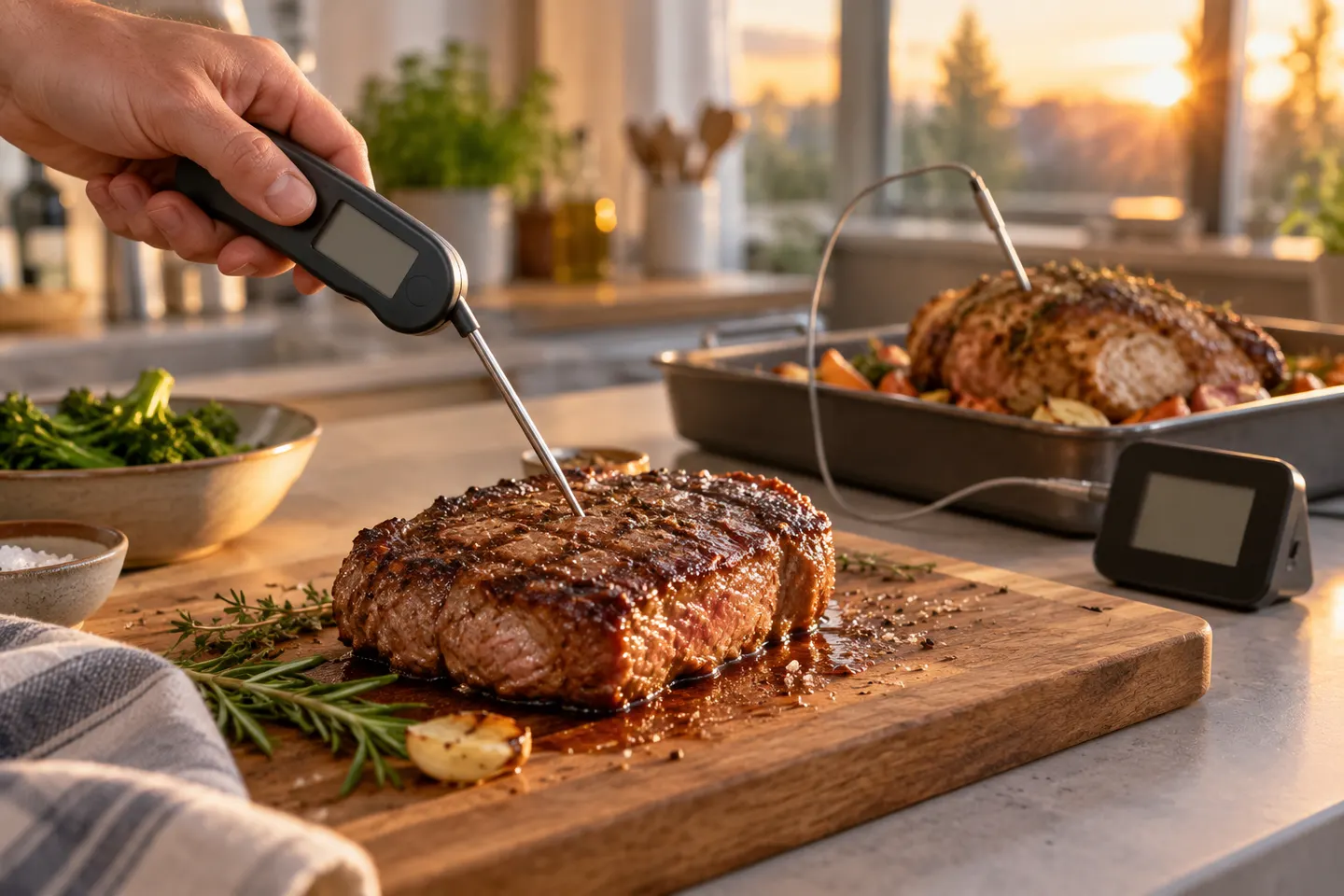
A folding instant-read probe suits quick checks; a cabled leave-in unit is better for monitoring a roast without opening the oven.
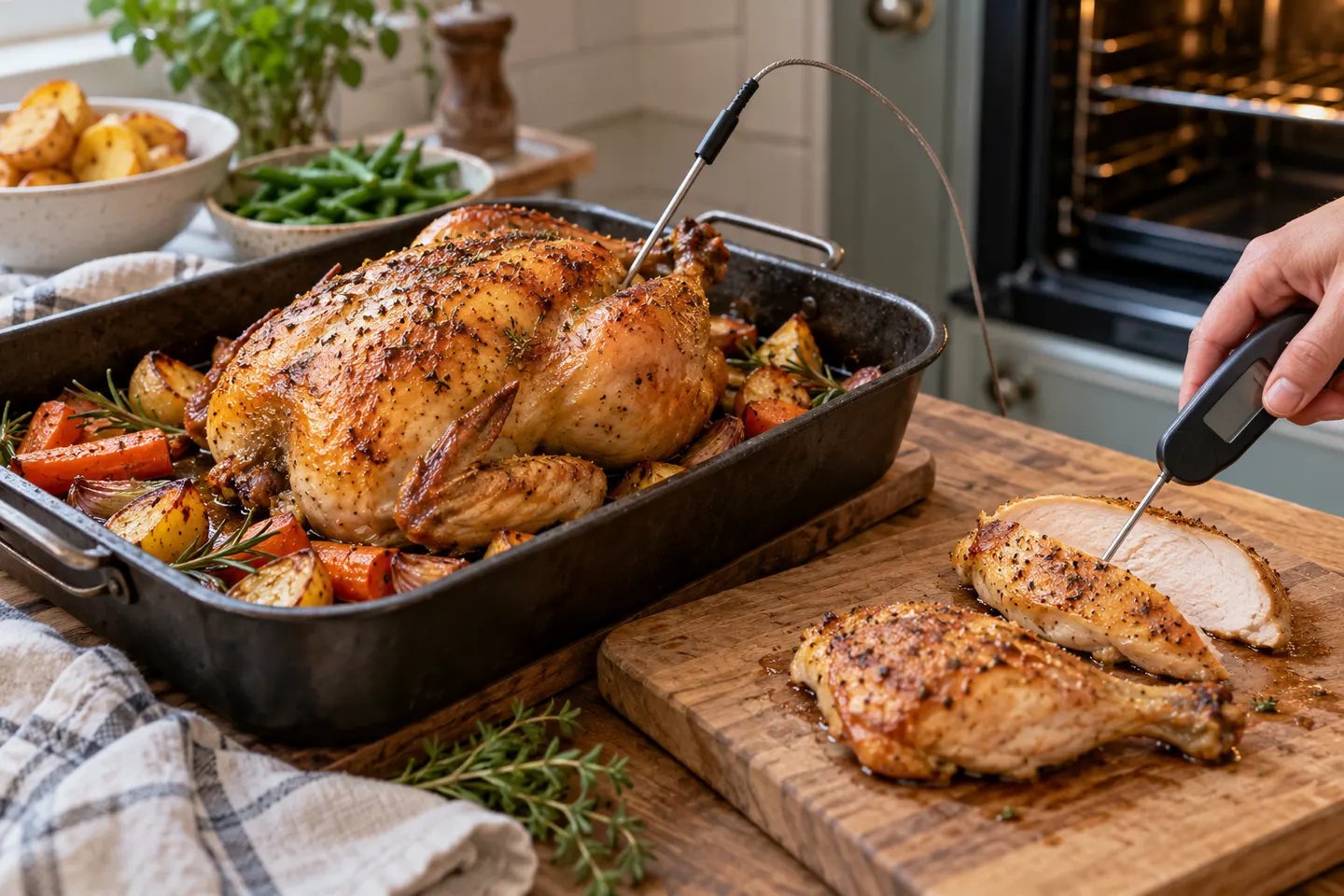
Use a clean probe in the thickest part without touching bone. FSANZ recommends poultry reach at least 75°C at the centre.