What temperature should turkey reach?
For Canadian cooks, Health Canada lists 82°C for a whole bird and 74°C for poultry pieces. Use the value that matches what you are cooking rather than relying only on time or skin colour.

Gearjury may earn a commission from qualifying retailer purchases. Our guidance follows the cited public-health sources.
Guide
Health Canada lists 82°C for whole poultry and 74°C for poultry pieces. Check the thickest areas with a clean food thermometer.
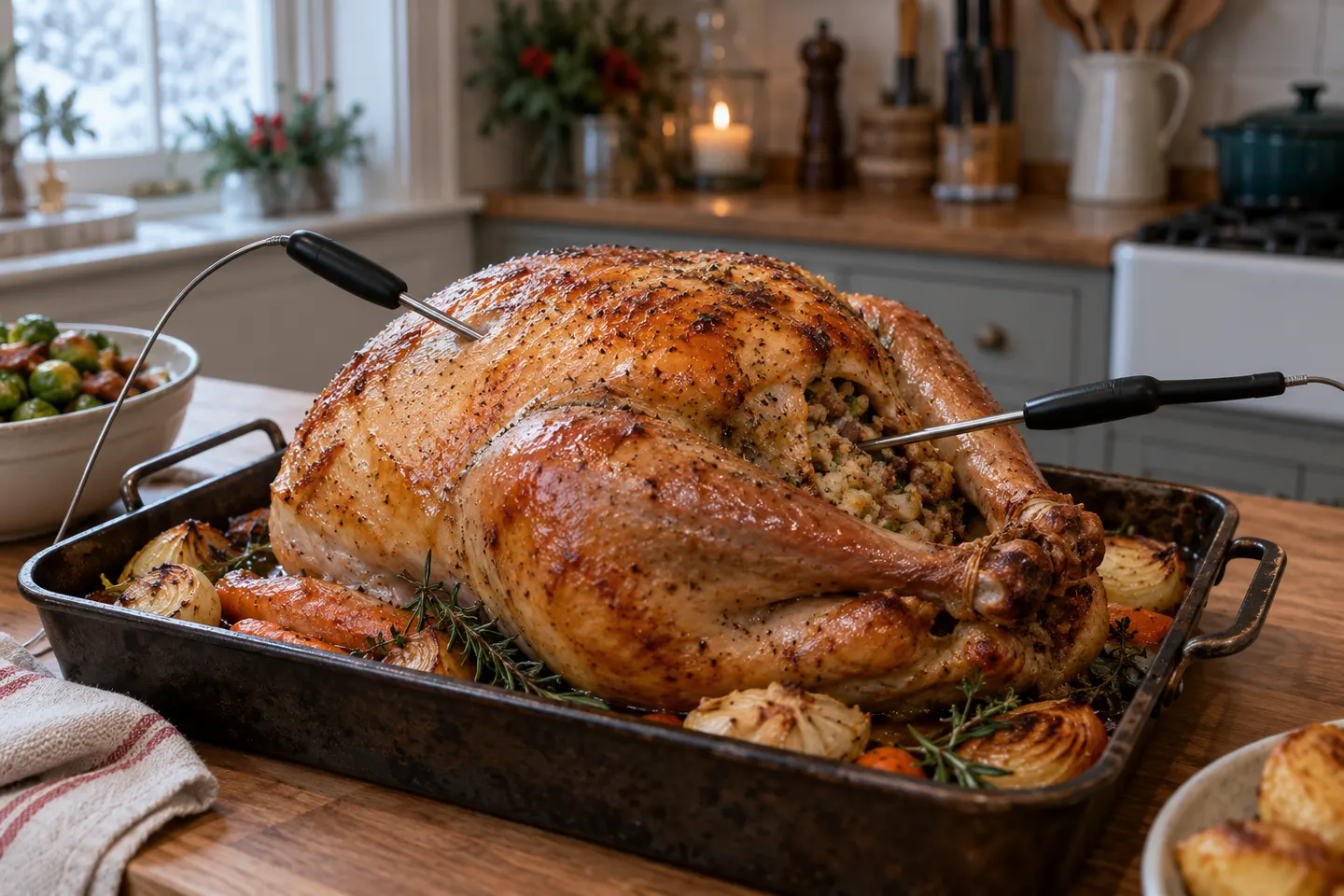
For Canadian cooks, Health Canada lists 82°C for a whole bird and 74°C for poultry pieces. Use the value that matches what you are cooking rather than relying only on time or skin colour.
Insert the sensing area into the thickest part of the breast and the innermost thigh, avoiding bone. For a whole bird, check several locations because the breast and legs can heat at different rates.
A leave-in probe can track one location during roasting, provided its cable and probe are rated for the oven. Near the end, confirm other thick areas with an instant-read thermometer.
Stuffing creates another dense area that must be checked. Health Canada lists 74°C for stuffing cooked inside poultry; measure the centre as well as the bird itself.
Remove the bird only after all required locations have reached the safe value. Resting can help juices redistribute, but it is not a substitute for reaching the public-health temperature.
Wash hands after handling raw poultry and clean and sanitize the probe between checks. Keep utensils and plates that touched raw turkey away from cooked food.
Common questions
Health Canada lists 82°C for whole poultry. Measure the thickest breast and innermost thigh areas without touching bone.
Poultry pieces should reach 74°C under Health Canada guidance. Check the thickest section and take more than one reading.
No. Bone can distort the reading, so reposition the probe into the thickest edible portion.
Health Canada lists 74°C for stuffing cooked inside poultry. Check the centre of the stuffing separately.