Which food thermometer is best for everyday cooking?
A digital instant-read model is the most versatile first purchase. It can check chicken pieces, burgers, fish, bread and leftovers without leaving a cable in the oven.

Gearjury may earn a commission from qualifying purchases made through retailer links.
Guide
For most kitchens, start with a fast digital instant-read thermometer. Add a leave-in or wireless probe for roasts and barbecue; use infrared only for surfaces, not meat centres.
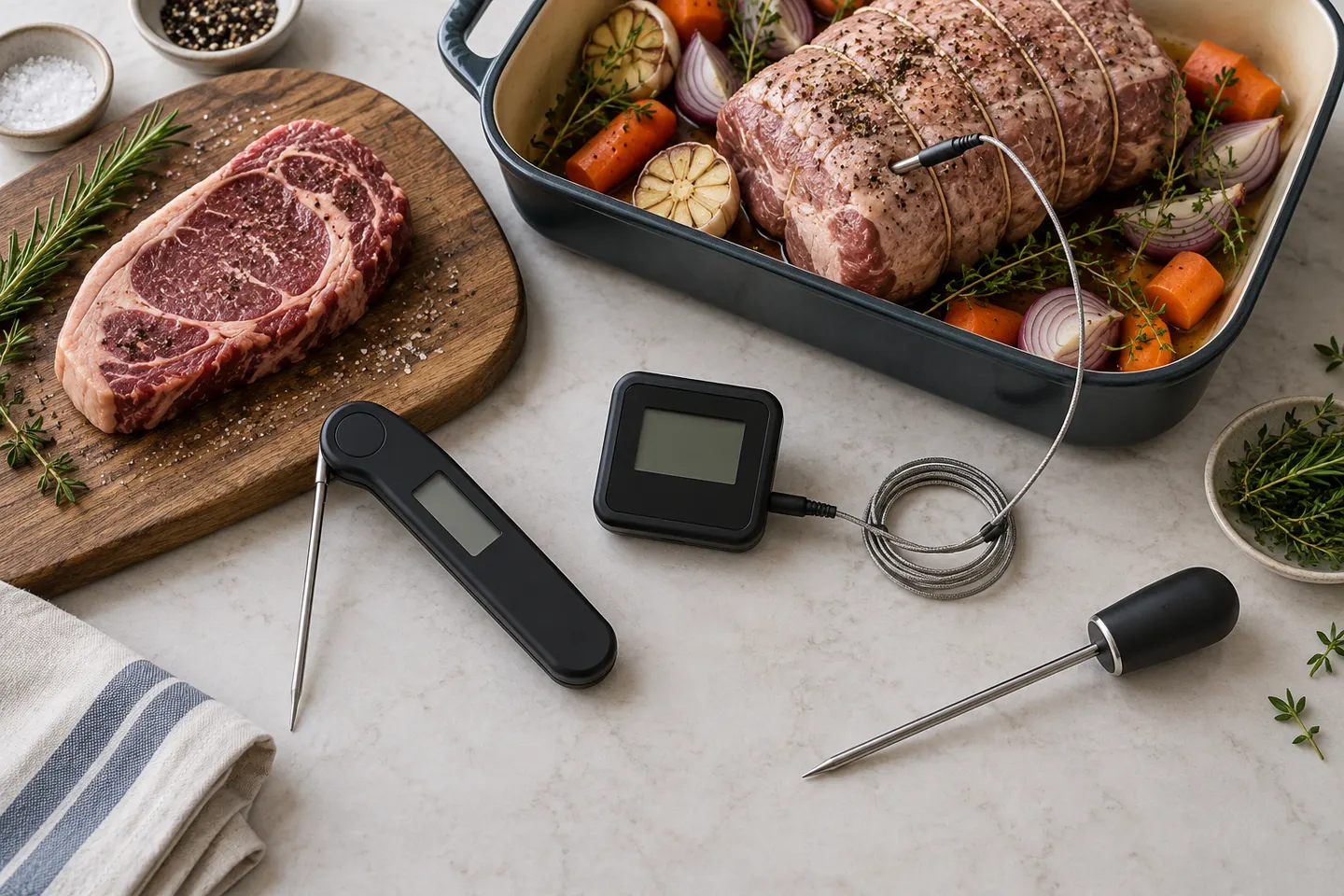
A digital instant-read model is the most versatile first purchase. It can check chicken pieces, burgers, fish, bread and leftovers without leaving a cable in the oven.
A wired or wireless probe suits roasts, smoking and barbecue because it tracks temperature while the food cooks. Confirm separate food-probe and ambient limits.
Dial thermometers can be durable and easy to read, but their sensing area is often longer and their response slower. They fit thicker foods better than thin portions.
An infrared thermometer can screen a griddle, pan or food surface quickly. It cannot read the centre, so it is not the best cooking thermometer for confirming meat safety.
Choose a range that covers the task, a probe thin enough for the food, and construction you can clean as instructed. Readability and calibration matter more than decorative presets.
Common questions
A thin-tip instant-read thermometer is practical for checking several areas. A leave-in probe can monitor a whole bird, but final checks should cover more than one spot.
A heat-rated leave-in probe is convenient during cooking, backed by an instant-read check near the end.
Digital models are often faster and easier for thin foods; analogue dials avoid batteries and can suit thicker cuts. Accuracy and correct placement matter more than display type.
Not for short cooks. It is useful when you want alerts or remote monitoring during a long closed-lid cook.