Identify whether it is leave-in or instant-read
A leave-in thermometer states that its probe can remain in food during cooking. A handheld instant-read thermometer is inserted for a reading and removed unless its manufacturer says otherwise.

Gearjury may earn a commission when you buy through a retailer link. Our editorial work is independent.
Guide
Leave it in only when it is explicitly designed for continuous oven use. Instant-read bodies and displays normally stay out of the cooking chamber.
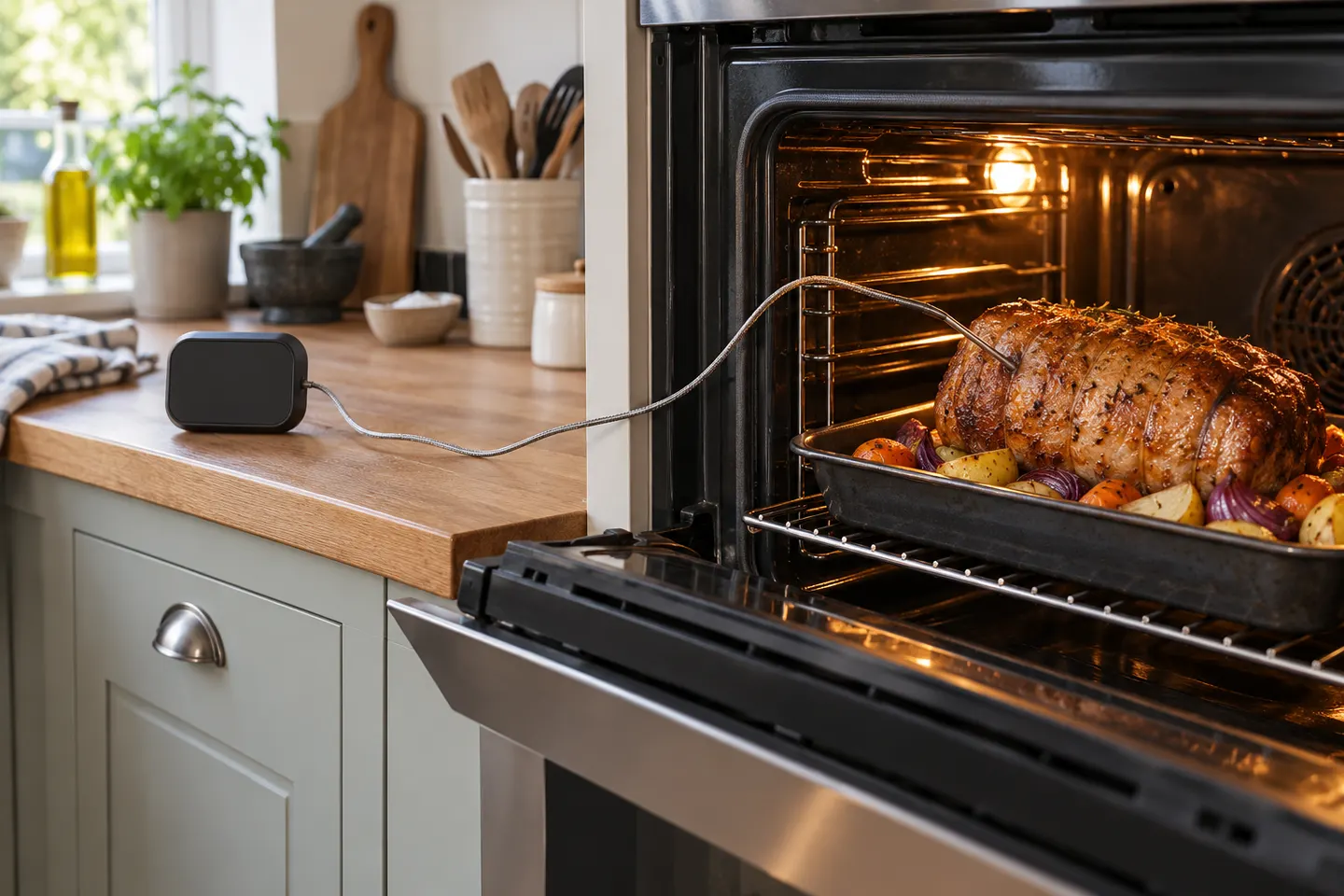
A leave-in thermometer states that its probe can remain in food during cooking. A handheld instant-read thermometer is inserted for a reading and removed unless its manufacturer says otherwise.
Read the limits for the sensing tip, cable, connector and transmitter separately. The probe may tolerate far more heat than the electronics or handle.
Insert the sensing area into the centre of the thickest edible portion and avoid bone, the pan and large pockets of fat. For poultry, check more than one location near the end.
Run the cable through the door without crushing it and keep it away from exposed elements, flame and sharp metal. Put the display on a stable surface outside the oven.
When practical, confirm the coolest thick section with a clean digital thermometer. Compare the result with current Health Canada guidance for that exact food category.
Common questions
Yes, but only a model or probe specifically rated for leave-in oven use. The display for a wired system normally remains outside.
Heat can damage its display, seals, battery or handle and may create a safety risk. Remove it after the reading unless the manual explicitly permits continuous use.
Many leave-in systems are designed for this, but the cable must not be sharply pinched. Follow the routing instructions and keep it away from heating elements.
No. Place the sensing area in the centre of the thickest meat without contacting bone, which can distort the reading.