
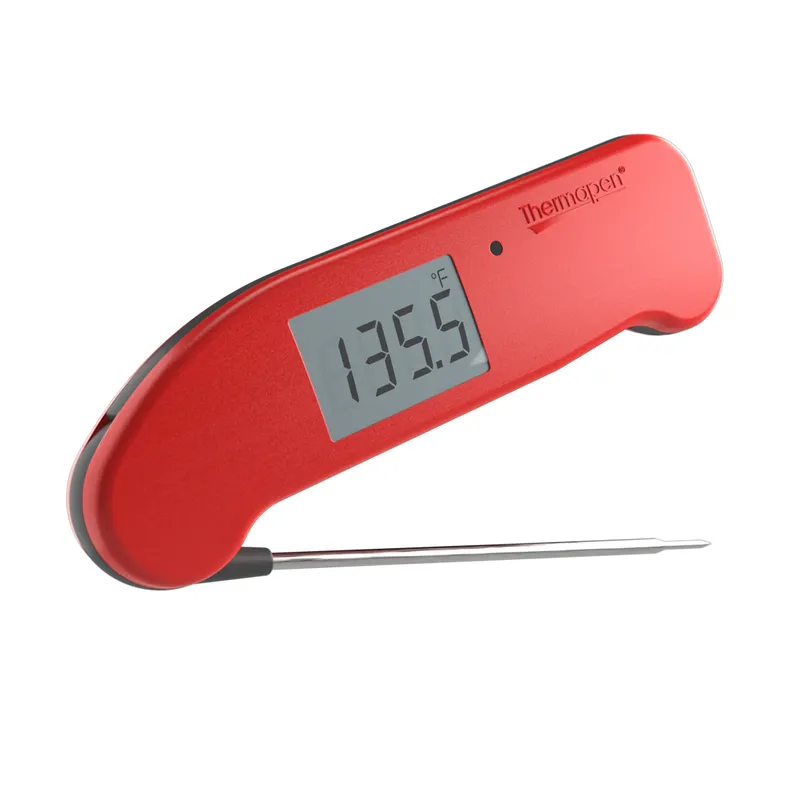
 Official manufacturer image
Our picks
Top picks
Official manufacturer image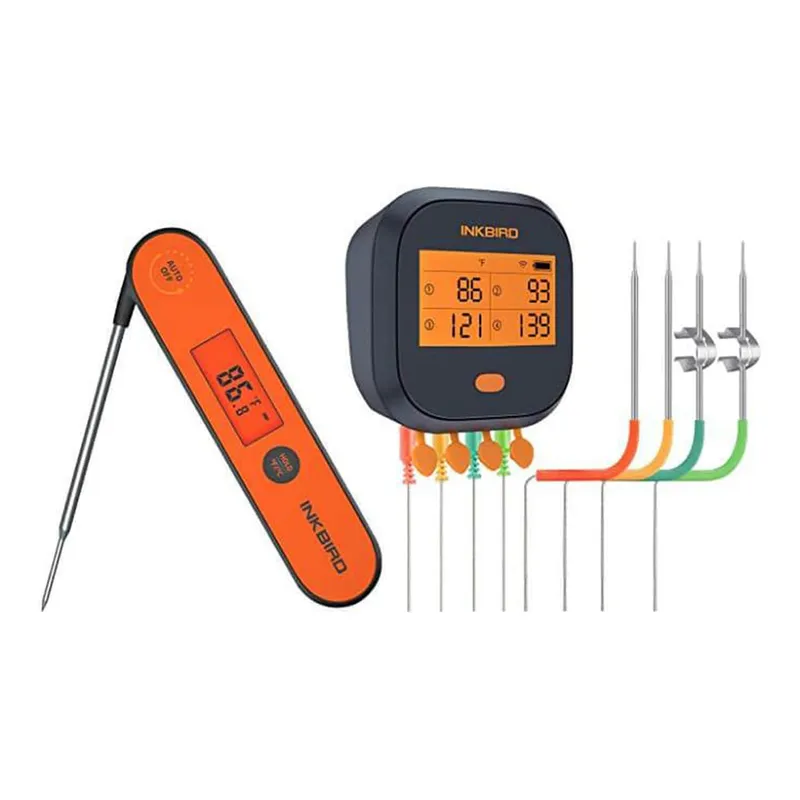 Official manufacturer image
INKBIRD IBBQ-4T
Check price on Amazon AU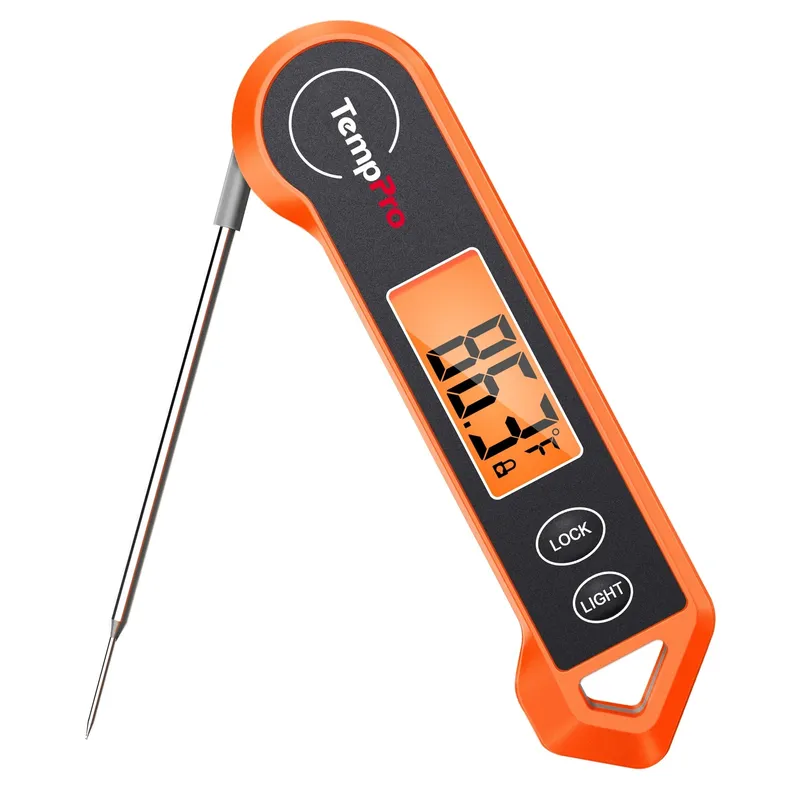 Official manufacturer image
ThermoPro TP19H
Check price on Amazon AUMeat thermometers
More specific
Common questions
Questions before you buy
What makes a thermometer food safe?
It should be suitable for contact with food, accurate across the temperatures you need and able to be cleaned and sanitised as directed. Its probe must also be intact and in good condition.
How accurate should a food thermometer be in Australia?
FSANZ requires food businesses handling potentially hazardous food to have a thermometer accurate to within 1°C. Check the specification and maintain or calibrate the instrument as instructed.
Is an infrared thermometer safe for checking cooked meat?
It is useful for surface checks but does not measure the internal centre. Use an insertion probe to determine whether the core has reached the intended temperature.
How do you sanitise a food thermometer?
FSANZ advises washing away grease and food particles, sanitising the probe with a suitable method such as an alcohol wipe, and drying it thoroughly. Follow the product's restrictions on water exposure.
When should a food thermometer be replaced?
Replace or repair it if the probe, cable, seal or display is damaged, if it cannot be cleaned properly, or if accuracy checks remain outside tolerance after the maker's calibration process.