



 Official manufacturer image
Our picks
Top picks
Official manufacturer image Official manufacturer image
Garmin Dash Cam Mini 3
Check price on Amazon Official manufacturer image
Garmin Dash Cam X310
Check price on AmazonInstallation and accessories
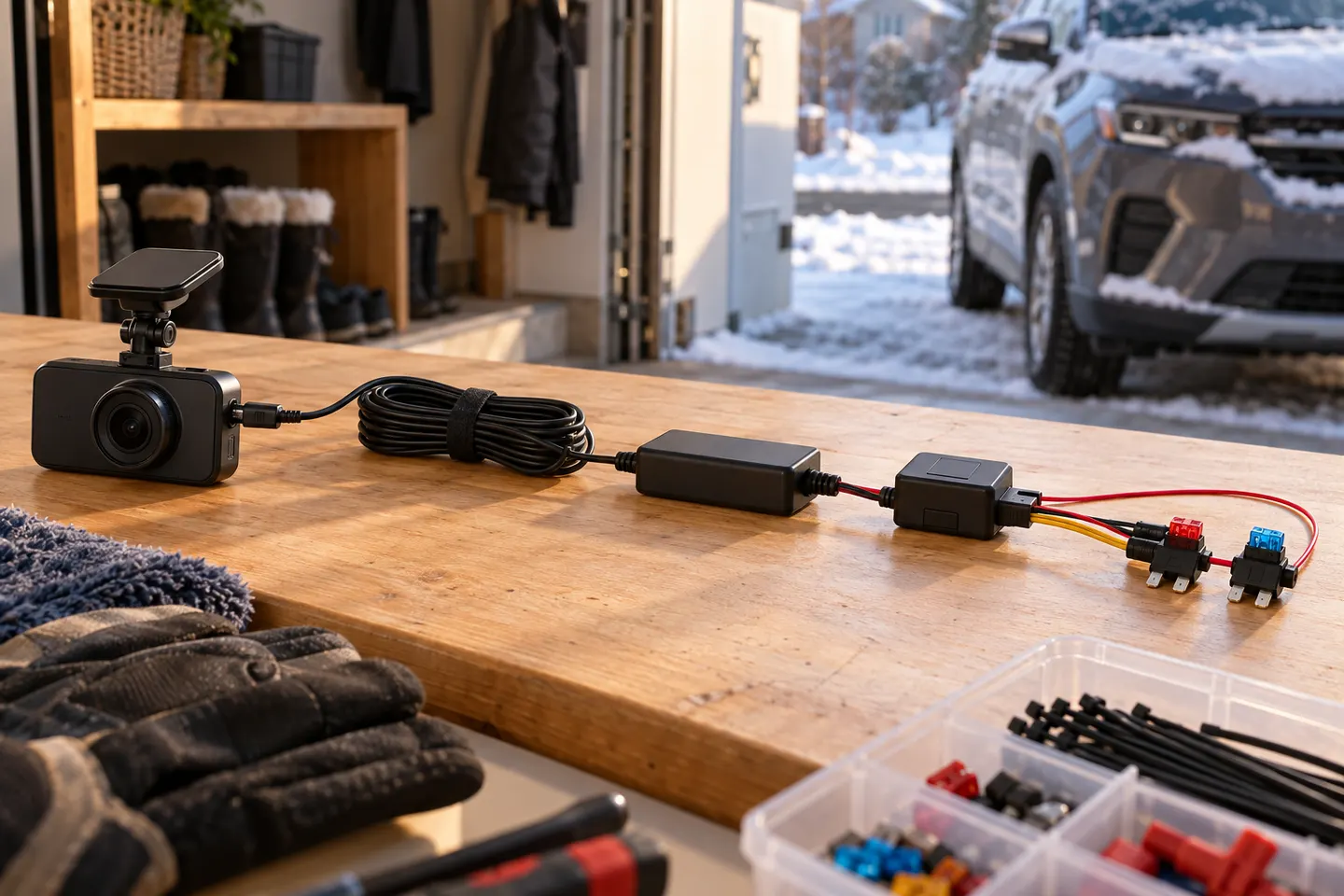 Hardwire kit
Common questions
Questions before you buy
Is it better to hardwire a dash cam?
Hardwiring creates a cleaner installation and can enable automatic parking mode on compatible cameras. It also adds installation complexity and must include suitable battery protection.
Will a hardwired dash cam drain the car battery?
It can if power management is wrong or the vehicle sits for too long. Use a compatible kit with a documented cutoff and choose settings appropriate for the battery and driving pattern.
Which fuse should a dash cam use?
The correct choice depends on the vehicle and kit: parking mode commonly needs suitable constant and switched circuits. Avoid safety-critical circuits and verify both with the vehicle documentation and proper test equipment.
Can I hardwire a dash cam myself?
Only if you can identify circuits, fuse types, grounding and airbag-safe cable routes confidently. Otherwise, a qualified automotive installer reduces the risk of electrical or trim damage.
Does every dash cam support parking mode when hardwired?
No. The camera firmware and hardwire kit must support the feature; a permanent power connection alone does not guarantee the right parking behavior.