



 Official manufacturer image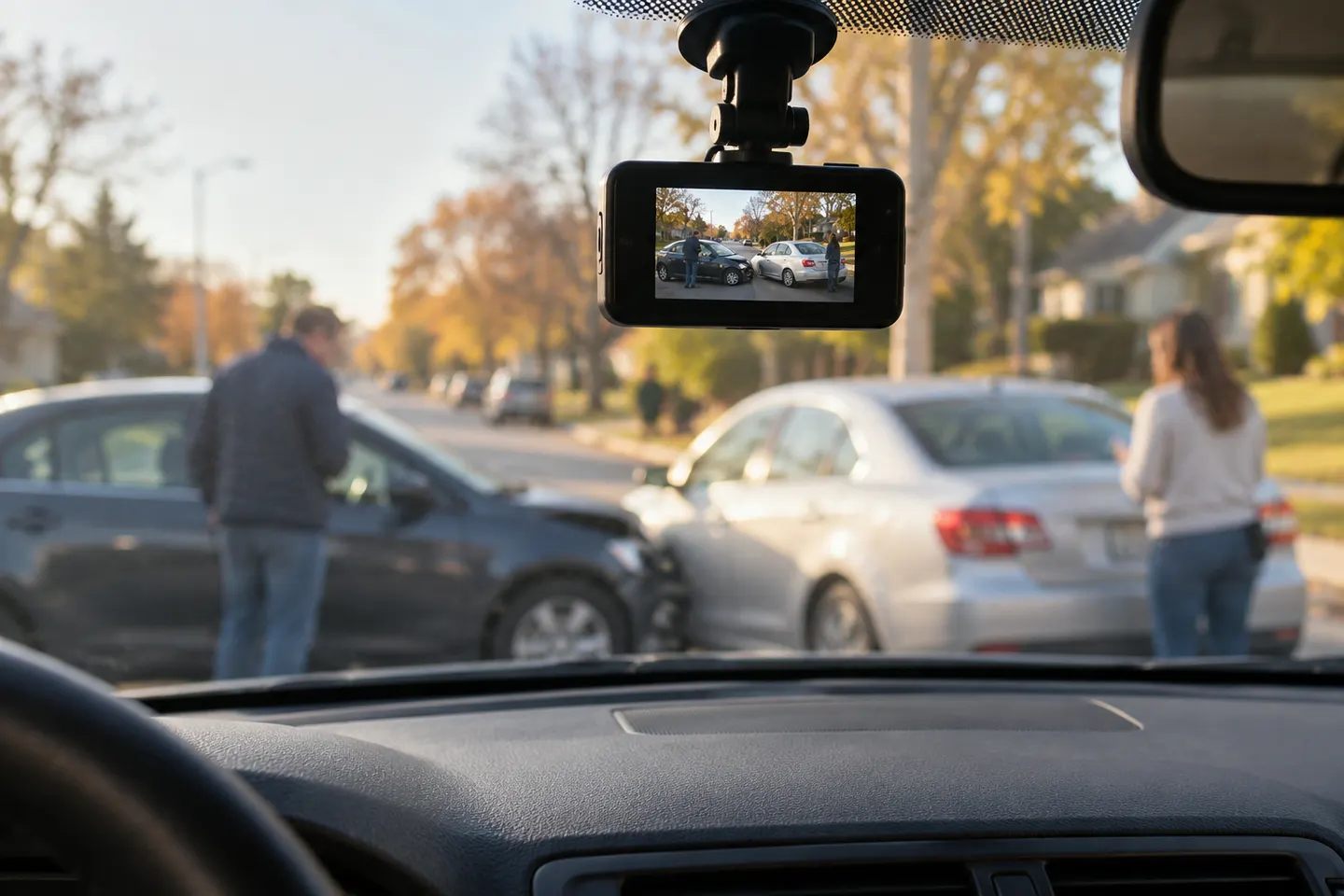
Our picks
Top picks
Official manufacturer image Official manufacturer image
Garmin Dash Cam Mini 3
Check price on Amazon Official manufacturer image
Garmin Dash Cam X310
Check price on AmazonCommon questions
Questions before you buy
Does dash cam footage prove who caused an accident?
It can provide important evidence, but fault is decided from the full record under applicable law. A clip may not capture speed, signals or activity outside its field of view.
How do I save dash cam footage after a crash?
Stop loop recording when it is safe, lock the event if the camera allows it and copy the original file plus the clips immediately before and after it. Avoid editing the only copy.
Should an accident dash cam have front and rear cameras?
Rear coverage can show following distance and rear impacts, while the front camera records the road ahead. Side events may still remain outside both views.
Can a dash cam miss an accident recording?
Yes. Power loss, a failed or incompatible card, incorrect impact sensitivity or an obstructed lens can cause gaps. Check recording status and review sample clips regularly.