

Best for most budget buyers
70mai Dash Cam A200
- Records 1080p video at up to 60 fps
- Supports optional front-and-rear recording with the RC11 rear camera
Drawback: Parking surveillance requires a separately sold hardwire kit.

Gearjury may earn a commission from qualifying Amazon purchases, at no extra cost to you.
Best picks
The 70mai A200 is the best starting point for most drivers because it combines smooth front recording, HDR and optional rear coverage. Choose the VIOFO VS1 for sharper compact recording or the Garmin Dash Cam Mini 3 for the smallest footprint.
Quick answer
For a good budget dash cam, start with the 70mai A200: it records at 1080p up to 60 fps and can add a rear camera. The VIOFO VS1 is the sharper, screen-free alternative, while the Garmin Dash Cam Mini 3 suits drivers who want a camera that almost disappears behind the mirror. ROVE R2-4K is the pick for higher stated resolution and a built-in display.
Best for most budget buyers
Drawback: Parking surveillance requires a separately sold hardwire kit.
 Official manufacturer image
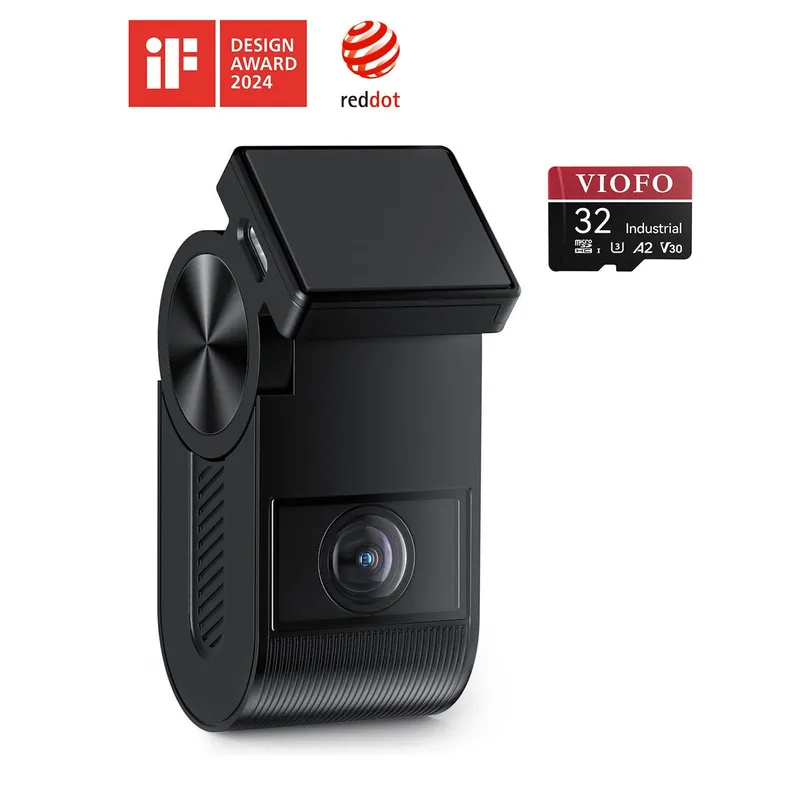
Best for compact 2K recording
Drawback: There is no built-in screen for reviewing alignment or clips.
 Official manufacturer image
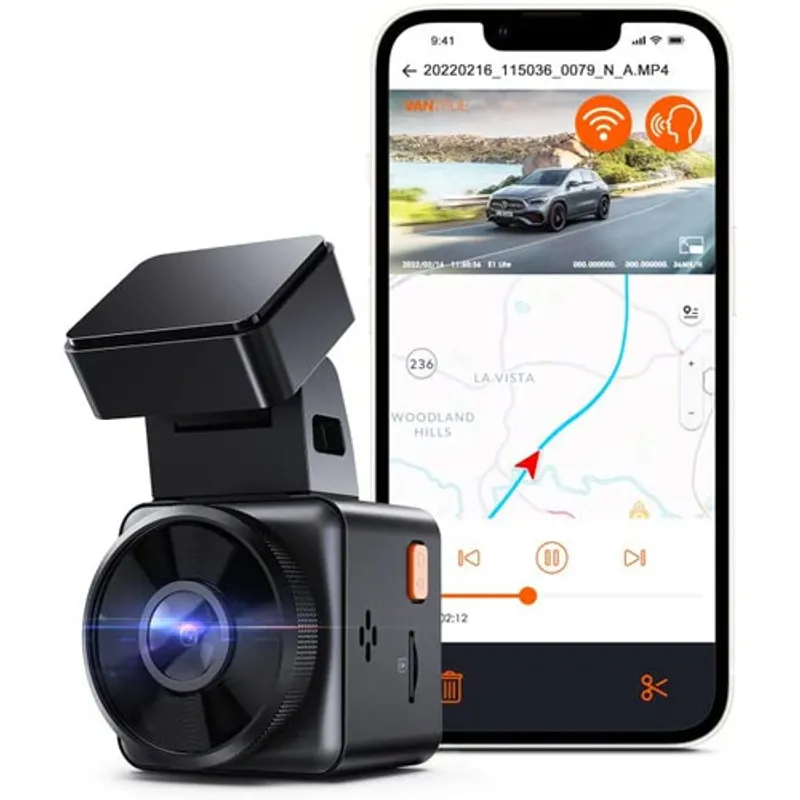
Best for voice control
Drawback: Its single front channel will not cover incidents behind the vehicle.
 Official manufacturer image
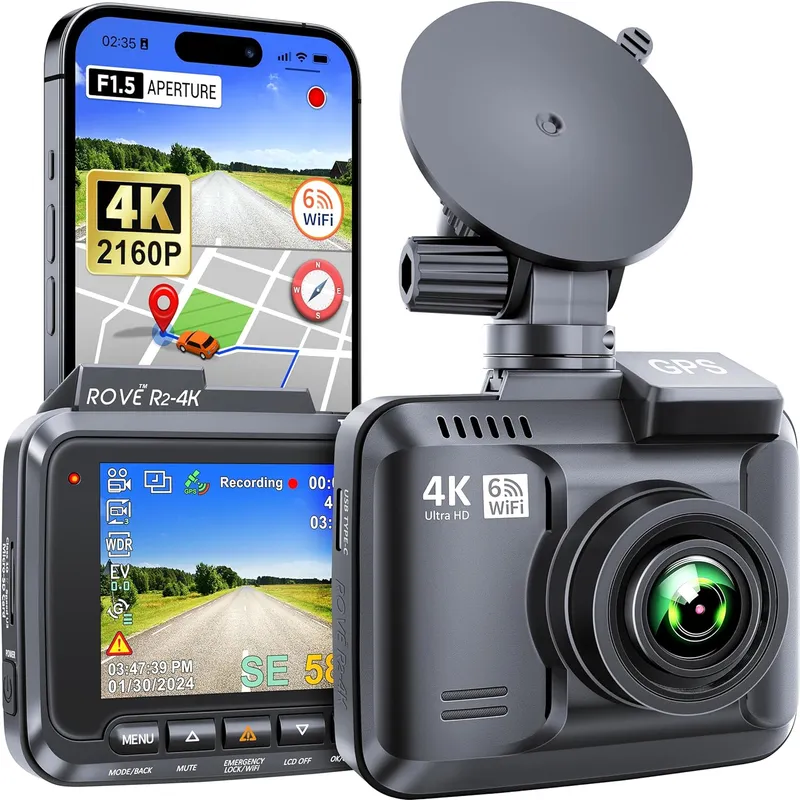
Best for high-resolution front footage
Drawback: It is a front-only camera, so rear coverage requires a different model.
 Official manufacturer image
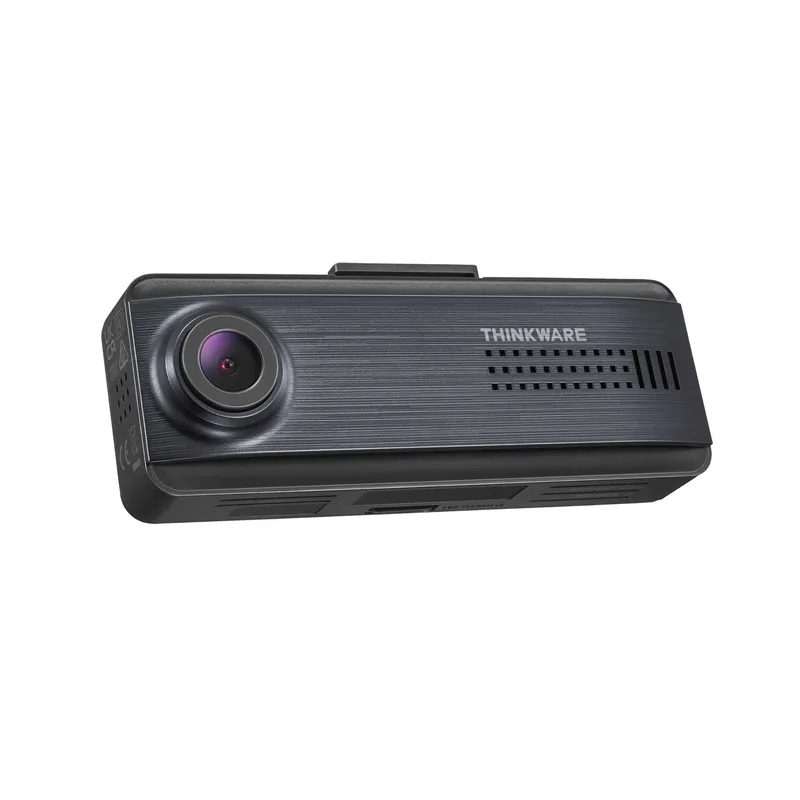
Best for a discreet installation
Drawback: The 1080p specification is less detailed than the 2K and 4K options here.
 Official manufacturer image
Best for future expansion
Drawback: Its 2.4 GHz Wi-Fi connection is slower than the 5 GHz links on some rivals.
| 70mai Dash Cam A200 | Official manufacturer imageVIOFO VS1 Mini | Official manufacturer imageVantrue E1 Lite | Official manufacturer imageROVE R2-4K | Official manufacturer imageGarmin Dash Cam Mini 3 | Official manufacturer imageThinkware Q200 | |
|---|---|---|---|---|---|---|
| Front video | 1080p up to 60 fps | 1440p at 30 fps | 1080p | 2160p at 30 fps | 1080p | 1440p at 30 fps |
| Rear coverage | Optional | — | — | — | — | Optional |
| Built-in GPS | — | Yes | Yes | Yes | — | Included antenna |
| Wi-Fi | Yes | 2.4 and 5 GHz | 5 GHz | Dual-band | Yes | 2.4 GHz |
| Screen | 2-inch | No | 1.54-inch | 2.4-inch | No | No |
| Parking recording | Hardwire kit required | Hardwire kit required | Suitable power connection required | Hardwire kit required | Compatible cable required | Hardwiring supported |
| Check price on Amazon | Check price on Amazon | Check price on Amazon | Check price on Amazon | Check price on Amazon |
Common questions
The 70mai A200 is the most rounded low-cost choice here because it offers smooth 1080p recording, HDR, app control and an optional rear camera. Pick the VIOFO VS1 instead if sharper 1440p front footage matters more than dual-channel flexibility.
Many can, but parking recording usually needs a compatible hardwire or constant-power cable. Confirm the exact accessory and low-voltage protection before installation.
1080p can document the overall event clearly in good conditions, but plate detail still depends on distance, motion and light. Higher resolution provides more pixels, though sensor quality and HDR also matter.
Front-only is the simplest way to cover the direction of travel. Front-and-rear coverage is more useful when rear impacts, tailgating or parking incidents are a concern.
Wi-Fi is not required for recording, but it makes clip transfer and settings changes easier. A camera with a screen and removable microSD card can still work well without it.
Keep exploring

VIOFO A229 Pro 2CH is our broad recommendation for detailed front and rear coverage. Garmin Mini 3 favors discretion, while Garmin X310 is the sharper single-camera choice.

A front and rear dash cam records both directions and can provide context a single lens misses. Check the rear-camera cable route and simultaneous recording resolution before buying.

The A329S serves buyers seeking high-detail multichannel recording; A229 models cover more moderate dual-camera needs, while A119 Mini 2 is the compact front-only option.

Start with the coverage you need: front-only, front and rear, cabin or a wider multi-camera view. Then compare recording detail, storage and power requirements.