



 Official manufacturer image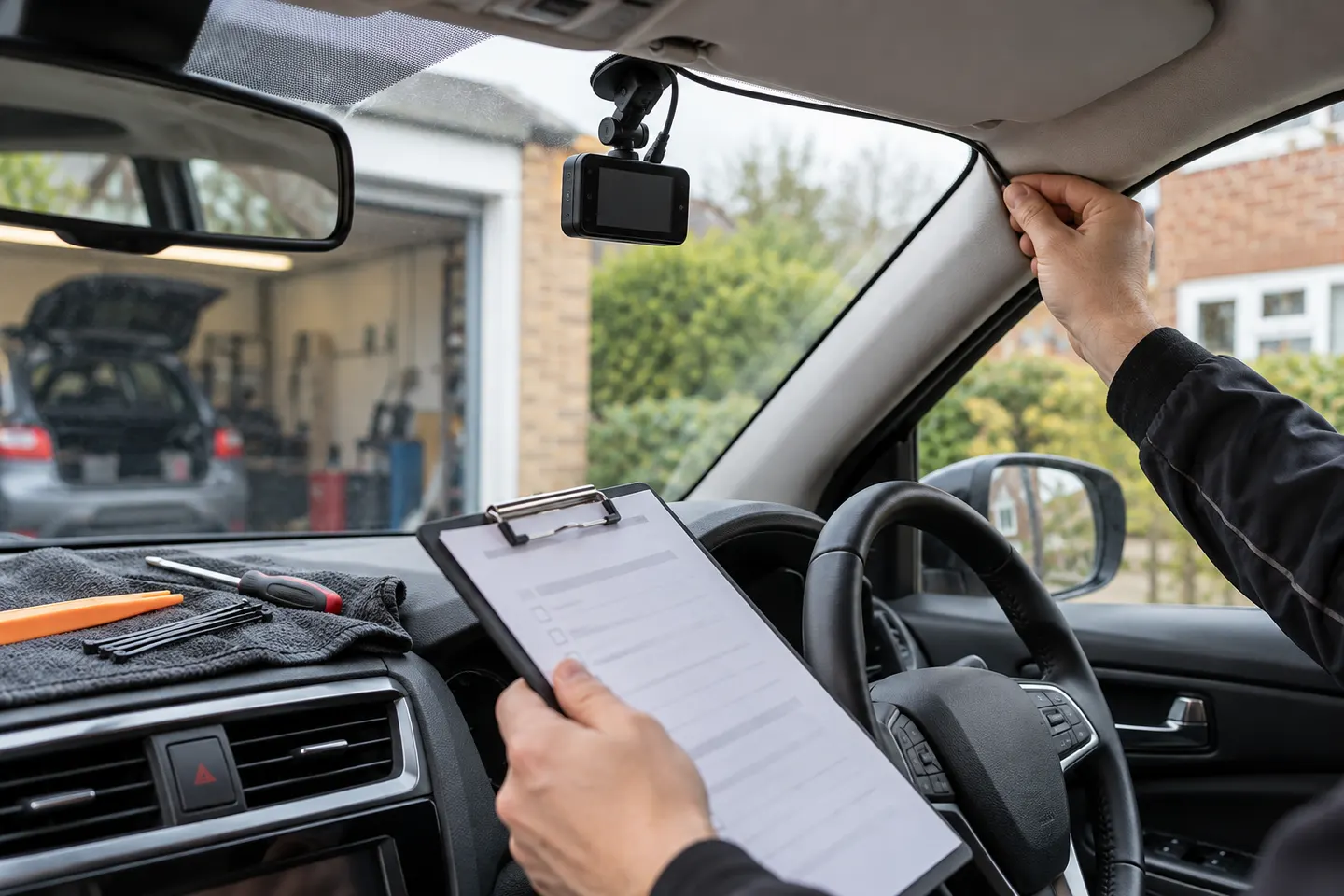
Our picks
Top picks
Official manufacturer image Official manufacturer image
Garmin Dash Cam Mini 3
Check price on Amazon Official manufacturer image
Garmin Dash Cam X310
Check price on AmazonCommon questions
Questions before you buy
What should dash cam fitters include in the installation?
The scope should state camera placement, cable routing, power connection, rear-camera work if applicable, parking-mode setup, and a recording check before handover.
Can a dash cam fitter hide wires near airbags?
Cables must not interfere with curtain airbags or their deployment path. Ask the installer to explain the vehicle-specific route and follow manufacturer service information.
Should I use a mobile fitter or an installation shop?
Either can be appropriate. Compare documented experience with your vehicle, insurance, workmanship warranty, reviews, and access to technical support rather than choosing by format alone.
Will professional fitting protect parking mode?
Installation can configure a compatible low-voltage cutoff, but it cannot make parking recording unlimited. Duration still depends on the vehicle, camera, settings, temperature, and power source.
What information should I give a dash cam installer?
Provide the exact vehicle and camera models, all accessories, desired channels, parking requirements, and any lease, warranty, or electrical restrictions.