How to calibrate a food service thermometer
First read the instrument manual to learn whether it is adjustable. Fill a container with crushed ice, add clean water to fill the gaps and stir until the mixture is uniform.

Gearjury may earn a commission when you buy through a retailer link. Editorial conclusions are based on cited evidence.
Guide
Start with a well-made ice slurry and the manufacturer's adjustment instructions. Many digital models can only be checked, not user-calibrated, so record the offset or replace an unreliable unit.
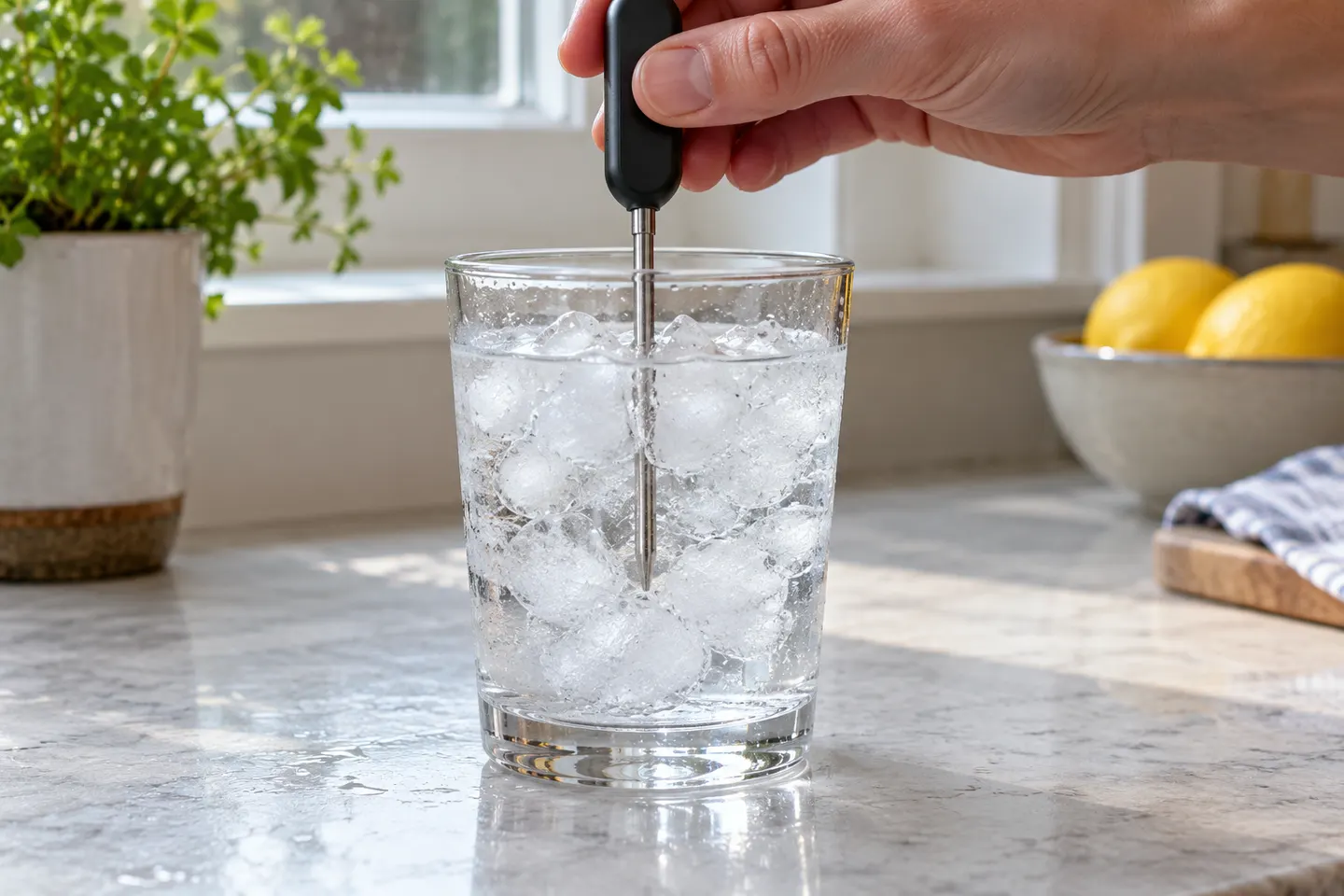
First read the instrument manual to learn whether it is adjustable. Fill a container with crushed ice, add clean water to fill the gaps and stir until the mixture is uniform.
Immerse the sensing section without touching the container's bottom or sides. Wait for the display to stabilize; the expected ice-point reading is 32°F under normal conditions.
Use the calibration control only as the manufacturer directs. If the model cannot be adjusted, note a small stable offset for noncritical use or replace it when the error is unacceptable or inconsistent.
A boiling-point check can assess the upper end, but boiling temperature changes with elevation and atmospheric pressure. Calculate the local expected value rather than assuming 212°F everywhere.
Check on the schedule required by your food-safety plan, and after a drop, temperature shock, battery change or suspicious reading. Home cooks should also check before important cooks if accuracy is in doubt.
Common questions
Use a properly mixed ice-water slurry, immerse the sensing area without touching the container, wait for stability and adjust to 32°F only as the manual directs.
Follow the workplace food-safety plan and check after impacts, extreme temperature exposure or questionable readings. Frequency depends on use and instrument policy.
No. Some offer a user calibration function, while others can only be checked. Consult the exact model's instructions before changing any setting.
Water's boiling point falls as elevation rises and also varies with pressure. Compare against the expected boiling point for your location and confirm correct probe placement.