Independent buying guidance · US editionHow we work

Gearjury may earn a commission from qualifying purchases made through retailer links.

Guide

How to Use a Meat Thermometer Correctly

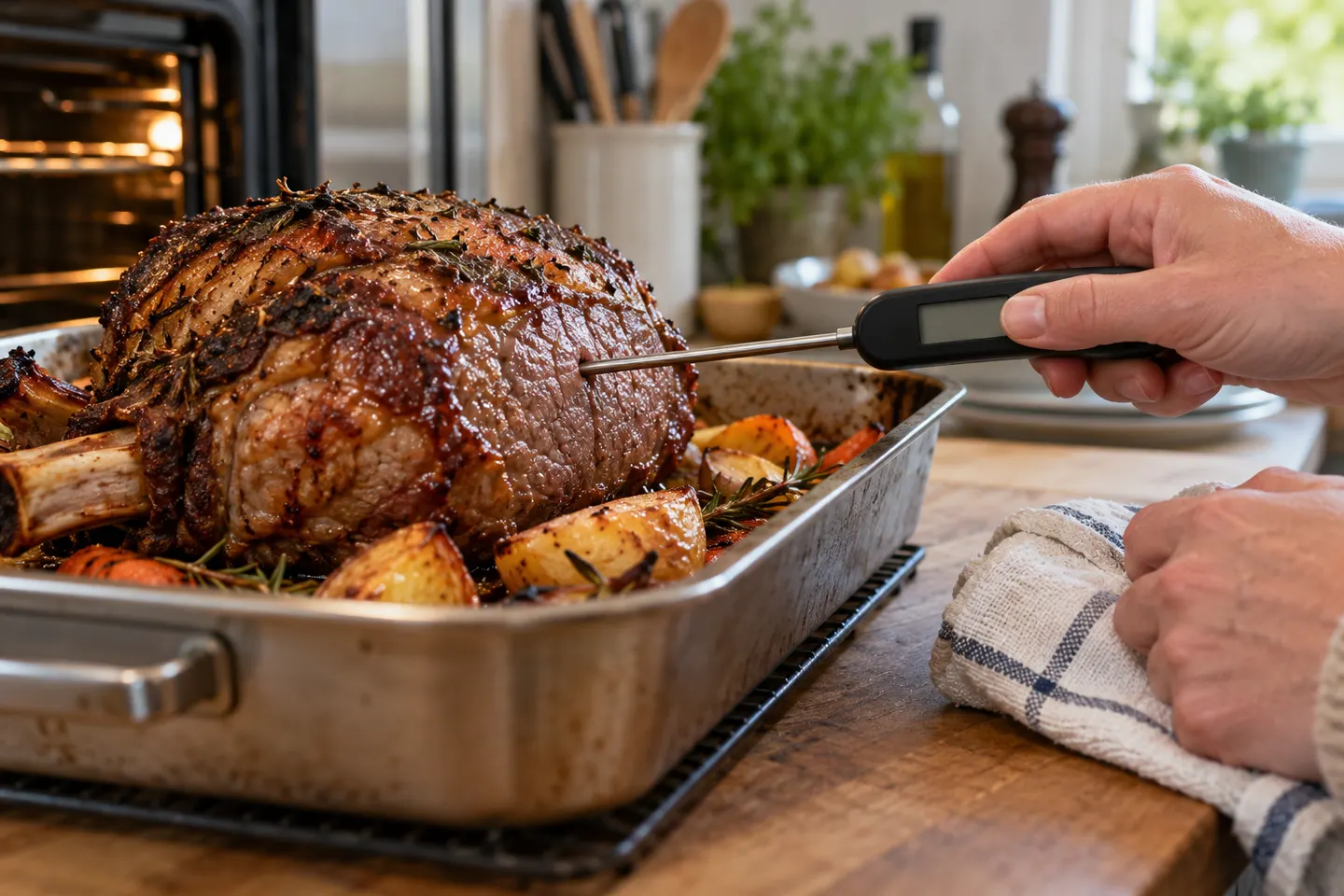
Insert the sensing area into the thickest central part of the food, avoid bone and fat, wait for a stable reading, and compare it with current USDA guidance.

How to Use a Meat Thermometer Correctly
01

How to set a food thermometer

Read the model instructions, select Fahrenheit or Celsius, install or charge the battery, and set alarms only after checking the food-specific safe minimum. If the model supports calibration, verify it by the manufacturer's stated method.

02

Choose the correct measurement point

For roasts and thick portions, target the thickest center away from bone, fat and gristle. For thin steaks, chops or patties, insert from the side. Check several areas in large or irregular food.

03

How to use a food thermometer correctly

Insert enough of the probe to cover its entire sensing area, wait until the reading stabilizes, then compare it with current USDA guidance. An instant-read model comes out after the check; only a rated leave-in probe stays during cooking.

04

Use a meat probe thermometer during cooking

Place the probe before cooking when practical, route its cable away from flames and pinch points, and keep every component within its temperature limit. Set an alert, then verify the final temperature in another spot.

05

How to sanitize a food thermometer

Wash the probe with hot, soapy water or follow the maker's cleaning directions before and after use. Do not immerse the display unless its water-resistance instructions allow it, and prevent the cleaned probe from touching raw-food surfaces.

06

How to use an infrared thermometer for cooking

Infrared devices measure surface temperature, not the internal center of meat. Use one for griddles or pan surfaces within its instructions, then use a probe thermometer when internal food temperature determines safety.

Common questions

Questions before you buy

How to use a food thermometer correctly?

Put the complete sensing area in the food's thickest center, avoid bone and fat, wait for a stable reading and check several spots when needed.

Why use a food thermometer?

Color, texture and cooking time cannot reliably confirm a safe internal temperature; a food thermometer measures it directly.

How to set a food thermometer?

Choose the unit, configure alarms from current safety guidance and follow the maker's calibration procedure if available.

What might we use a food probe thermometer for?

Use it for meat, poultry, fish, egg dishes, casseroles and other foods where internal temperature matters, within its stated range.

How to sanitize a food thermometer?

Clean the probe with hot, soapy water or the manufacturer's approved method before and after use, then avoid recontamination.

Can I use a regular thermometer for food?

Use a thermometer designed for food, with a suitable range, probe construction and cleaning instructions.

How many thermometer types exist in a food industry?

There is no single fixed count; common families include thermocouples, thermistors, bimetallic stems, oven probes, infrared instruments and time-temperature indicators.

How to use an infrared thermometer for cooking?

Aim it at the surface specified by its instructions and account for distance and surface properties; it cannot replace an internal probe reading.

How can an instant-read thermometer assist in microwave cooking?

Pause safely and check several locations because microwaves can create hot and cold spots; never leave a standard instant-read model inside while heating.

Can I use a laser thermometer for cooking?

An infrared or laser-aimed thermometer can check surfaces, but it does not measure the center of meat.

Can I use a body thermometer for cooking?

No. Its range, construction and cleaning design are intended for body temperature, not cooking.

Can I use a medical thermometer for cooking?

No. Choose a food thermometer designed for the temperatures, probe depth and sanitation demands of cooking.

Sources and how we chose