



 Official manufacturer image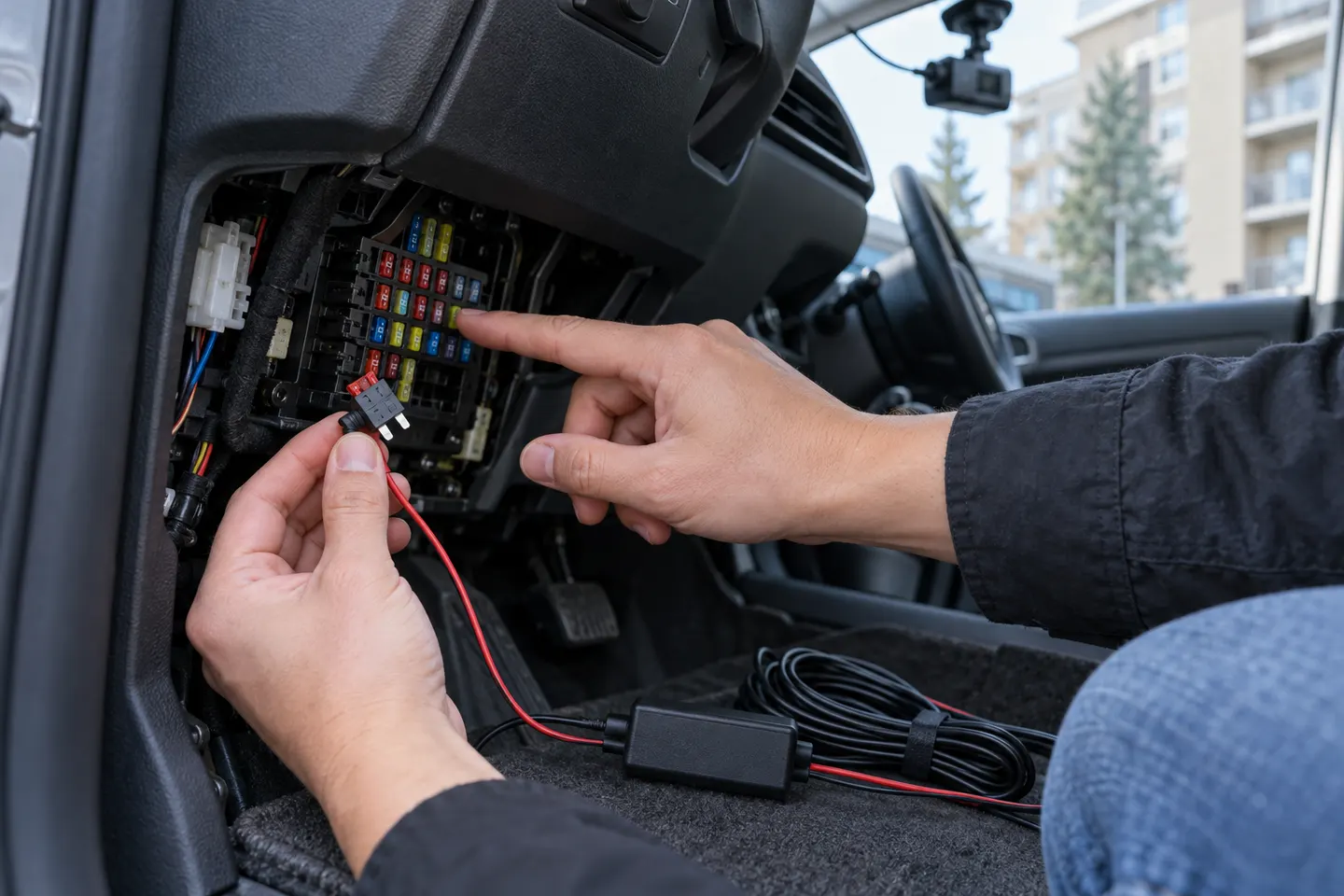
Our picks
Top picks
Official manufacturer image Official manufacturer image
Garmin Dash Cam Mini 3
Check price on Amazon.ca Official manufacturer image
Thinkware U3000
Check price on Amazon.caInstallation and accessories
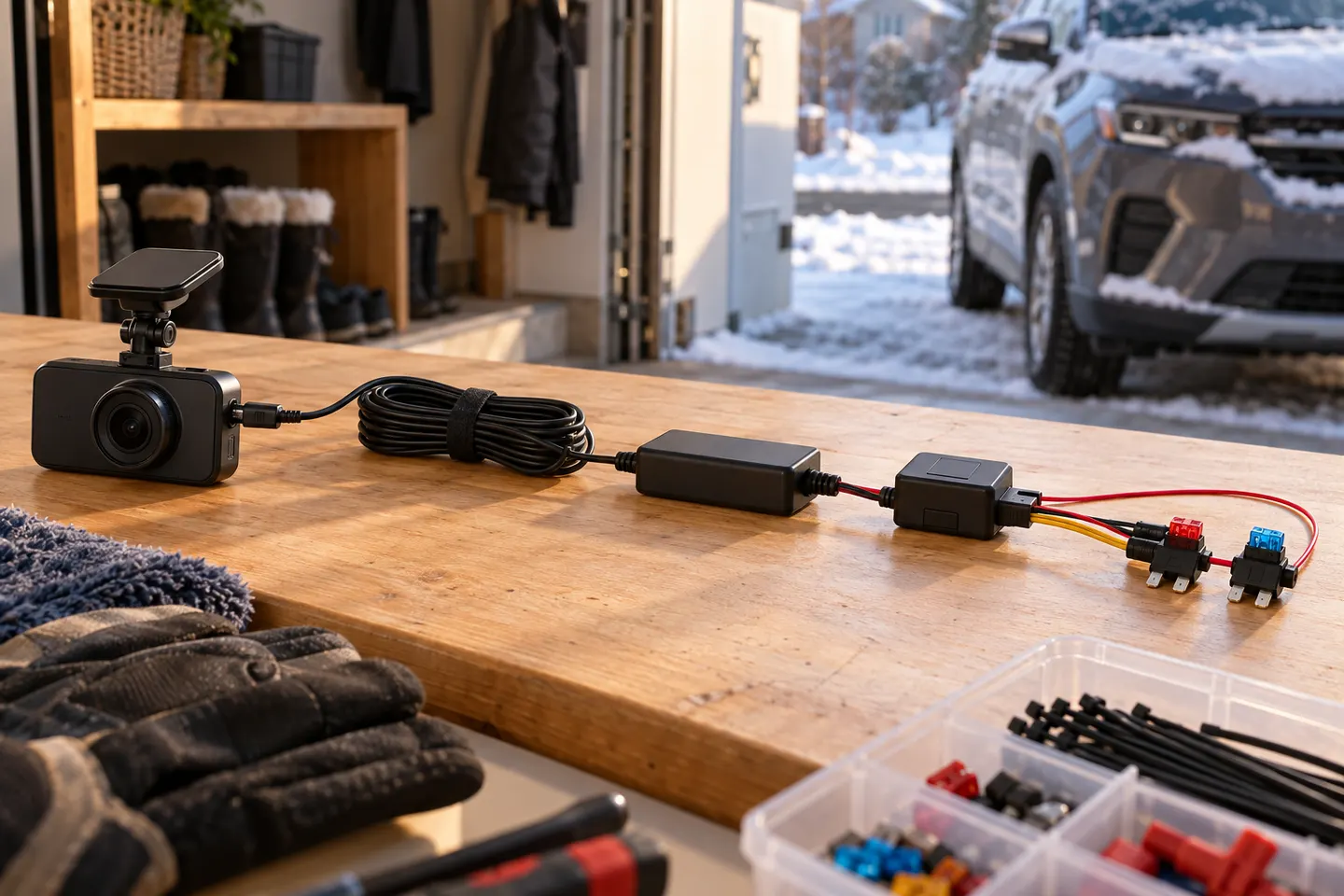 Hardwire kit
Common questions
Questions before you buy
Will hardwiring a dash cam drain the car battery?
Parking recording draws power after shutdown. A compatible kit with a correctly set low-voltage cutoff reduces the risk, but parking duration and battery condition still matter.
Which fuse should I use to hardwire a dash cam?
The kit may require both an ignition-switched and a constant-power circuit. Identify them with the vehicle documentation and a tester, and avoid safety-critical circuits.
Can I hardwire a dash cam myself?
You can if you understand automotive fuses, grounding and airbag-safe cable routing. Otherwise, professional installation is the safer choice and may protect warranty conditions.
Does hardwiring enable parking mode automatically?
Only when the camera and hardwire kit support the same parking-mode trigger and are configured correctly. Some cameras also require parking mode to be enabled in settings.
Can hardwiring damage a vehicle warranty?
Warranty effects depend on the vehicle, lease and installation. Check the owner's documentation and use a qualified installer when modifications are restricted.