 Official manufacturer image
Core temperature of meat
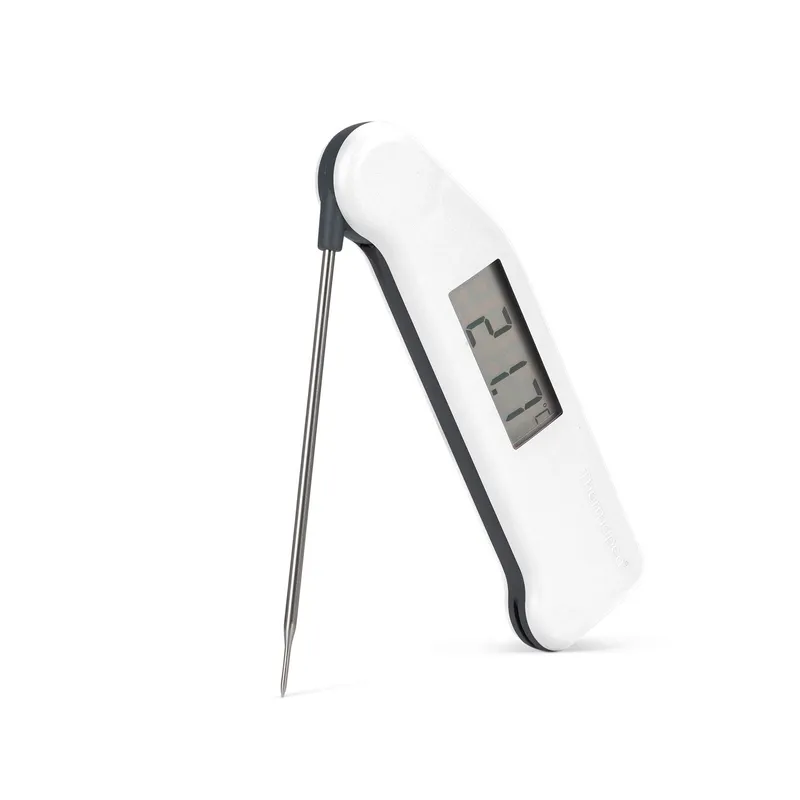
Thermapen Classic
Check price on AmazonSponsored link · no live price shown

Gearjury may earn a commission when you buy through a retailer link. Our editorial choices remain independent.
Head to head
A meat probe is shaped for core checks; a candy thermometer is designed to monitor hot sugar continuously. A wide-range instant-read model may check both, but it is not always the safest hands-free option.
Official manufacturer image
Core temperature of meat
 Official manufacturer image
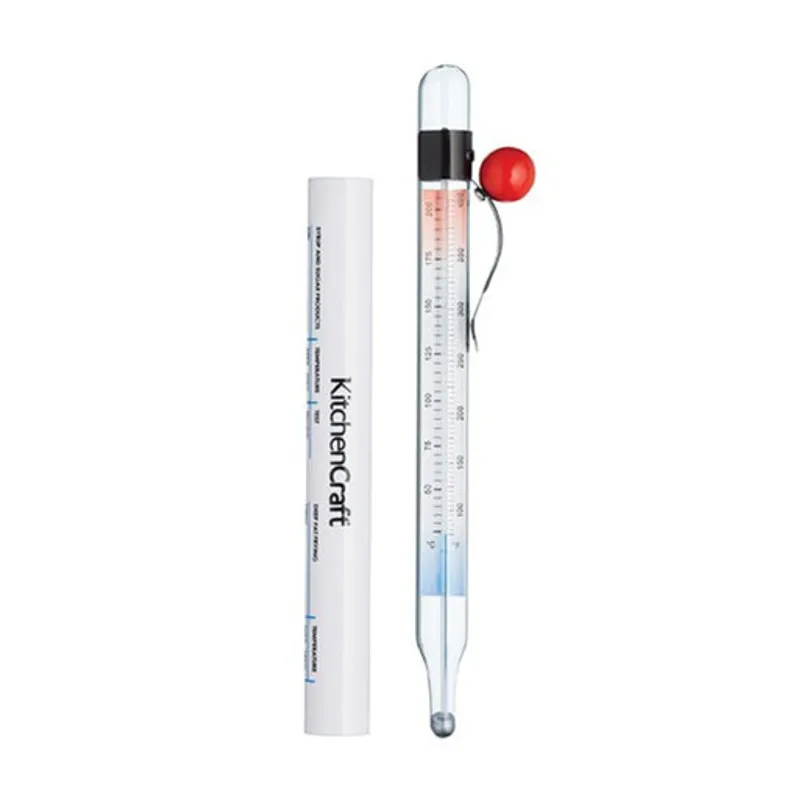
Hands-free sugar monitoring
The verdict
Its folding probe and three-second stated response suit spot checks in solid food.
It is designed for jam, confectionery and deep-frying temperatures.
Its published range covers both ordinary meat cooking and confectionery spot checks.
| Official manufacturer imageThermapen Classic | Official manufacturer imageKitchenCraft Glass Jam and Sugar Thermometer | |
|---|---|---|
| Primary use | Meat and general food checks | Sugar, jam and frying |
| Range | -49.9 to 299.9°C | 25 to 205°C |
| Reading style | Digital | Glass scale |
| Continuous monitoring | No | Designed for the task |
| Best handling | Insert, read, remove | Position in pan as directed |
| Check price on Amazon | Check price on Amazon |
Common questions
Yes, if its stated range covers the required sugar stage and the maker permits that use. For continuous hands-free monitoring, a clip-on candy thermometer is usually more practical.
Its shape and sensing area may make core placement awkward even if the range overlaps. A purpose-made meat probe is the clearer choice.
It can be. Baking may call for air, liquid or sugar temperatures, while a meat probe is shaped to reach the core of solid food.
Confectionery stages and frying require sustained measurement at temperatures well above typical meat core temperatures.
Keep exploring

Thermapen ONE is the strongest all-round instant-read choice on published speed and accuracy. Choose MEATER Pro for cable-free monitoring or Thermapen DOT for a simple oven alarm.
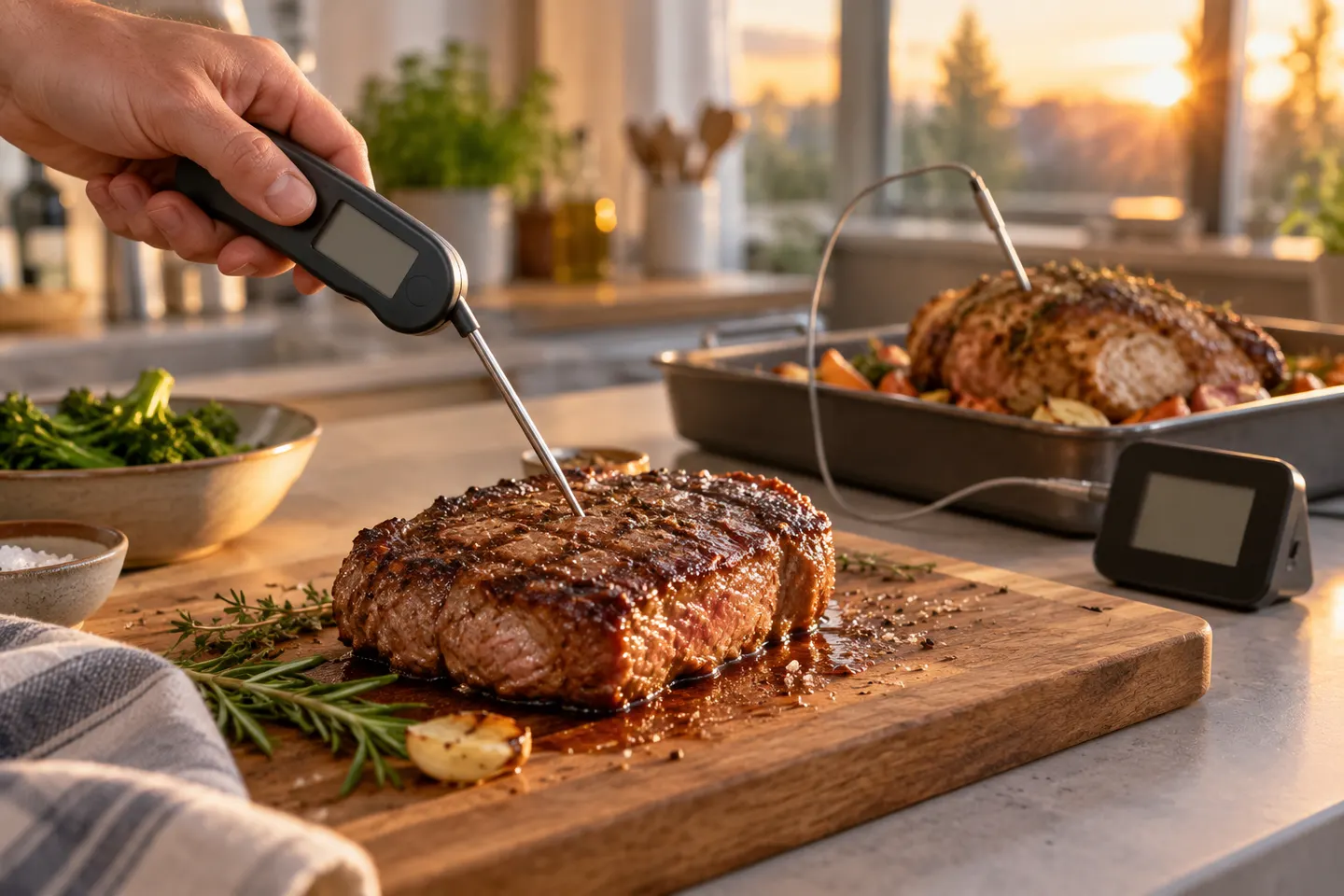
Pick an instant-read digital probe for spot checks or a leave-in model for continuous tracking. Published accuracy and probe suitability matter more than extra buttons.

An instant-read probe suits quick checks; a leave-in or wireless model tracks longer cooks. Start with the cooking method, then compare accuracy and probe limits.