Choose the right thermometer for the turkey
Use a cleaned instant-read probe for checks near the end, or an oven-rated leave-in probe for monitoring. A pop-up indicator is not a substitute for checking multiple areas.

Gearjury may earn a commission when you buy through a retailer link. Food-safety guidance comes from the cited authorities.
Guide
Check the thickest breast and the innermost thigh without touching bone. Verify more than one point and follow current Irish safety guidance before serving.
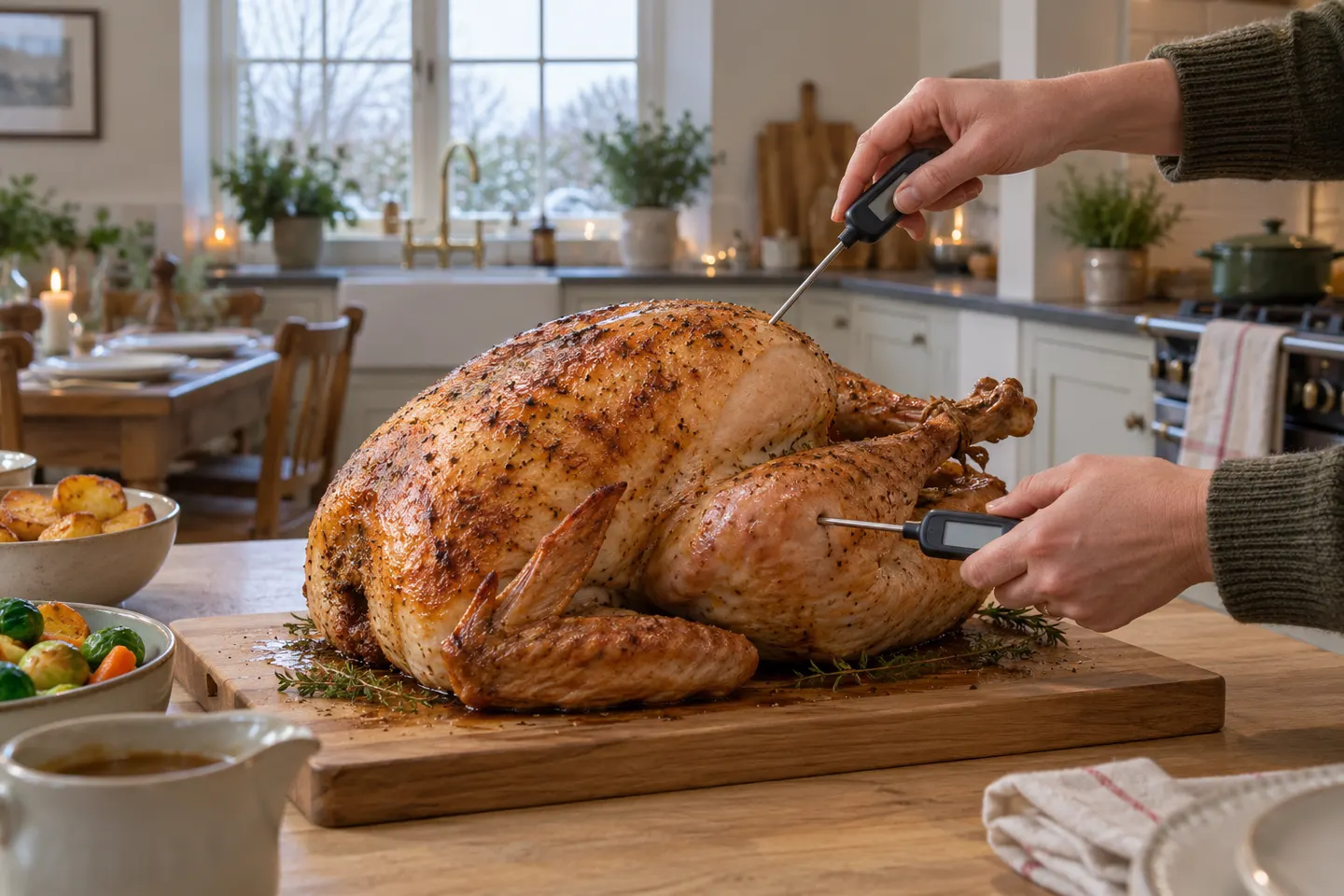
Use a cleaned instant-read probe for checks near the end, or an oven-rated leave-in probe for monitoring. A pop-up indicator is not a substitute for checking multiple areas.
Approach from the side when helpful and place the sensing zone in the deepest meat without reaching the cavity or breastbone.
Measure the thick flesh where the thigh joins the body, avoiding the joint and bone. Bone contact can produce a misleading result.
Stuffing heats unevenly and should be checked at its centre. Cooking stuffing separately makes temperature control more straightforward.
Large birds are not uniform. Sample another point in the breast and thigh, use the coolest valid reading and compare it with current food-safety advice.
Keep the instrument away from ready-to-eat food until its probe has been cleaned according to its instructions. Never return a contaminated probe to its cover.
Common questions
Check the thickest breast and the innermost thigh, keeping the sensor away from bone, the cavity and the roasting tin.
No. Bone conducts heat differently and can distort the reading you need from the meat.
Only if the model and its probe are explicitly rated for leave-in oven use. Remove an instant-read thermometer after each check.
No. A whole bird cooks unevenly, so verify the breast and thigh and check stuffing separately when present.
Keep exploring
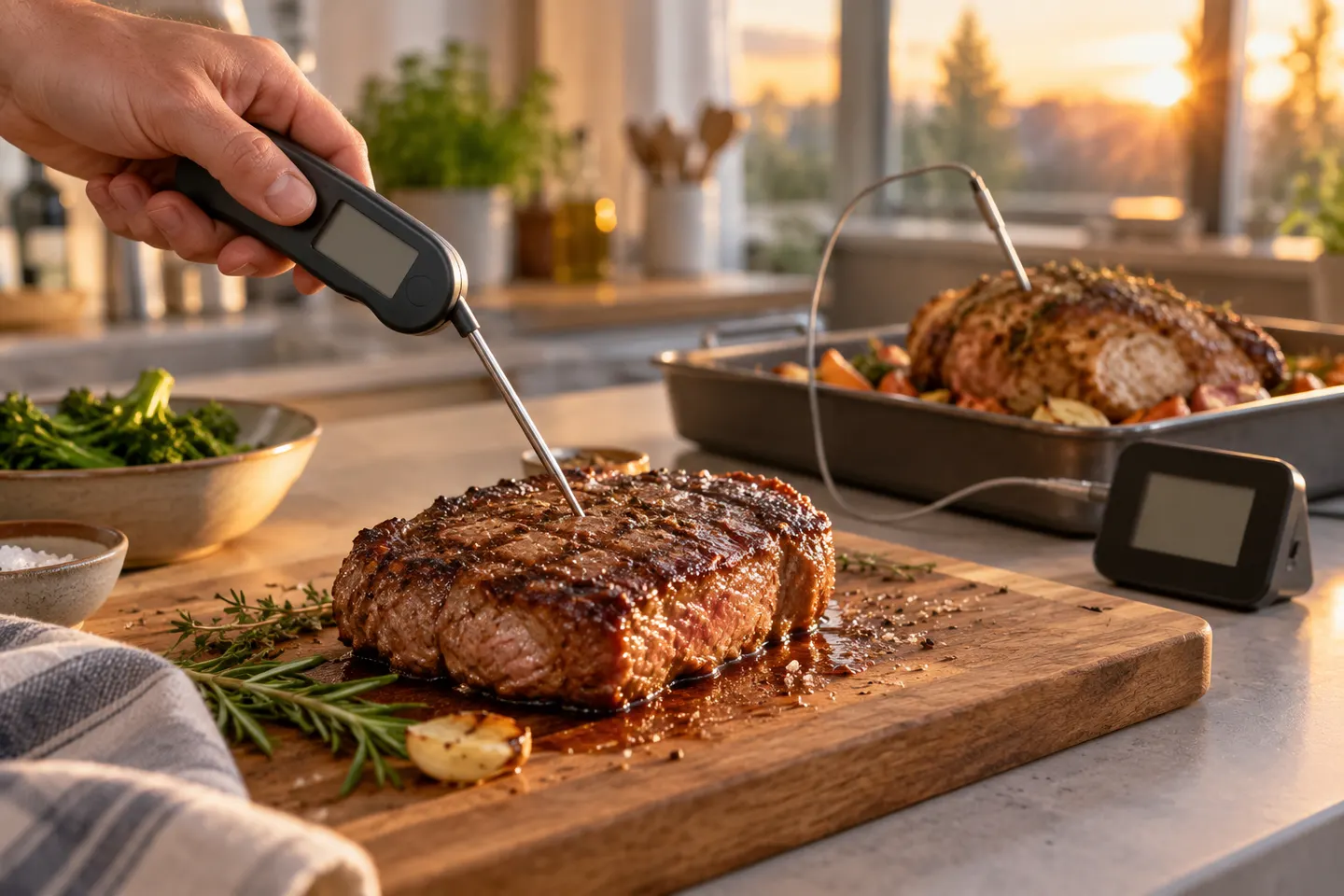
Pick an instant-read digital probe for spot checks or a leave-in model for continuous tracking. Published accuracy and probe suitability matter more than extra buttons.

Thermapen ONE is the strongest all-round instant-read choice on published speed and accuracy. Choose MEATER Pro for cable-free monitoring or Thermapen DOT for a simple oven alarm.

An instant-read probe suits quick checks; a leave-in or wireless model tracks longer cooks. Start with the cooking method, then compare accuracy and probe limits.