How does a digital meat thermometer work?
A sensor near the probe tip changes its electrical response with temperature, and the electronics convert that signal into a display reading. Check the manual to learn exactly where the sensing area sits.

Gearjury may earn a commission when you buy through a retailer link. Our guidance follows the cited sources.
Guide
Insert the clean probe into the thickest part of the food, away from bone and the cooking surface. Wait for a stable reading and check another point if the food is uneven.
A sensor near the probe tip changes its electrical response with temperature, and the electronics convert that signal into a display reading. Check the manual to learn exactly where the sensing area sits.
Wash your hands, inspect the probe and clean it as directed. Confirm the display, battery and temperature unit are behaving normally before relying on the reading.
Aim for the thickest section and avoid bone, gristle, the pan and large pockets of fat. For burgers, chops and other thin foods, insert from the side so the sensor reaches the centre.
Allow the number to settle, then check a second point in irregular or large food. Compare the coolest result with current Irish food-safety guidance rather than judging doneness by colour alone.
An instant-read model comes out after the check. Only leave a wired probe in an oven or barbecue when its cable and probe are explicitly rated for that environment.
Clean the food-contact part between uses and avoid immersing the display unless the stated protection permits it. Dry the probe and fold it or replace its cover before storage.
Common questions
Insert its sensing area into the thickest part before reading the dial. Oven-safe dial models may remain in food only when their instructions say so.
A temperature-sensitive component in the probe sends a signal that the unit converts to a numeric reading. The sensing zone varies by design.
Only a leave-in probe and cable rated for oven use should stay there. A handheld instant-read body should be removed after checking.
Check the thickest flesh, avoiding bone and the cavity. For a whole bird, verify more than one area because temperatures can differ.
Keep exploring
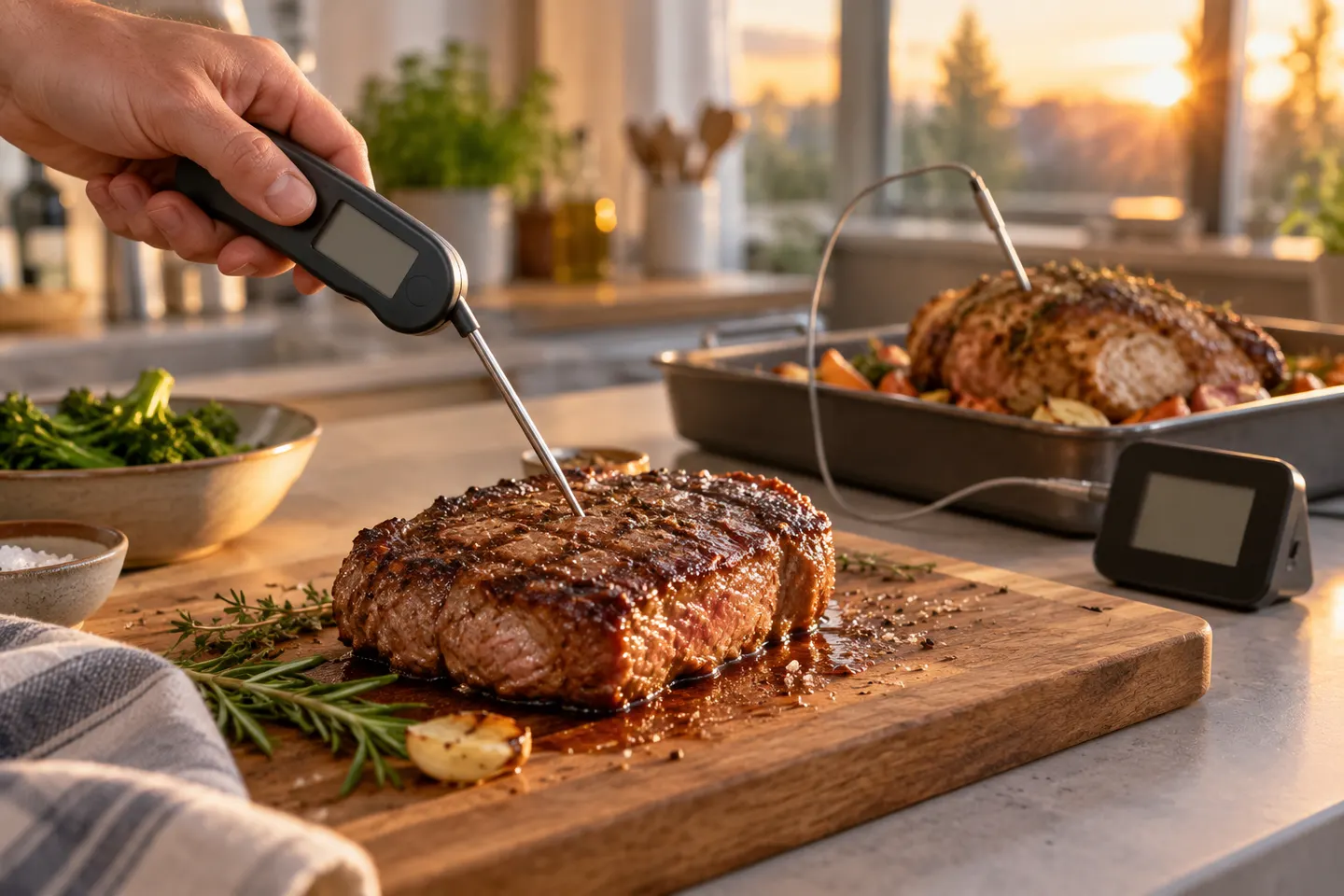
Pick an instant-read digital probe for spot checks or a leave-in model for continuous tracking. Published accuracy and probe suitability matter more than extra buttons.

Thermapen ONE is the strongest all-round instant-read choice on published speed and accuracy. Choose MEATER Pro for cable-free monitoring or Thermapen DOT for a simple oven alarm.

An instant-read probe suits quick checks; a leave-in or wireless model tracks longer cooks. Start with the cooking method, then compare accuracy and probe limits.