Confirm the temperature scale
Check whether the instrument shows Celsius or Fahrenheit before comparing it with guidance. Do not assume the larger printed numbers are the scale you need.

Gearjury may earn a commission when you buy through a retailer link. Our safety guidance follows the cited authorities.
Guide
Read the value only after the probe is correctly positioned and the display or pointer has settled. On a dial, identify the scale and view it straight on.
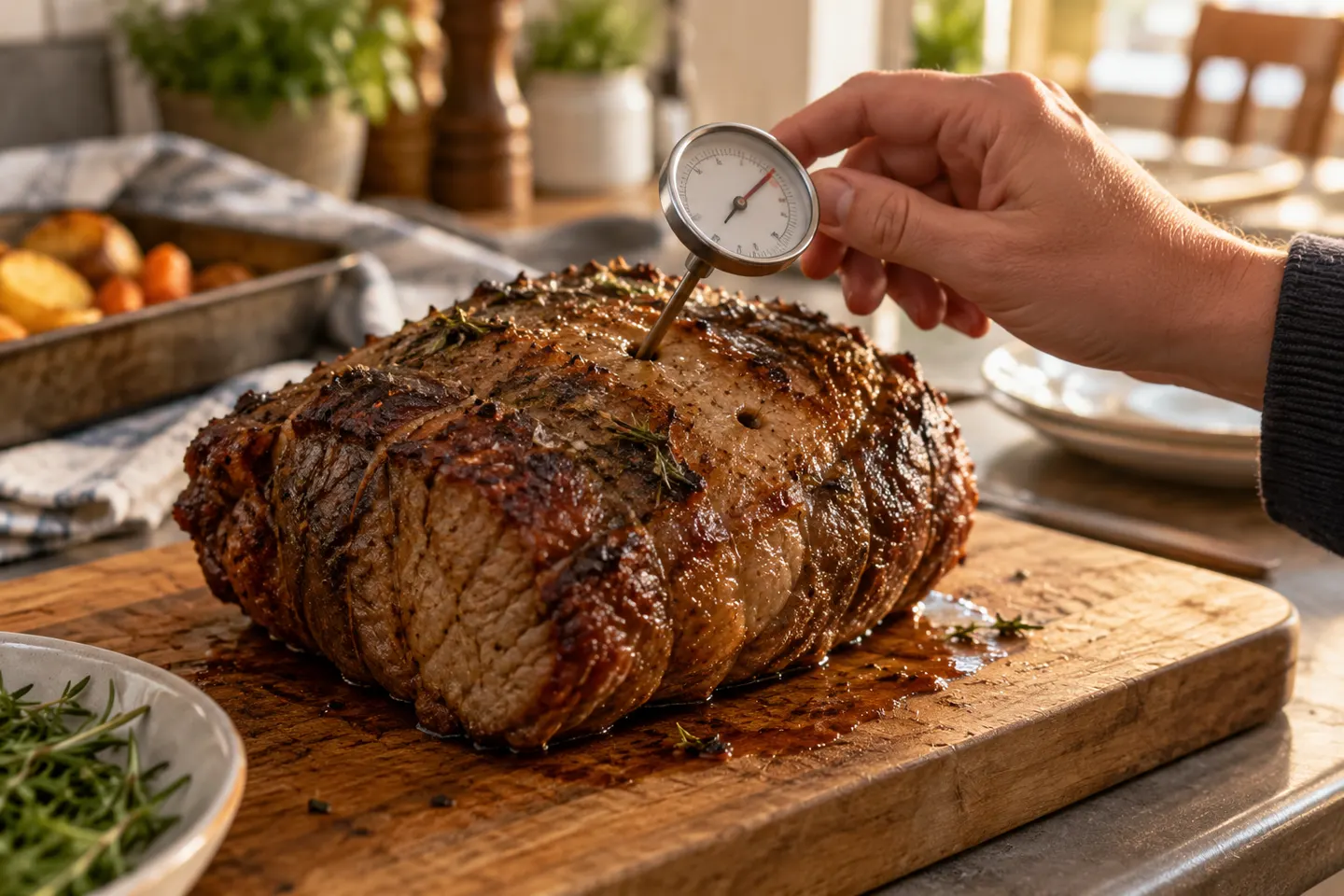
Check whether the instrument shows Celsius or Fahrenheit before comparing it with guidance. Do not assume the larger printed numbers are the scale you need.
Look straight at the pointer to avoid parallax. Count the minor divisions between labelled marks, wait until the pointer stops moving and note the value at its tip.
A digital probe often senses near its tip, while a bimetal dial may average temperature along a longer stem section. The manual or a stem mark should explain the required insertion depth.
Keep the sensing zone away from bone, large fat pockets and the pan. Insert thin foods from the side when necessary to reach their centre.
Small changes can occur while heat equalises. Hold the probe steady until it settles; a rapid large change often means the tip moved into a different part of the food.
GoodCook sells more than one thermometer format. Read the model's scale, insertion and oven-use instructions rather than applying one method to the whole brand.
Common questions
Identify the scale, count the small divisions and view the pointer straight on after it stabilises. Make sure the sensing section is fully inside the food.
They are commonly Celsius and Fahrenheit scales. Confirm their labels before using a target temperature.
The probe may still be responding or may be crossing warmer and cooler areas. Hold it steady, then check a second location.
Identify the exact GoodCook model and follow its scale and insertion instructions. Dial, instant-read and leave-in designs do not share one reading method.
Keep exploring
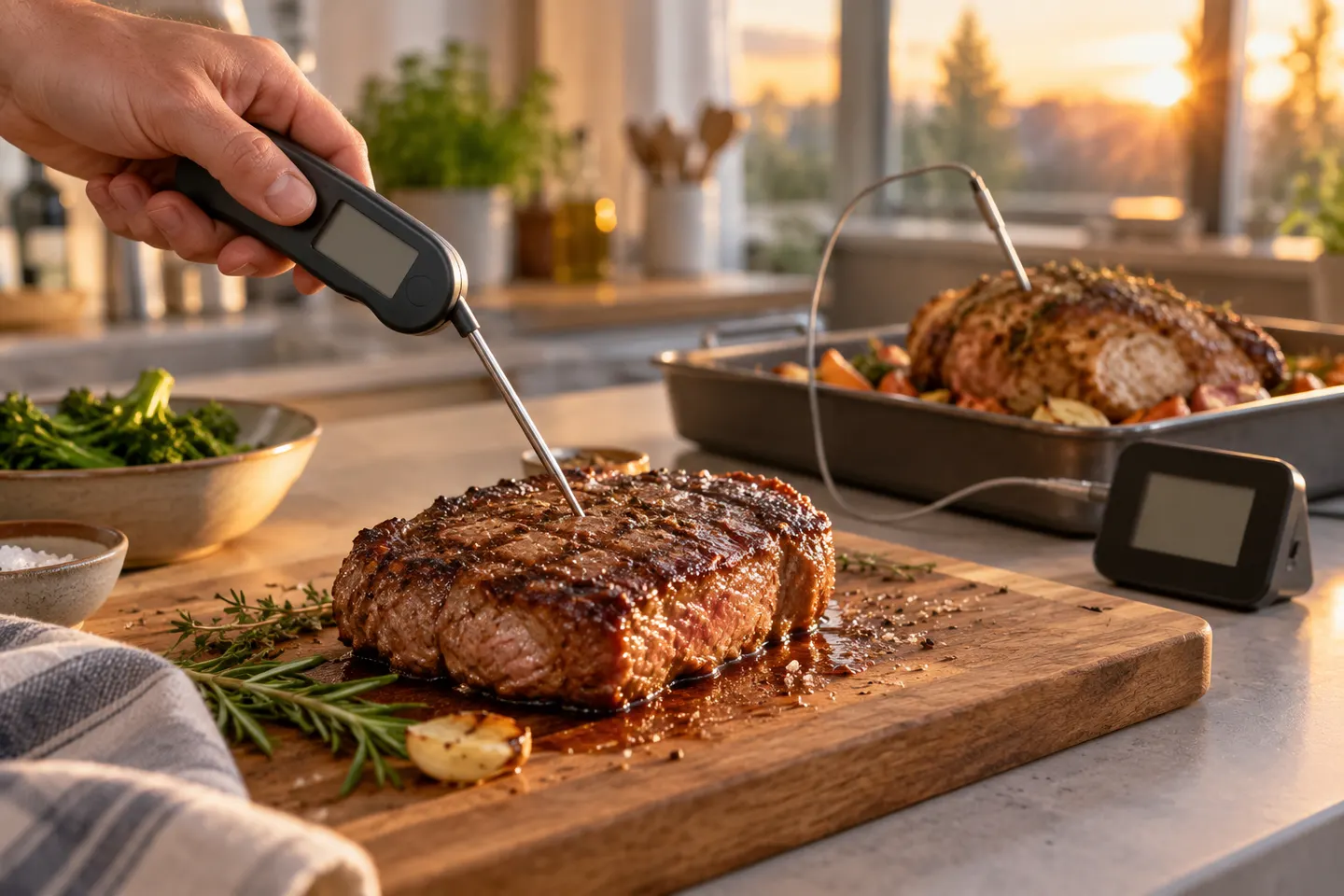
Pick an instant-read digital probe for spot checks or a leave-in model for continuous tracking. Published accuracy and probe suitability matter more than extra buttons.

Thermapen ONE is the strongest all-round instant-read choice on published speed and accuracy. Choose MEATER Pro for cable-free monitoring or Thermapen DOT for a simple oven alarm.

An instant-read probe suits quick checks; a leave-in or wireless model tracks longer cooks. Start with the cooking method, then compare accuracy and probe limits.