Check whether the thermometer is adjustable
Read the exact model manual. Calibration may use a nut, a button sequence or an offset in an app; some domestic thermometers can only be checked, not adjusted.

Gearjury may earn a commission when you buy through a retailer link. Editorial guidance follows the cited sources.
Guide
Make a dense ice-and-water slurry, place the sensing area in the centre without touching the glass and wait for a stable reading. Adjust only if the manual provides a calibration control.
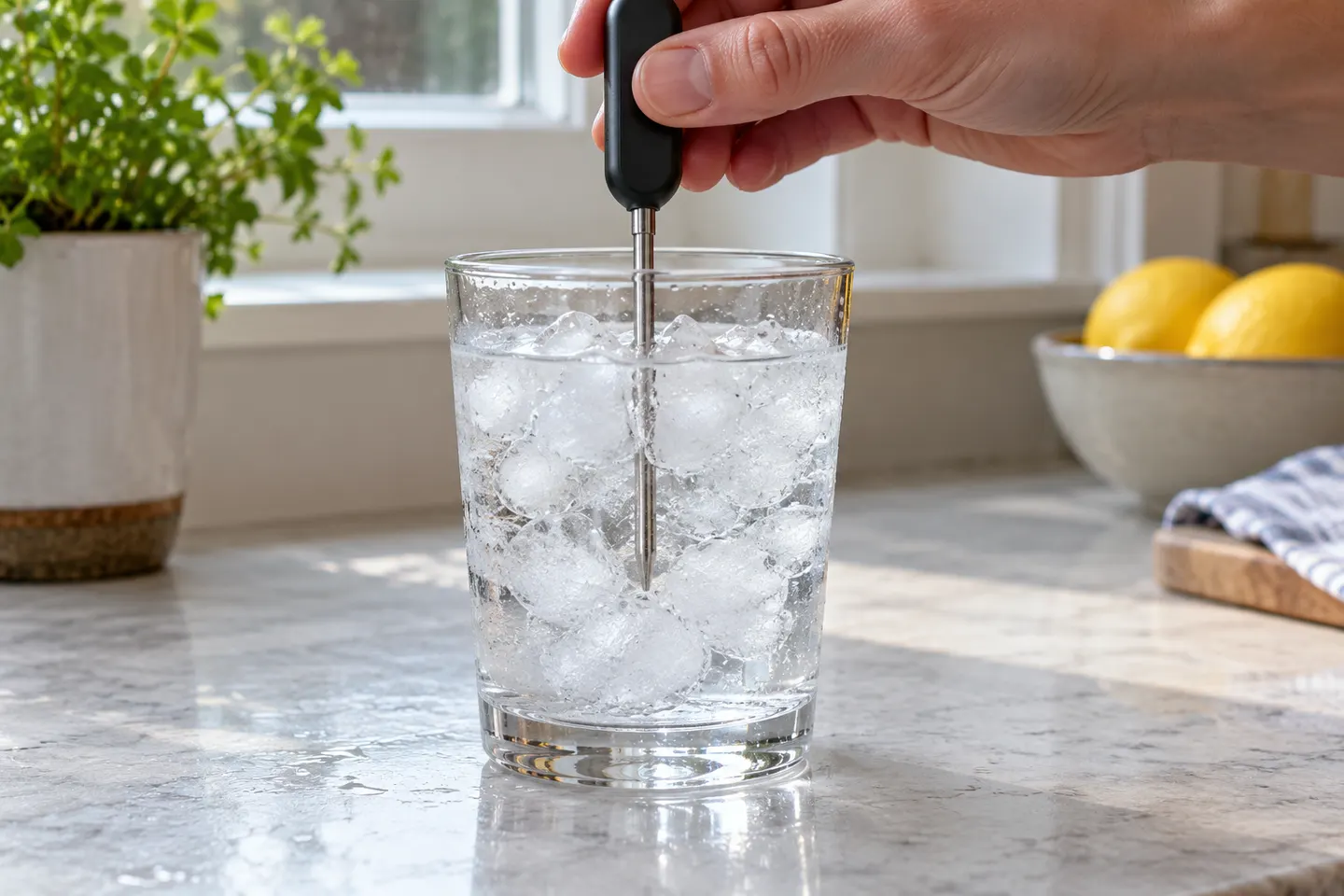
Read the exact model manual. Calibration may use a nut, a button sequence or an offset in an app; some domestic thermometers can only be checked, not adjusted.
Fill a vessel with crushed ice, add enough clean water to fill the gaps and stir. The aim is an ice-water equilibrium, not a glass of cold water with a few floating cubes.
Immerse the sensing section without touching the base or sides. Keep electronics and non-waterproof joints dry, stir gently and allow the display to settle.
At ordinary atmospheric pressure, a well-made ice bath should be close to 0°C. Repeat the setup if the reading seems implausible before changing an offset.
Turn the calibration nut or enter the offset exactly as the manufacturer directs. Do not force a dial, open a sealed body or invent a correction that the instrument cannot store safely.
For food-service use, record the result under your food-safety procedure. Replace or service a probe that is damaged, unstable or outside the tolerance required for its job.
Common questions
Use a tightly packed ice-and-water slurry, keep the sensing area away from the container and wait for stability. Adjust towards 0°C only by the model's approved method.
Follow your manufacturer and food-safety plan. Recheck after a drop, temperature shock, repair, battery change where relevant, or any suspicious reading.
No. Some allow a stored offset, while others can only be accuracy-checked and then serviced or replaced if they fail.
Only with suitable equipment and a corrected local boiling point, which changes with atmospheric pressure and altitude. An ice bath is usually simpler for a routine check.
Keep exploring
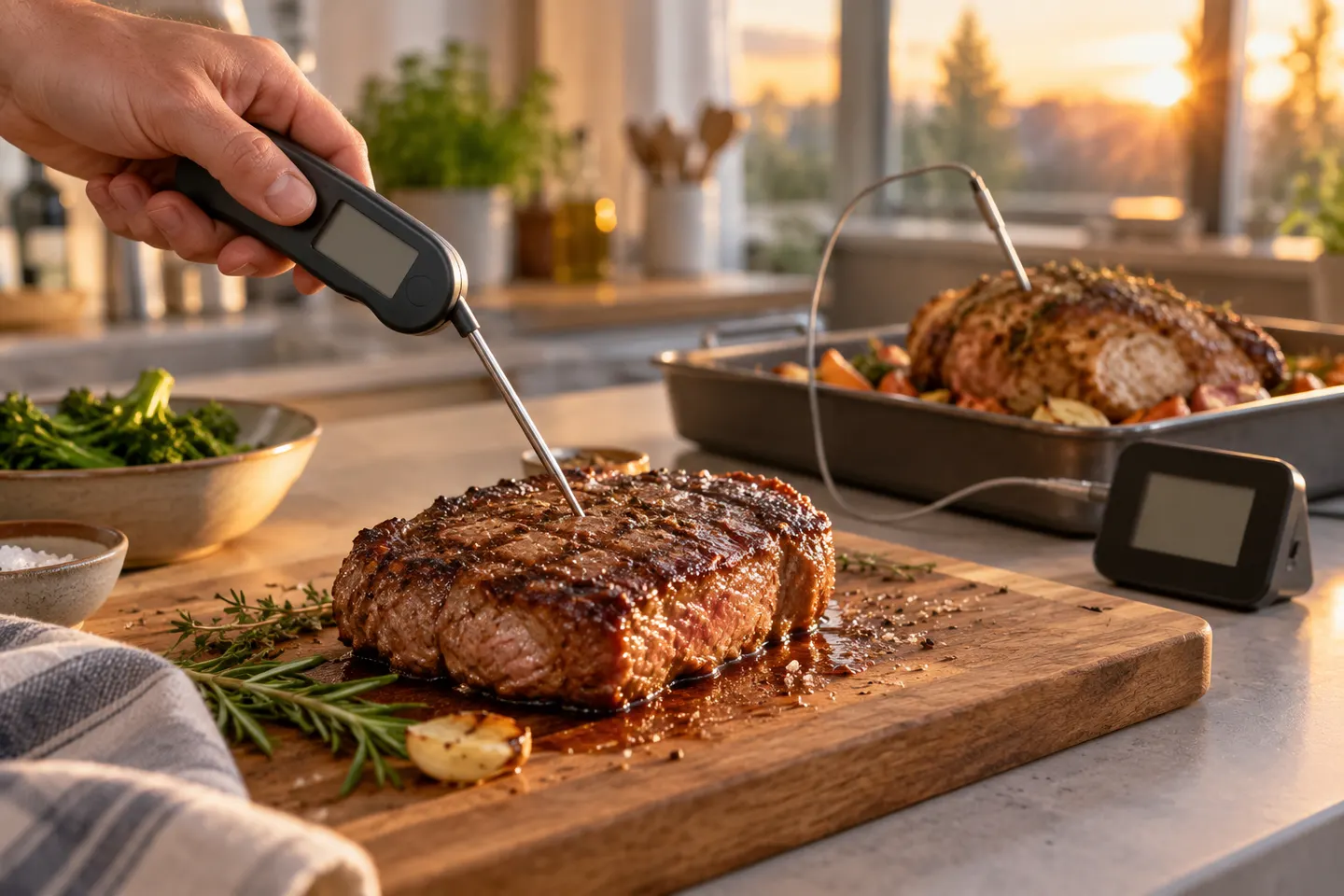
Pick a folding digital thermometer for rapid checks or a leave-in digital probe for alarms during a roast. Accuracy and sensing-tip placement matter more than extra presets.

Thermapen ONE is our top all-round pick for fast spot checks. ThermoPro TP19H is the simpler alternative, while DOT and MEATER Pro suit cooks who need continuous monitoring.

An instant-read thermometer suits quick checks; a leave-in or wireless probe is better for tracking a roast without repeatedly opening the oven.