



 Official manufacturer image
Our picks
Top picks
Official manufacturer image Official manufacturer image
Garmin Dash Cam Mini 3
Check price on Amazon Official manufacturer image
Garmin Dash Cam X310
Check price on AmazonBy feature
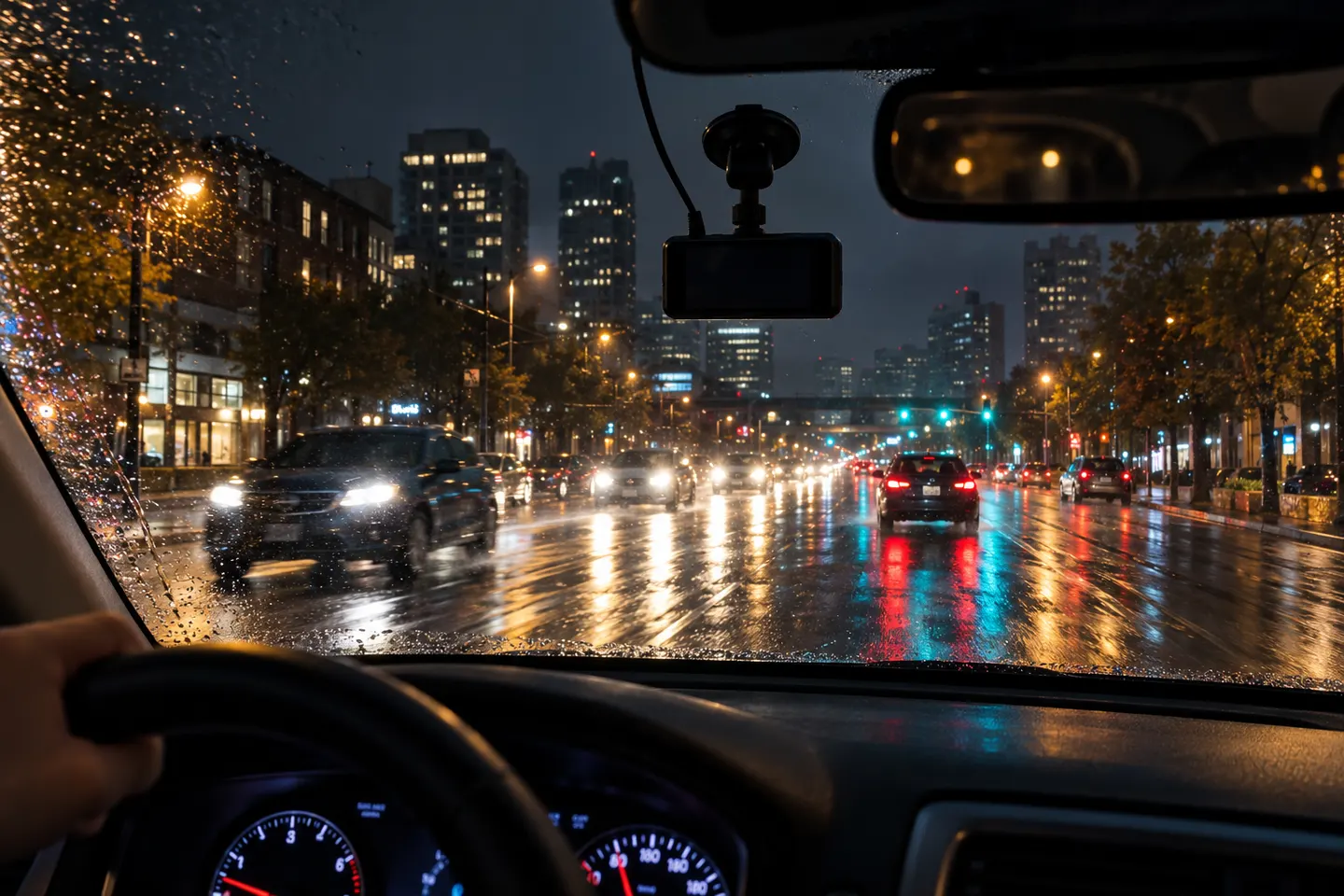 Night
NightCommon questions
Questions before you buy
Do dash cams have true night vision?
Some use sensitive imaging sensors and HDR for low-light road recording; cabin cameras may add infrared emitters. These are different approaches, so check which one the model actually uses.
Can a night vision car camera read license plates in the dark?
No camera can guarantee it. Distance, motion, headlight glare, angle, exposure and plate reflectivity all affect whether characters are readable.
Is infrared useful on a front dash cam?
Infrared is generally more useful inside the cabin. Through a windshield it can reflect from glass and does not illuminate distant road subjects effectively.
Does 4K automatically improve nighttime dash-cam video?
No. Resolution can preserve detail, but sensor size, exposure, lens quality and processing strongly affect low-light results.
Should I use a polarizing filter at night?
A polarizer may reduce dashboard reflections but also reduces incoming light. Compare footage with and without it in your own windshield and lighting conditions.