Gearjury may earn a commission when you buy through qualifying links, at no extra cost to you.
Best picks
Best Infrared Meat Thermometer for Surface and Internal Checks
The TempPro TempScan PLUS TP420 is our top pick because it checks cooking surfaces by infrared and meat interiors with its fold-out probe. ThermoWorks Thermapen IR is the stronger premium alternative, while dedicated infrared guns suit griddles, pizza stones, and food holding checks.
GGearjury editorial team · Updated October 15, 2026· 8 min
Quick answer
The best infrared meat thermometer for most cooks is the TempPro TempScan PLUS TP420: its infrared sensor maps hot cooking surfaces, then its probe checks internal doneness. Choose the ThermoWorks Thermapen IR for a calibration certificate and tighter probe accuracy, the ThermoWorks IRFS for straightforward food-surface scans, or the CDN IN1022 when wide-area targeting and programmable alerts matter. Infrared alone cannot confirm the center of meat is safely cooked.
Can an infrared thermometer check whether meat is done?
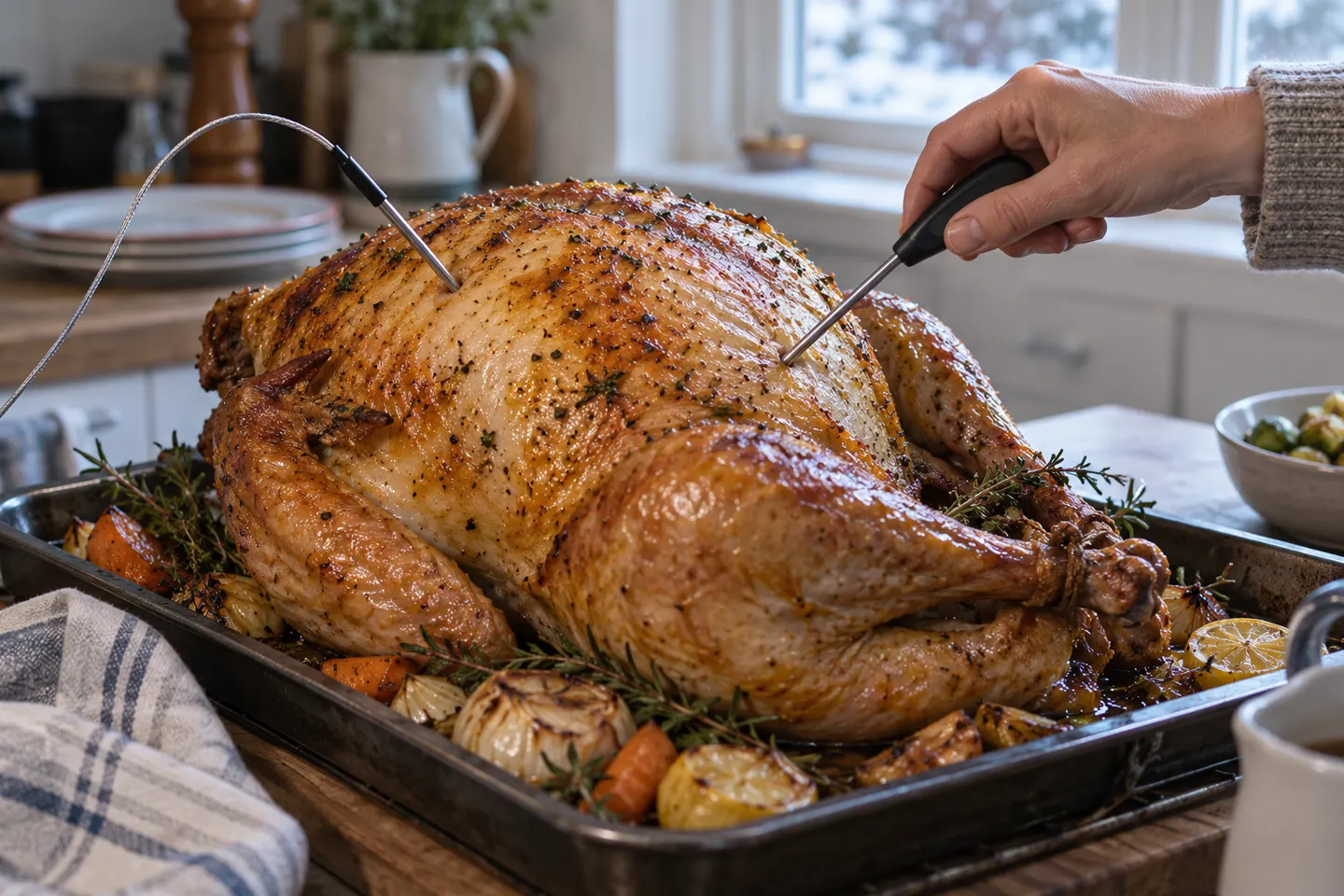
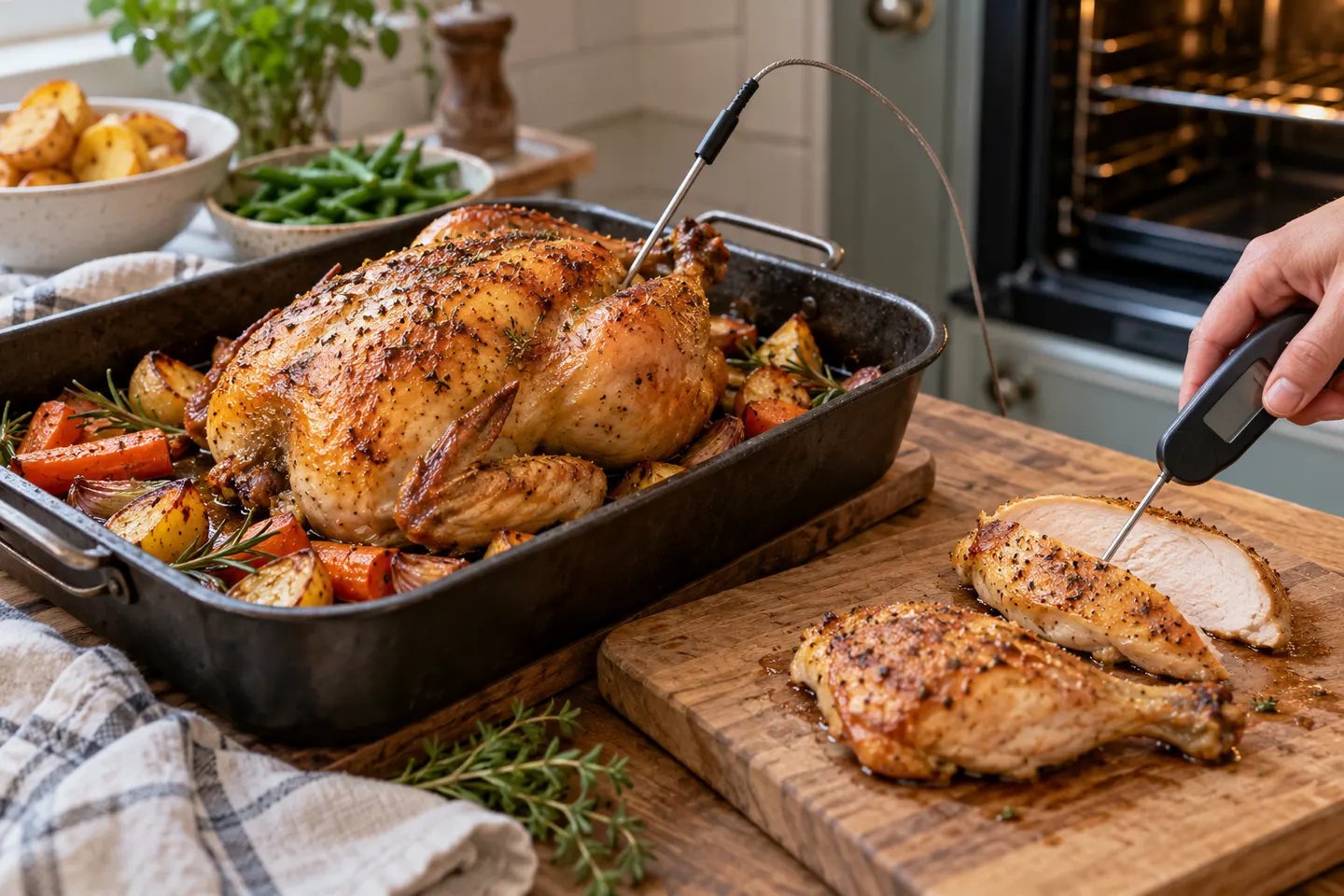
Not by itself. An infrared thermometer reads the surface, while safe doneness depends on the temperature at the center of the meat. Use a penetration probe in the thickest part, away from bone, fat, and gristle.
What is the best infrared food thermometer for cooking?
For most cooks, a combination model such as the TempPro TempScan PLUS TP420 is the most useful because it scans the cooking surface and probes the food interior. If you only need food-surface screening, the ThermoWorks IRFS has food-oriented fixed emissivity and simple controls.
Where should I aim an infrared cooking thermometer?
Aim at a matte, unobstructed section of the pan, griddle, pizza stone, or food surface. Move close enough that the measured spot is smaller than the target, and remember that the laser marks the aim rather than measuring temperature itself.
Why do infrared thermometer readings change on shiny cookware?
Polished metal reflects surrounding infrared energy and can produce misleading readings. Adjustable emissivity can help on some surfaces, but a matte section or manufacturer-recommended measuring method is more dependable.
Is a wider infrared temperature range always better for cooking?
No. Useful optics, suitable emissivity, and accuracy around normal cooking temperatures matter more than an extreme maximum. A wide range is helpful for pizza ovens and high-heat grills, but it does not make a surface-only gun suitable for checking meat interiors.
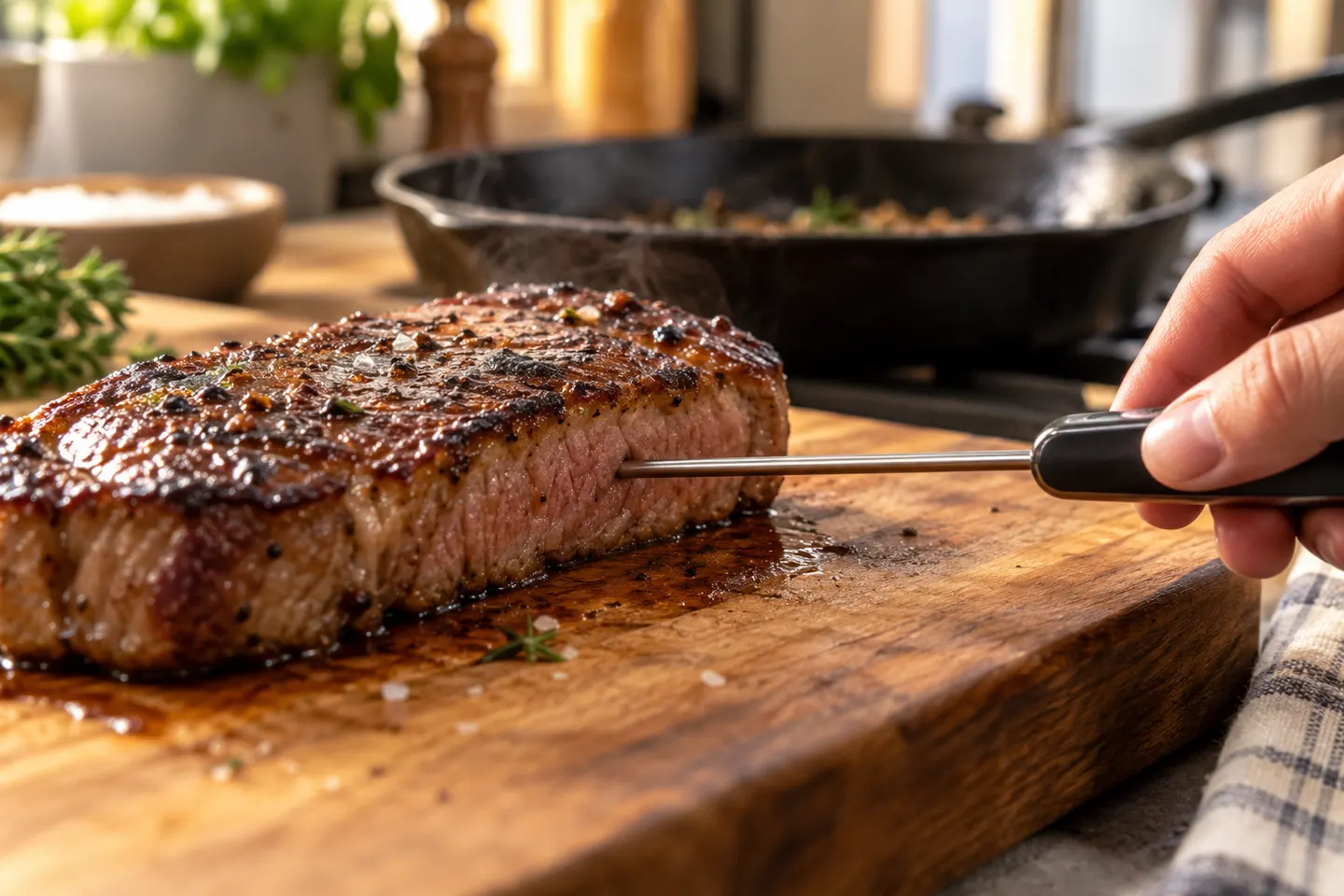
A fast instant-read probe is the most practical choice for steaks; insert it from the side into the center.
Your privacy
We use cookies and similar technologies. Necessary ones keep the site working. With your permission we also use statistics cookies (Google Analytics and Microsoft Clarity) to understand which guides help readers. You can accept all, reject all or choose. You can change your choice at any time from "Cookie settings" at the bottom of every page. Cookie policy




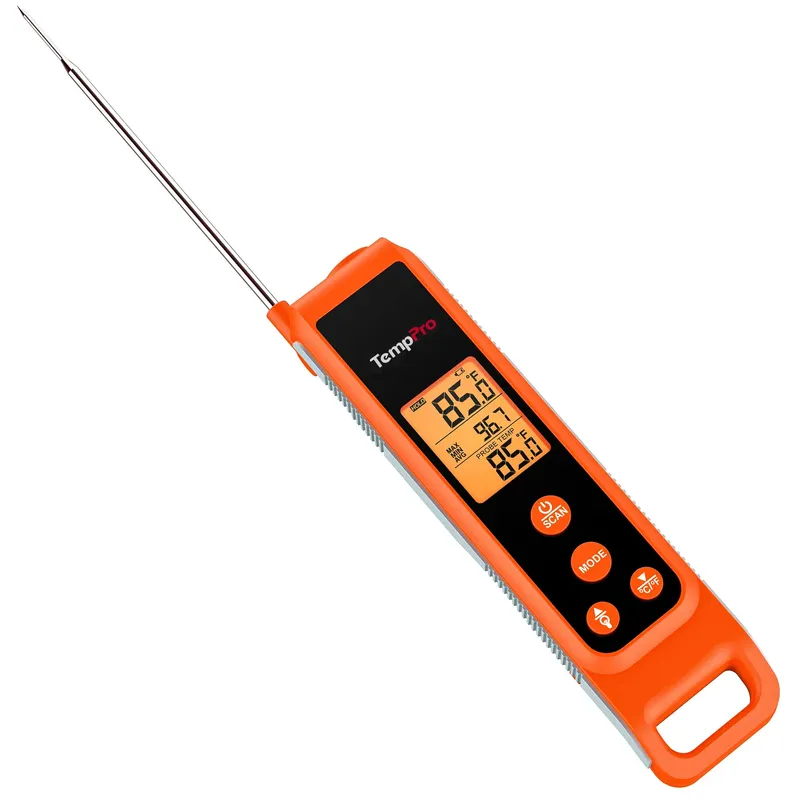 Official manufacturer image
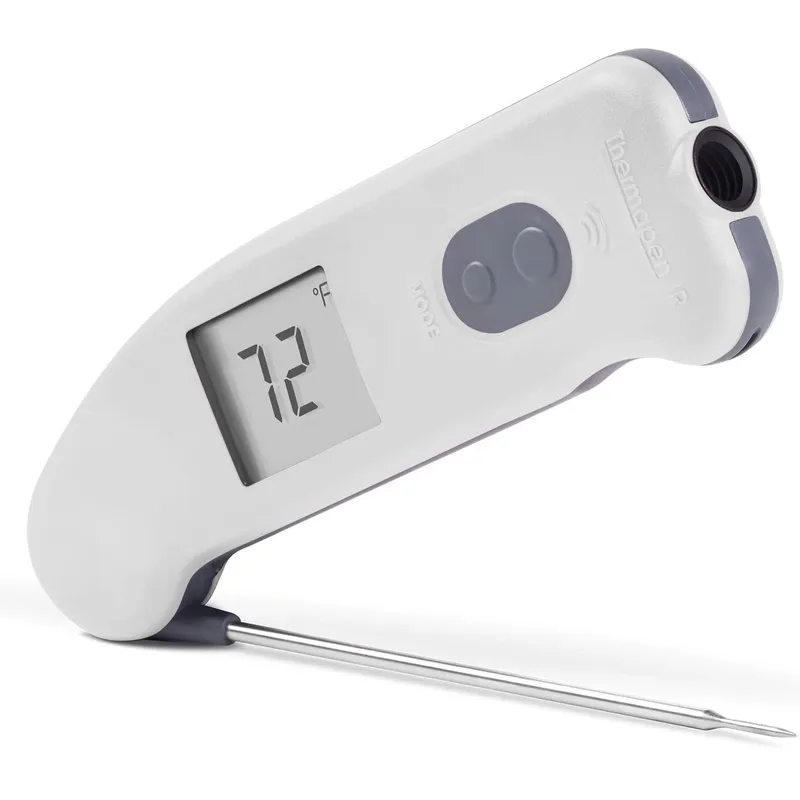 Official manufacturer image
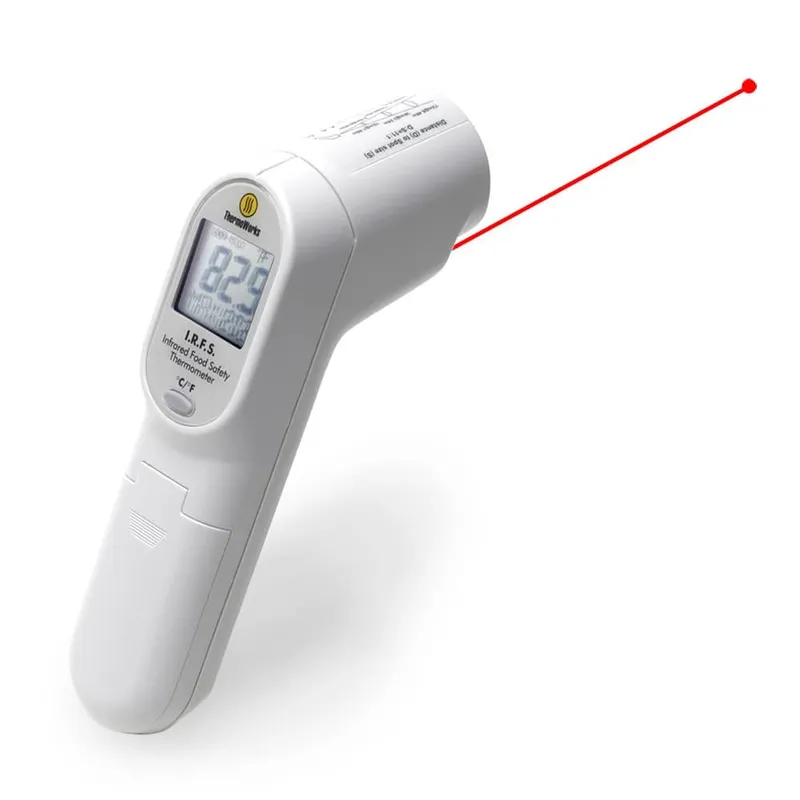 Official manufacturer image
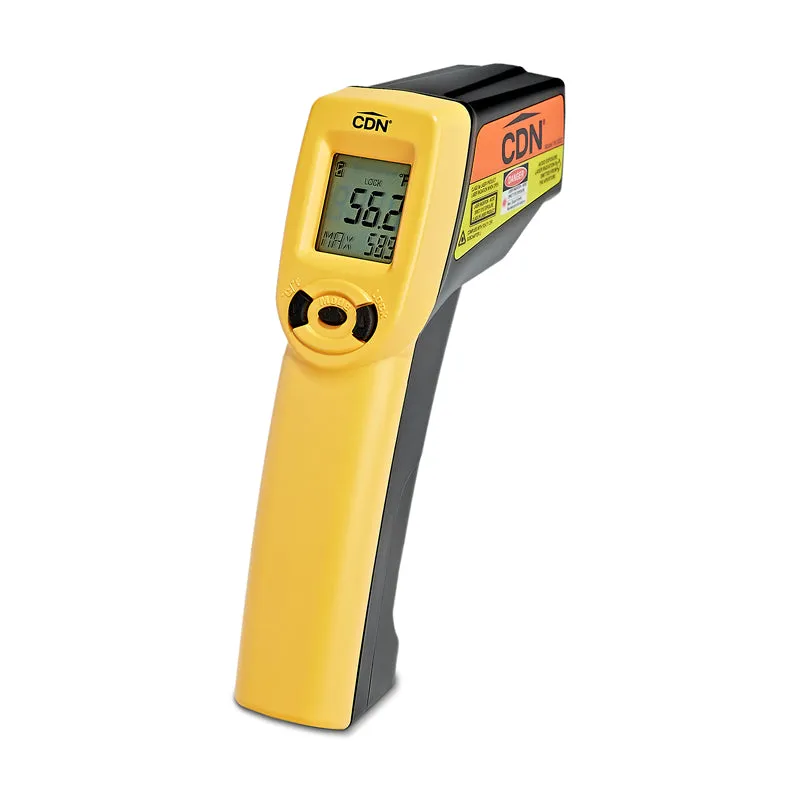 Official manufacturer image
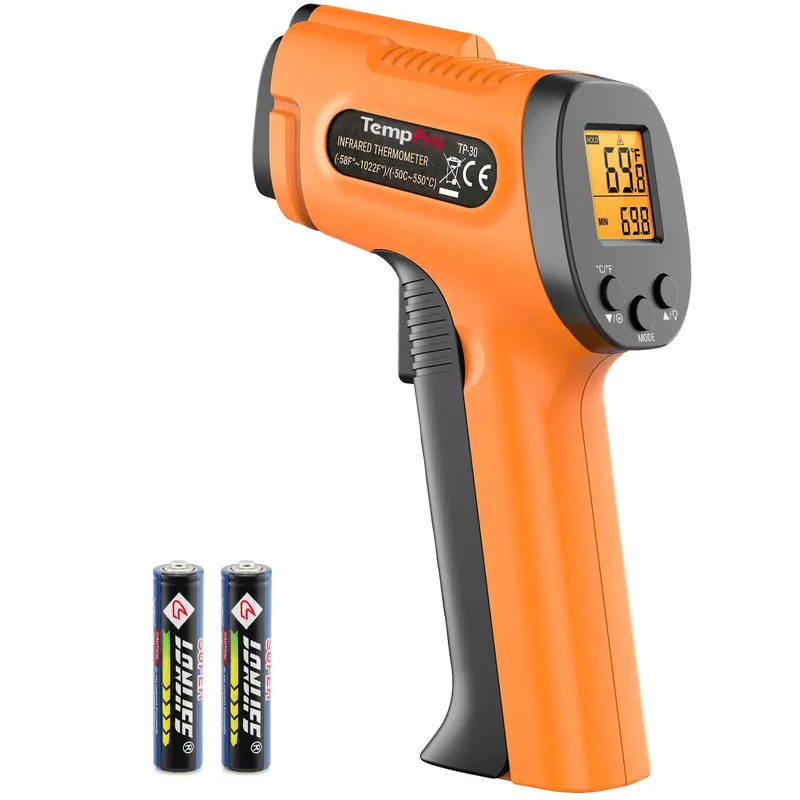 Official manufacturer image