



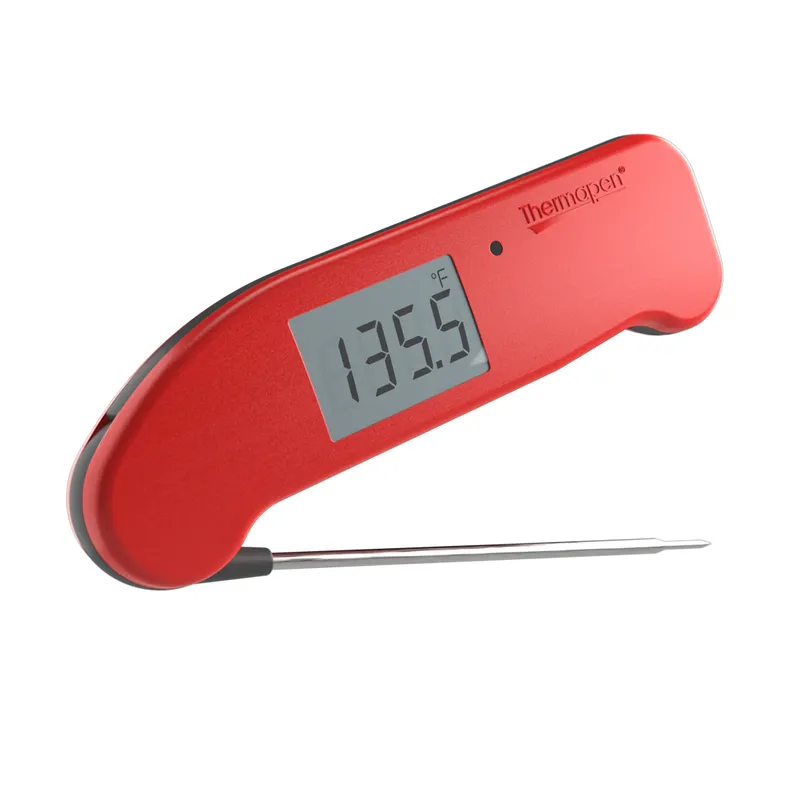
 Official manufacturer image
Our picks
Top picks
Official manufacturer image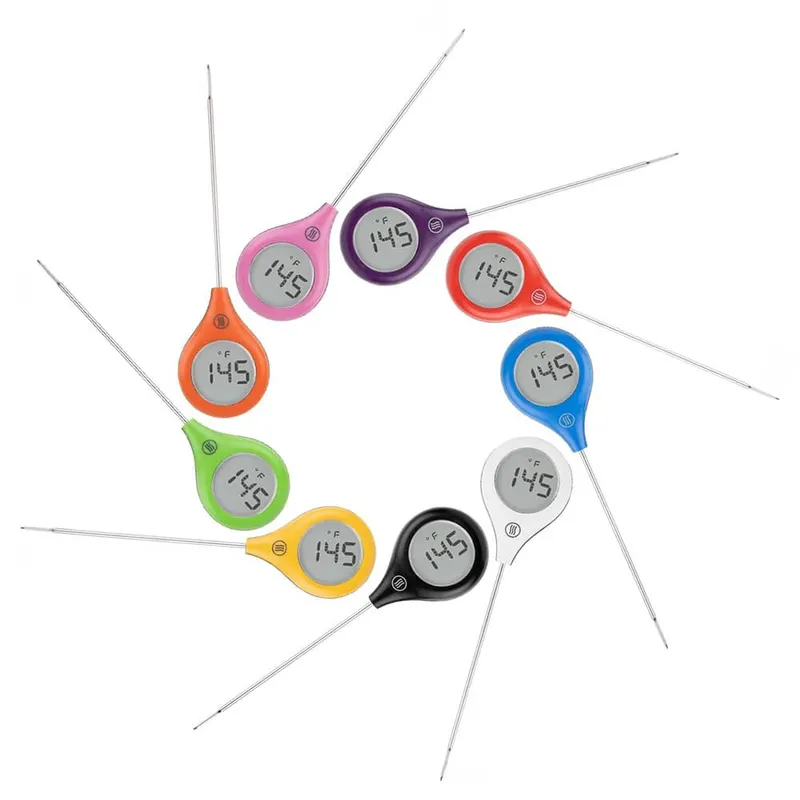 Official manufacturer image
ThermoWorks ThermoPop 2
Check price on Amazon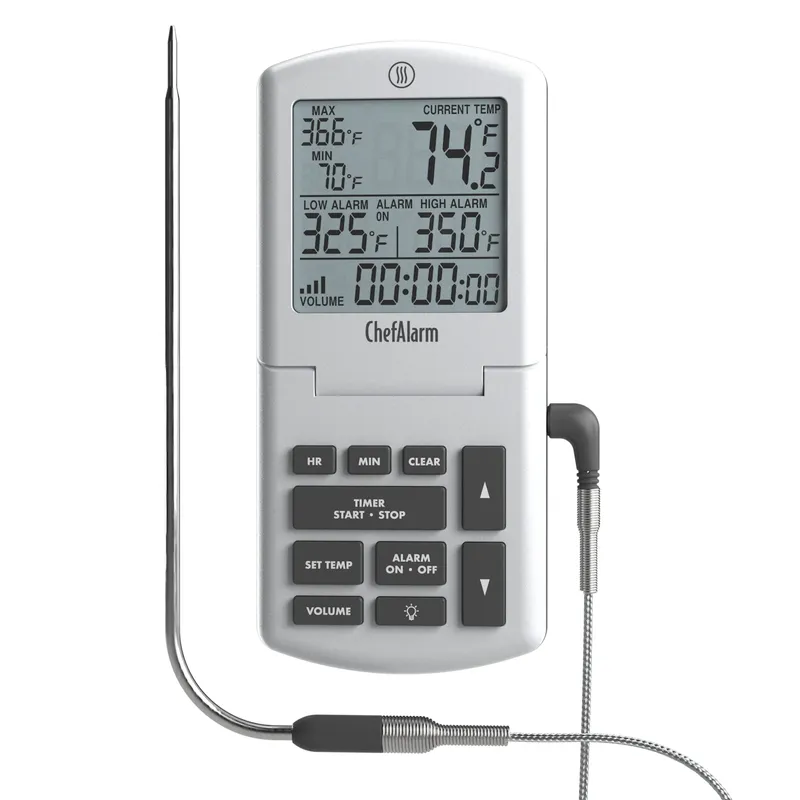 Official manufacturer image
ThermoWorks ChefAlarm
Check price on AmazonCommon questions
Questions before you buy
How far should a dial meat thermometer go into the food?
Insert the full sensing area, often marked by a dimple. USDA guidance says many bimetal dial stems require about two to three inches, but the model instructions take priority.
Can a dial meat thermometer stay in the oven?
Only an oven-safe model can stay in during cooking. Instant-read dial thermometers should be removed after the needle settles.
Why is a dial thermometer awkward for thin meat?
Its sensing coil may extend along a large part of the stem. If that area cannot fit entirely in the center, the reading may average hotter and cooler zones.
How do I calibrate a meat dial thermometer?
Use the ice-water or boiling-water method described by the manufacturer. If the dial has an adjustment nut, follow its directions; not every model is adjustable.
How long should I wait for the reading?
Wait until the needle stops moving. Mechanical dial models generally respond more slowly than fine-tip digital thermometers.