


How does a meat thermometer sense heat?
The sensing element changes electrically or mechanically as its temperature changes. The instrument converts that change into a digital reading or moves a dial.

Gearjury may earn a commission when you buy through a retailer link.
Guide
A meat thermometer converts heat at its sensing area into a readable temperature. Correct placement matters because food does not heat evenly.
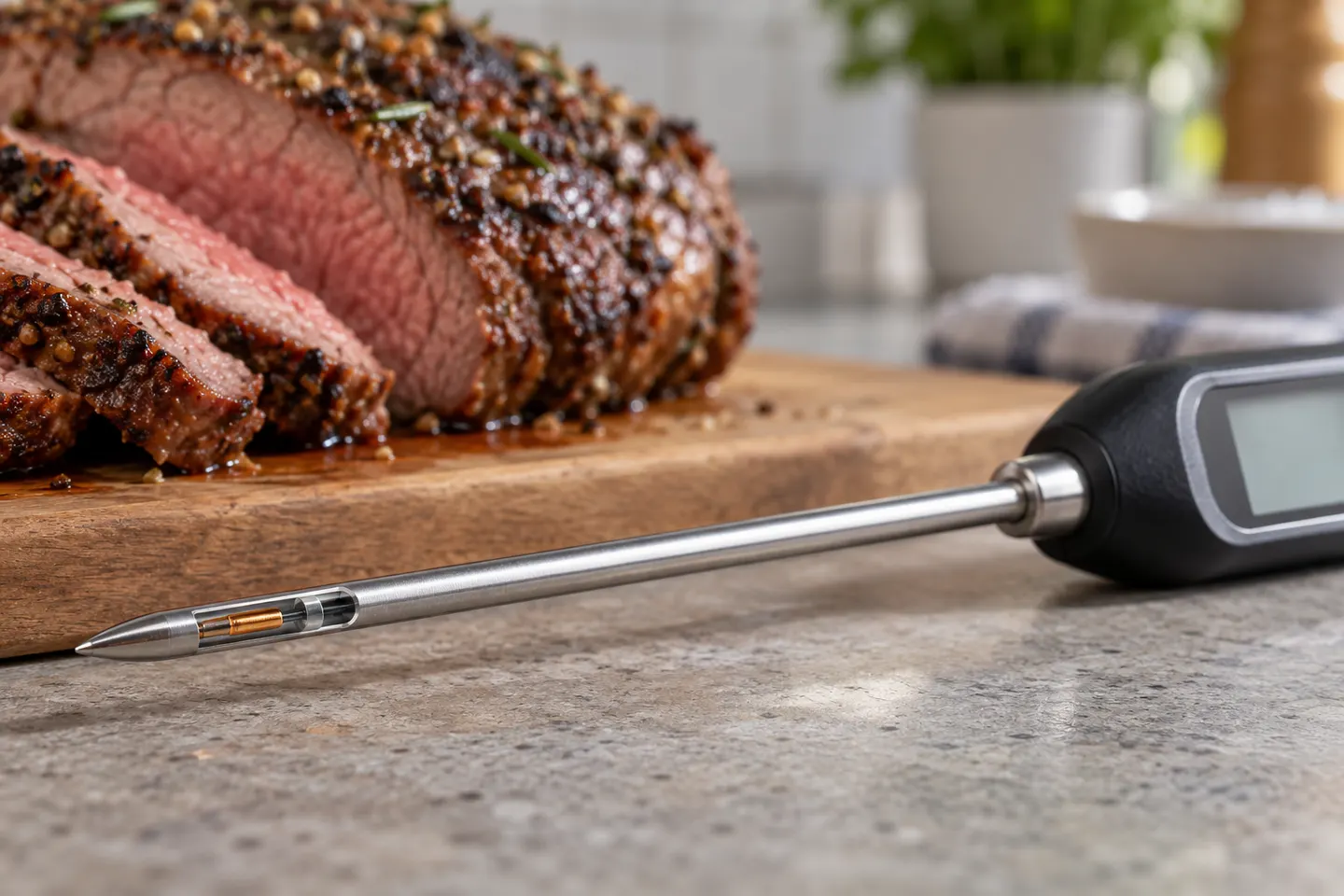
The sensing element changes electrically or mechanically as its temperature changes. The instrument converts that change into a digital reading or moves a dial.
A thermocouple often senses near its tip, while some thermistor and dial probes measure over a longer section. Follow the maker's insertion guidance so the whole sensing area reaches the food's center.
Insert from the side when that makes it easier to center the sensor in a thin food. Avoid bone, gristle and the pan, then check another location because temperature varies within the food.
An instant-read food thermometer is used for spot checks. An oven-safe or wired cooking thermometer can remain in place only when its instructions and temperature limits permit it.
Wait for the reading to stabilize, compare it with the applicable safe-temperature guidance, and clean the probe after each use according to its instructions.
Common questions
A food thermometer may display a number, but it is not a substitute for a medical thermometer. Its range, sensing location, hygiene and validation are intended for food.
Do not rely on one for health decisions. Use a thermometer labeled for body temperature and follow medical guidance.
Its probe contains an electronic sensor whose response changes with temperature; circuitry converts that response into the number on the display.
The center and edges can be at different temperatures. Measuring the thickest or coldest likely area helps you judge whether the whole portion has reached the target.
Keep exploring
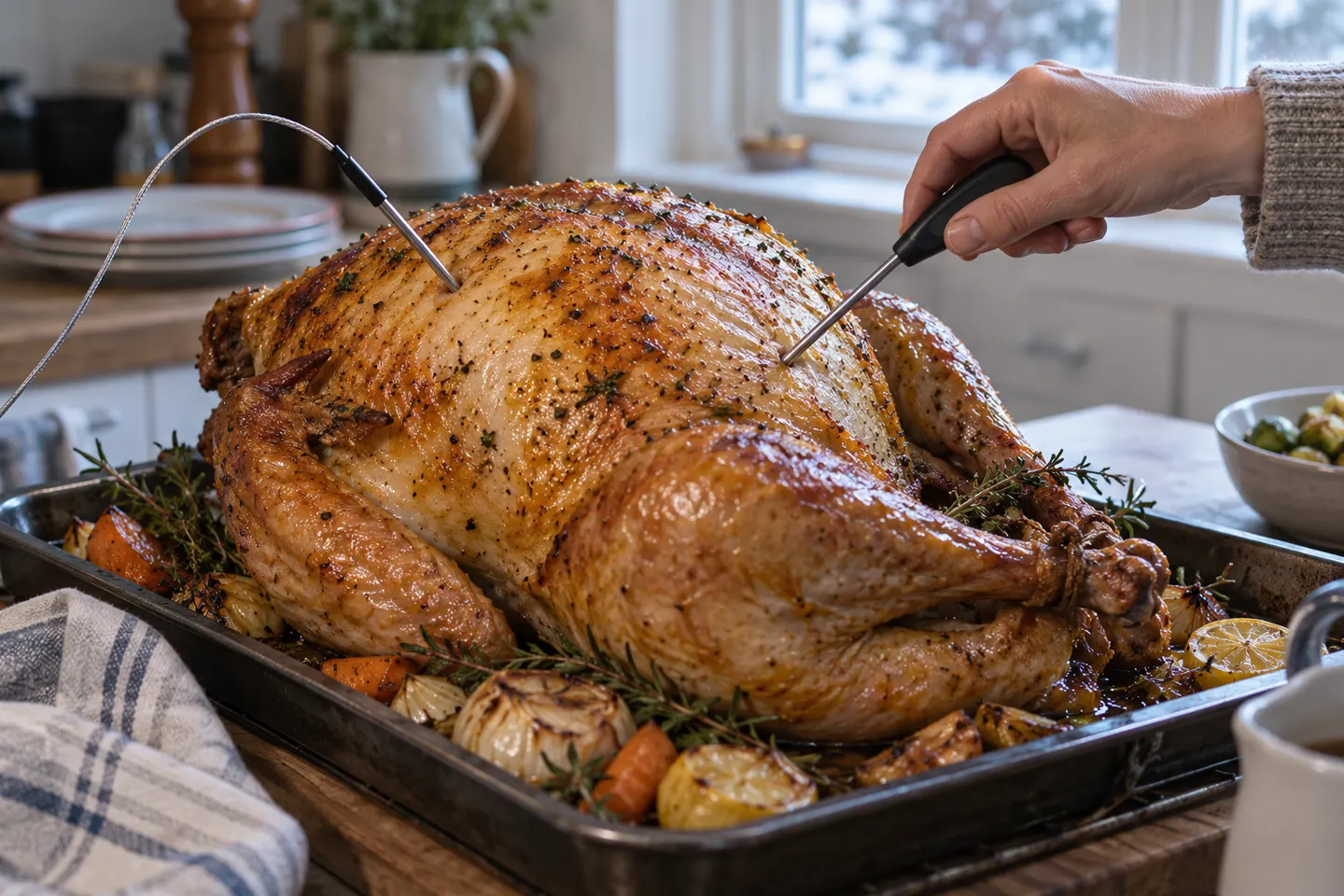
Use a leave-in probe to track the cook and an instant-read model to check more than one spot before serving.
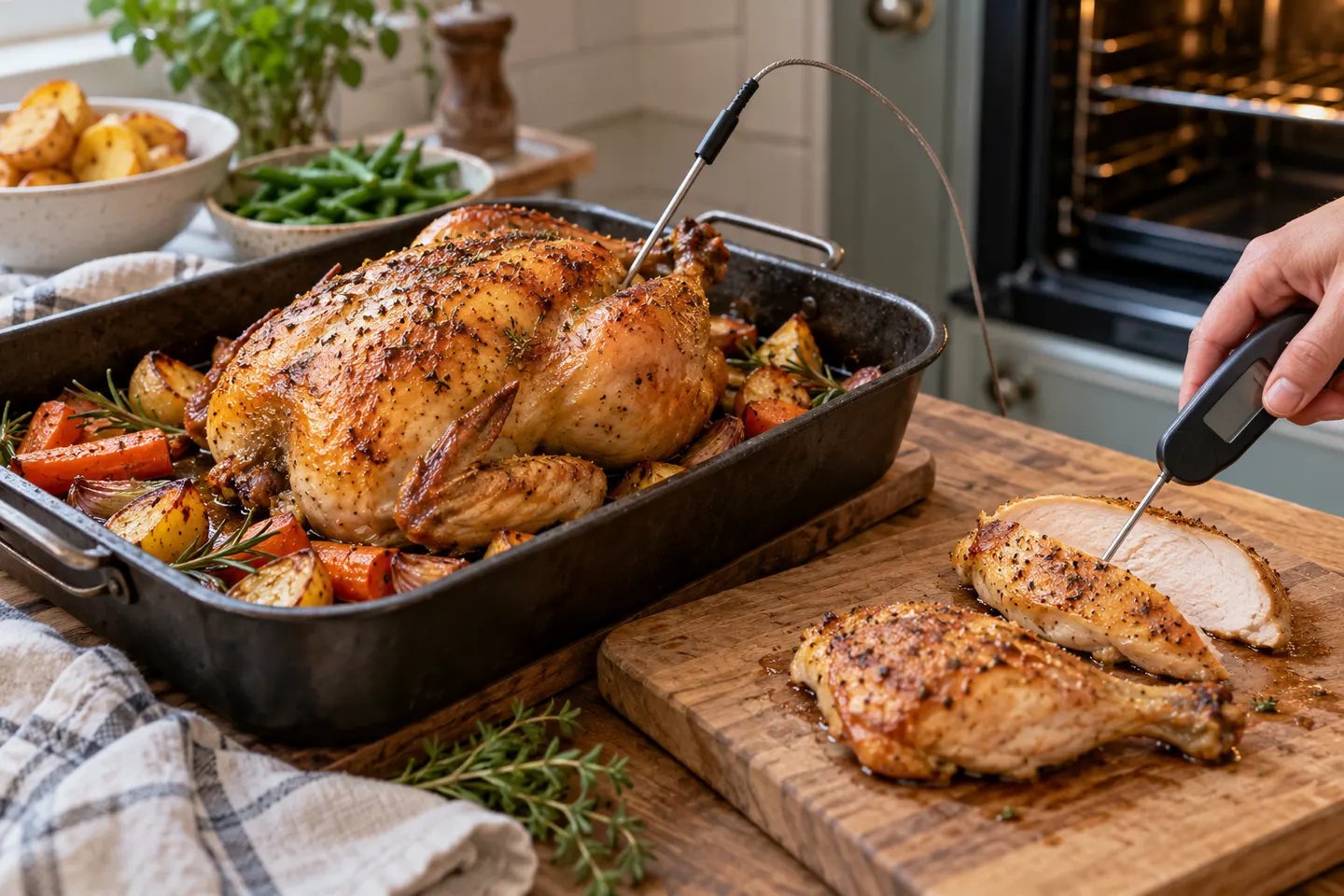
A fast, thin probe works well for portions; a heat-safe leave-in probe makes a whole roast easier to monitor.
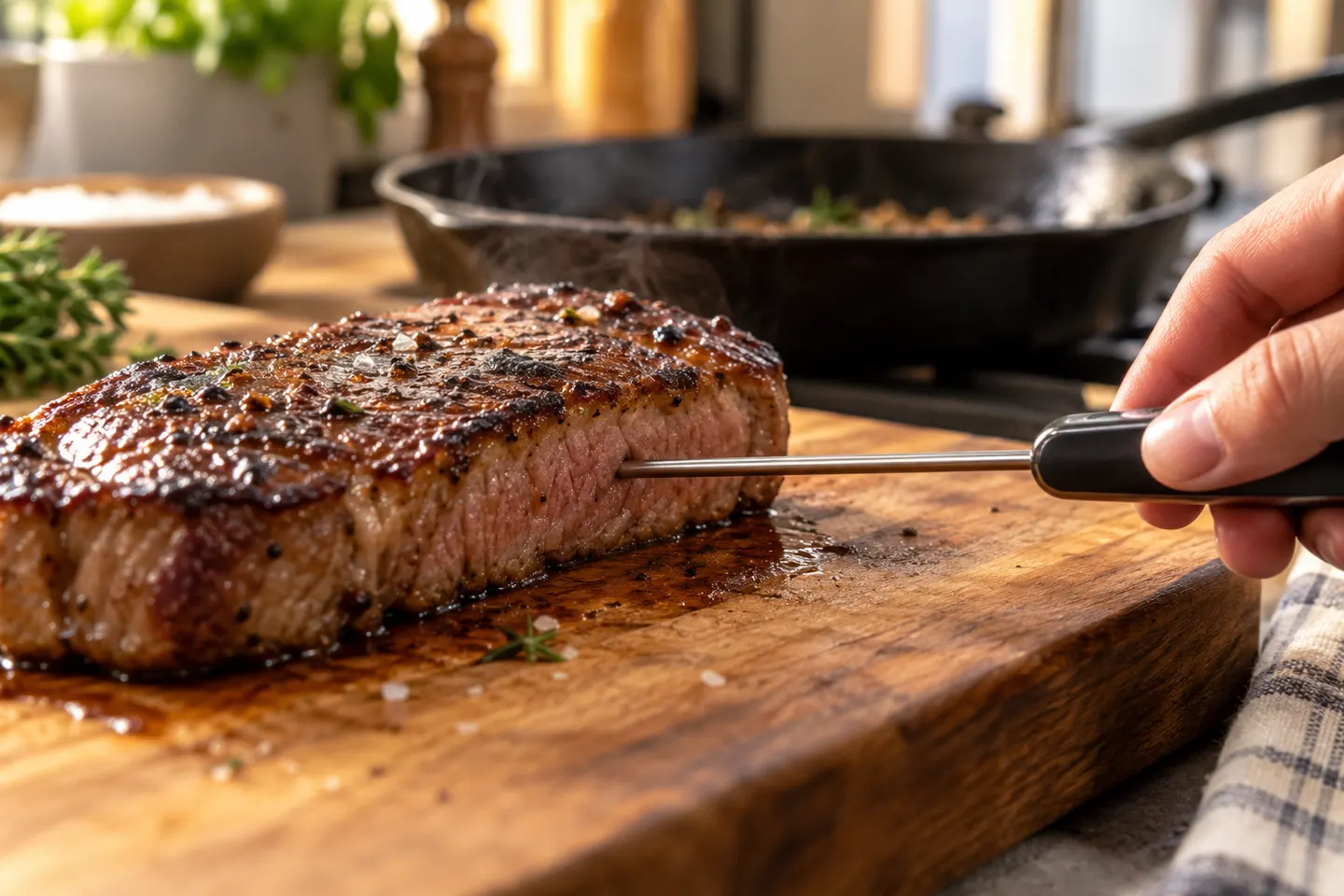
A fast instant-read probe is the most practical choice for steaks; insert it from the side into the center.

Start with a dependable instant-read thermometer; add a leave-in or wireless probe when you want continuous monitoring.