


Prepare the thermometer before handling chicken
Use a clean food thermometer and identify its sensing area. Keep the display and clean utensils away from raw juices.

Gearjury may earn a commission when you buy through a retailer link.
Guide
Measure the thickest part without touching bone, then check more than one area. USDA guidance lists 165°F as the safe minimum internal temperature for poultry.
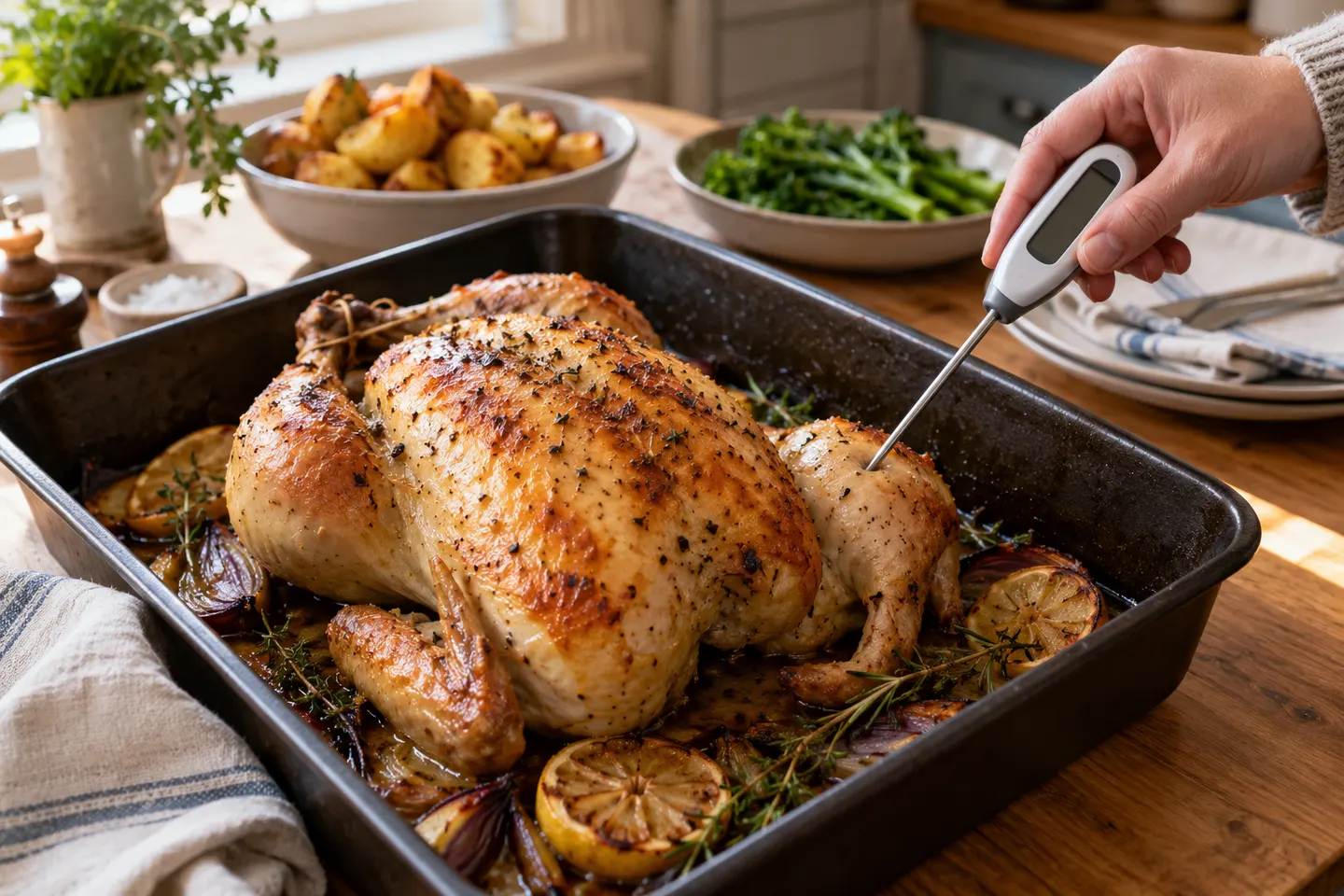
Use a clean food thermometer and identify its sensing area. Keep the display and clean utensils away from raw juices.
Insert it into the innermost part of the thigh and wing and the thickest part of the breast, avoiding bone, the cavity and the pan.
Probe the thickest section; for a thin breast, insert from the side so the sensor reaches the center. Check separate pieces individually.
USDA guidance sets 165°F for all poultry. Wait for a stable reading and check another likely-cool spot rather than relying on color or juices.
Wash the probe using the manufacturer's method before it touches cooked food or another surface. Do not reuse a raw-chicken plate for serving.
Common questions
Place the sensing area in the thickest meat without touching bone; for a whole bird, check the breast and the innermost thigh and wing areas.
USDA guidance gives 165°F as the safe minimum internal temperature for all poultry.
Only use it that way if the model is explicitly designed as an oven-safe or leave-in thermometer.
Yes. Appearance is not a reliable substitute for a food-thermometer reading in the correct locations.
Keep exploring
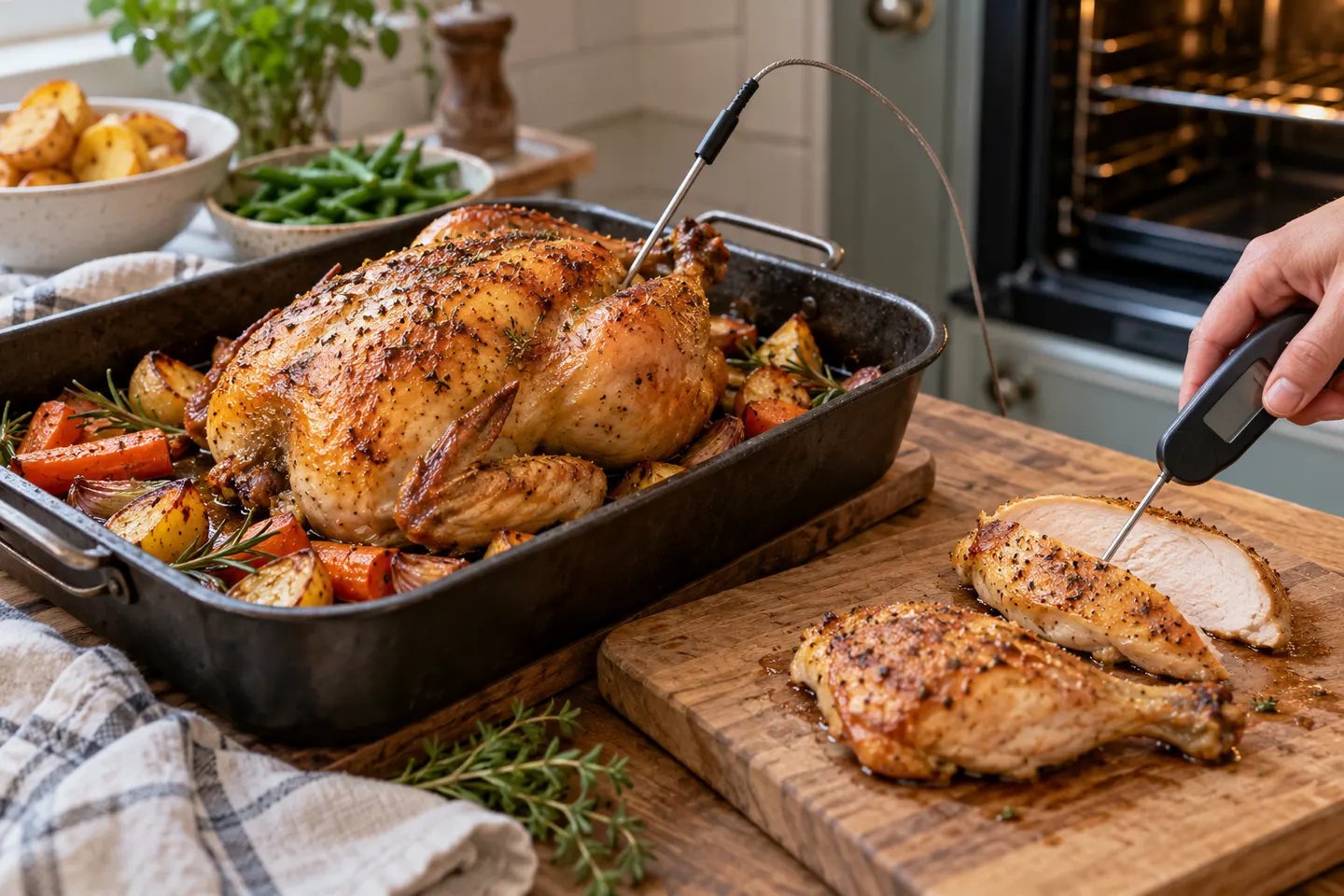
A fast, thin probe works well for portions; a heat-safe leave-in probe makes a whole roast easier to monitor.
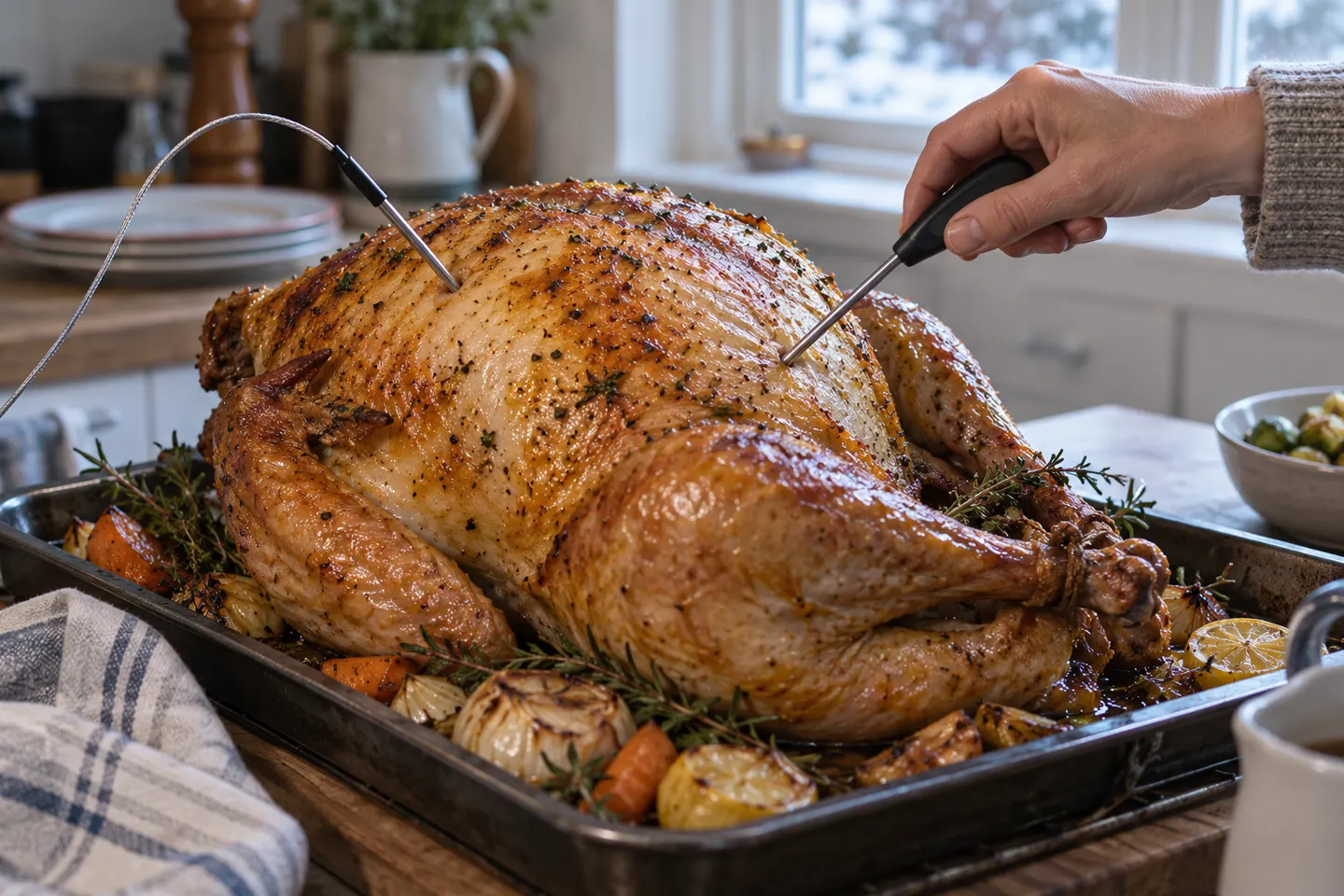
Use a leave-in probe to track the cook and an instant-read model to check more than one spot before serving.

Start with a dependable instant-read thermometer; add a leave-in or wireless probe when you want continuous monitoring.
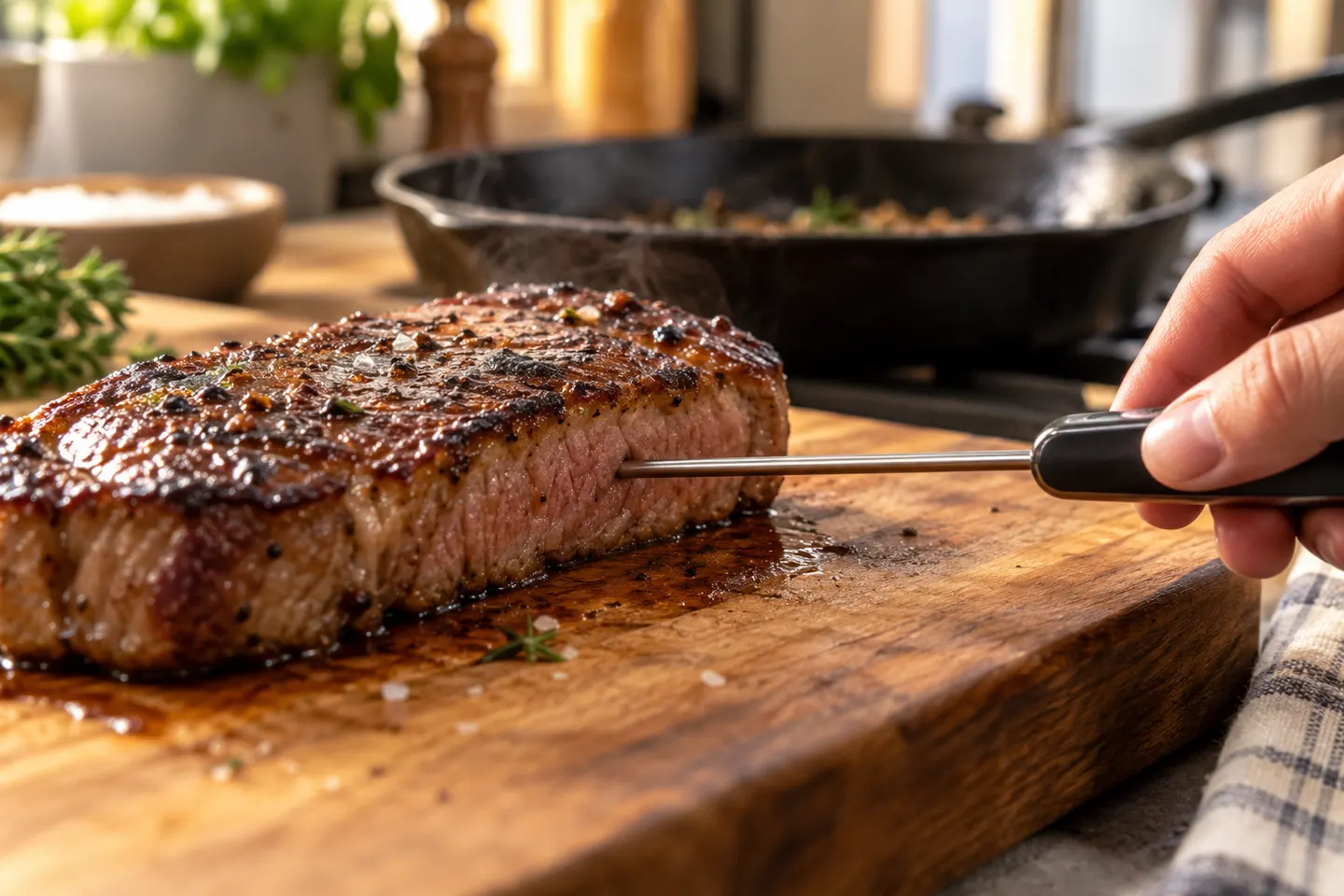
A fast instant-read probe is the most practical choice for steaks; insert it from the side into the center.