


Use a fast, narrow probe
An instant-read probe disturbs the steak less and lets you scan for the coolest point. Check where its sensing area sits; it may extend beyond the visible tip.

Gearjury may earn a commission when you buy through a retailer link. Cooking guidance is based on cited sources.
Guide
Insert a fast probe sideways into the thickest part so the sensing area reaches the center. Check more than one spot and remove the steak with carryover cooking in mind.
An instant-read probe disturbs the steak less and lets you scan for the coolest point. Check where its sensing area sits; it may extend beyond the visible tip.
For most steaks, slide the probe horizontally into the thickest section. Aim for the thermal center and avoid bone, large seams of fat and the cooking surface.
Move the tip slowly through the center and watch for the coolest reading. Check another area when the steak has uneven thickness or a bone.
USDA guidance lists a minimum internal temperature of 145°F for beef steaks, followed by at least a three-minute rest. Personal doneness preferences do not override food-safety advice.
Temperature can continue rising after the steak leaves the heat. The amount varies with thickness, cooking method and resting conditions, so avoid assuming one fixed carryover figure.
Wash the stem as directed after contact with undercooked meat and before using it on ready-to-eat food. Keep the display and non-waterproof joints dry.
Common questions
Insert it from the side into the thickest part and place the sensing area at the center, away from bone and large fat pockets.
Yes, if you can insert the probe safely without touching the pan. A fast check away from direct heat reduces misleading contact readings.
USDA lists 145°F with at least a three-minute rest for beef steaks. Follow current guidance and consider individual health needs.
Thickness, bone, fat and uneven heat create temperature gradients. Scan the central region and use the lowest stable reading from the edible thick portion.
Keep exploring
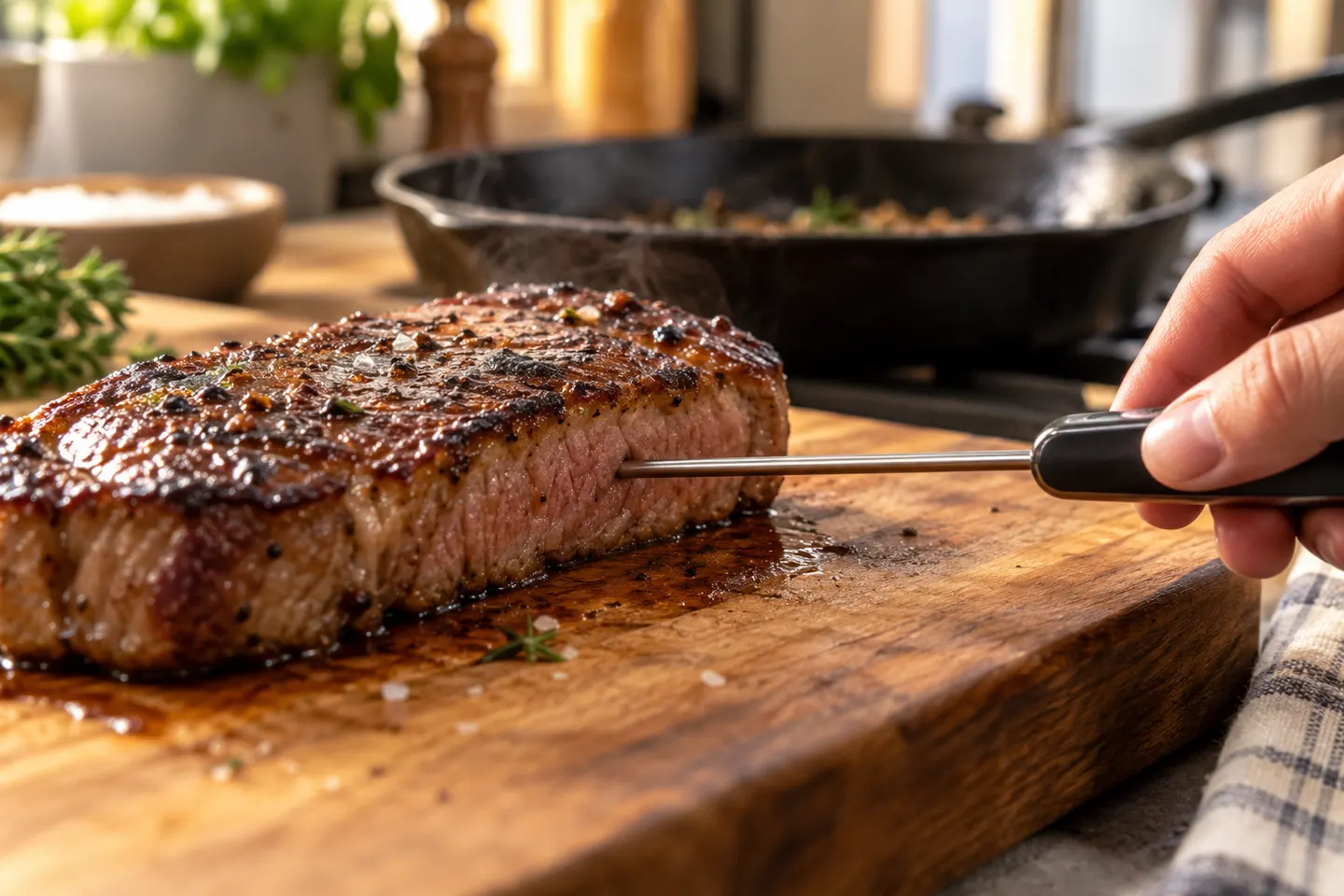
A fast instant-read probe is the most practical choice for steaks; insert it from the side into the center.
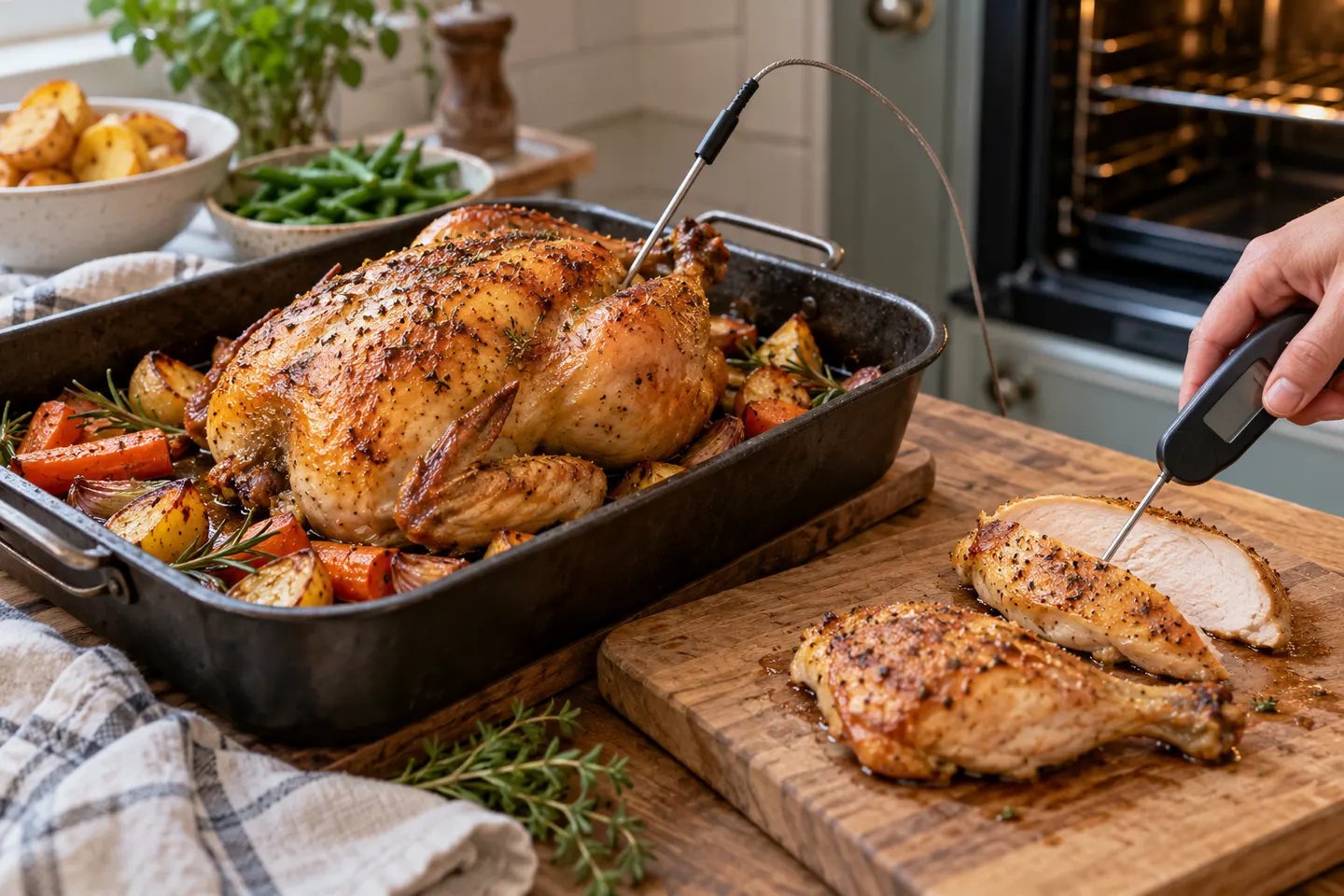
A fast, thin probe works well for portions; a heat-safe leave-in probe makes a whole roast easier to monitor.
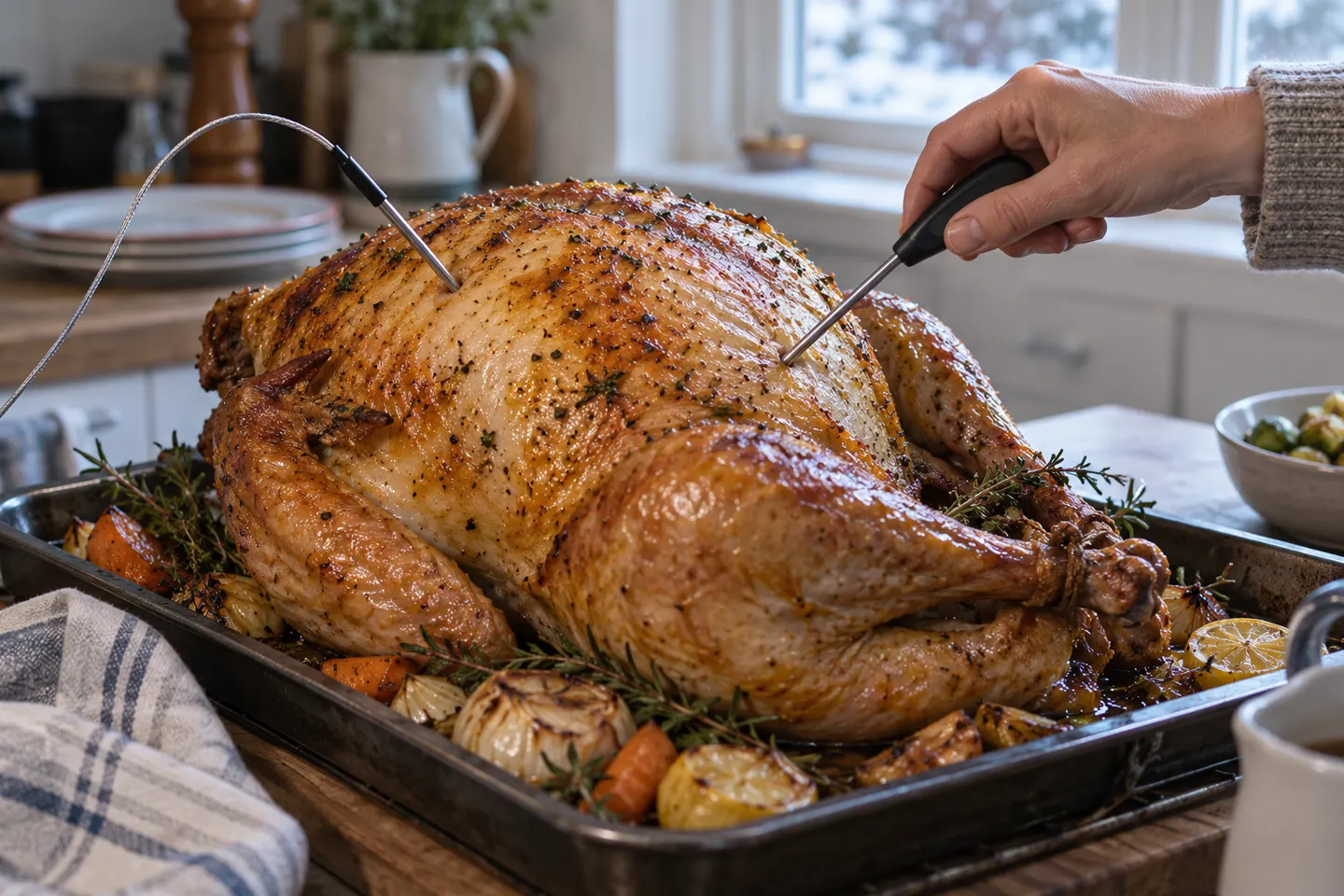
Use a leave-in probe to track the cook and an instant-read model to check more than one spot before serving.

Start with a dependable instant-read thermometer; add a leave-in or wireless probe when you want continuous monitoring.