


What temperature should a meat thermometer read for chicken?
Use 165°F as the safe minimum internal temperature for chicken. The USDA applies this target to breasts, whole birds, legs, thighs, wings, ground poultry, giblets, and stuffing.

Gearjury may earn a commission from qualifying retailer purchases; food-safety guidance comes from the cited authorities.
Guide
Chicken is safe when its internal temperature reaches 165°F, according to USDA guidance. Check the thickest areas and keep the probe away from bone.
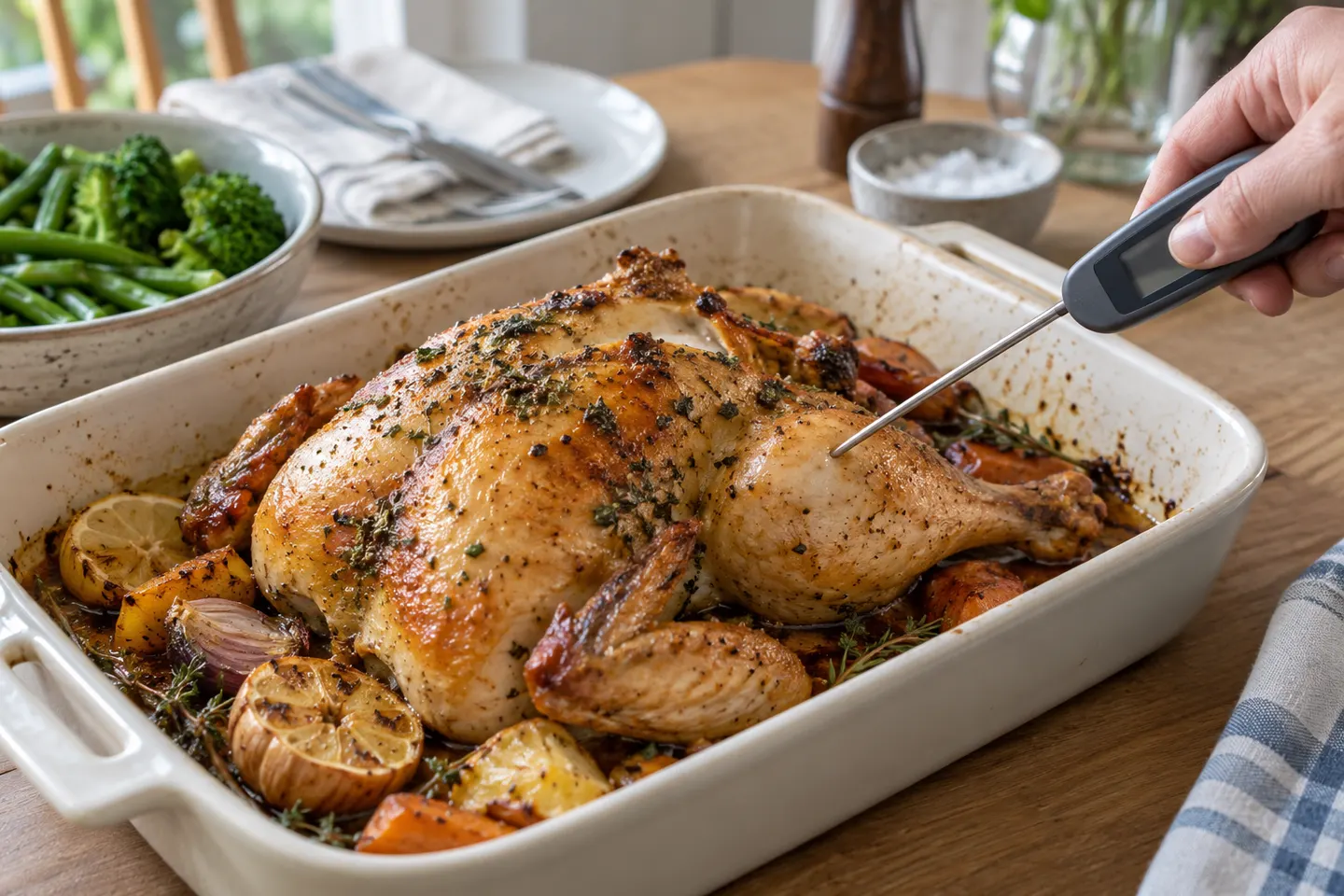
Use 165°F as the safe minimum internal temperature for chicken. The USDA applies this target to breasts, whole birds, legs, thighs, wings, ground poultry, giblets, and stuffing.
Check the innermost thigh, the innermost wing, and the thickest part of the breast. Keep the sensing tip away from bone, which can distort the reading, and confirm the target in every location.
Place the probe in the thickest section without touching bone. For a thin breast or cutlet, insert from the side so the sensing area sits in the center rather than passing through it.
Yes. The center of the stuffing must also reach 165°F. Measure the meat and the stuffing separately because one can heat more slowly than the other.
Check multiple spots in a large or irregular piece and check individual pieces when sizes vary. A single reading cannot show whether every cold spot has reached the safe minimum.
Clean the probe as directed before and after use. If you check early and the chicken is not ready, clean the probe before inserting it again so raw juices are not carried onto cooked surfaces.
Common questions
USDA consumer guidance sets 165°F as the safe minimum internal temperature for all poultry. Keep cooking until the checked locations reach that temperature.
The thickest part of a chicken breast should reach 165°F. Avoid bone and insert from the side when the piece is too thin for a top-down reading.
Check the innermost thigh and wing and the thickest portion of the breast, without touching bone.
Color is not a reliable safety test. Use the thermometer reading at the correct locations as your guide.
Yes. USDA guidance lists 165°F for ground poultry as well as whole birds and poultry pieces.
Keep exploring
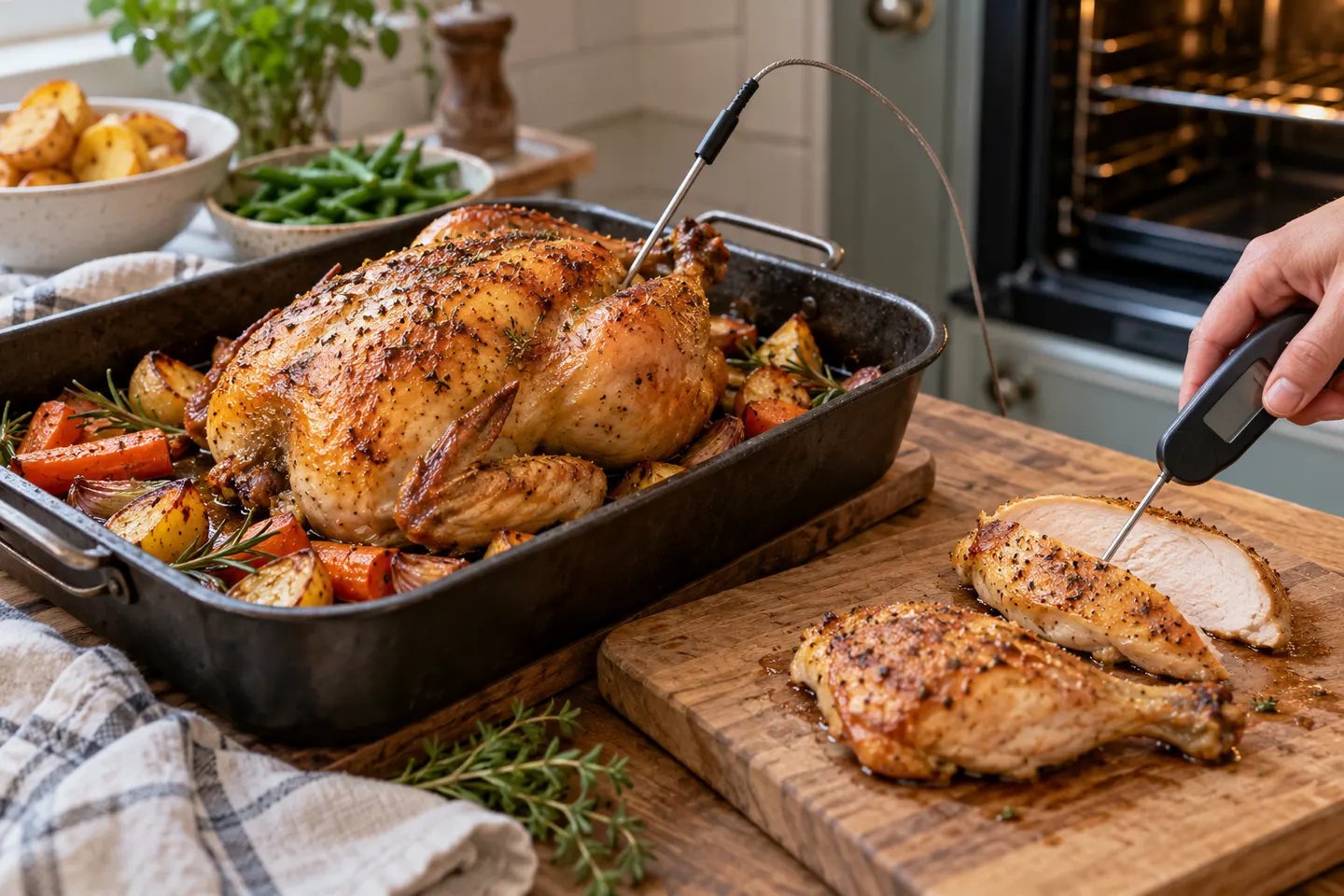
A fast, thin probe works well for portions; a heat-safe leave-in probe makes a whole roast easier to monitor.
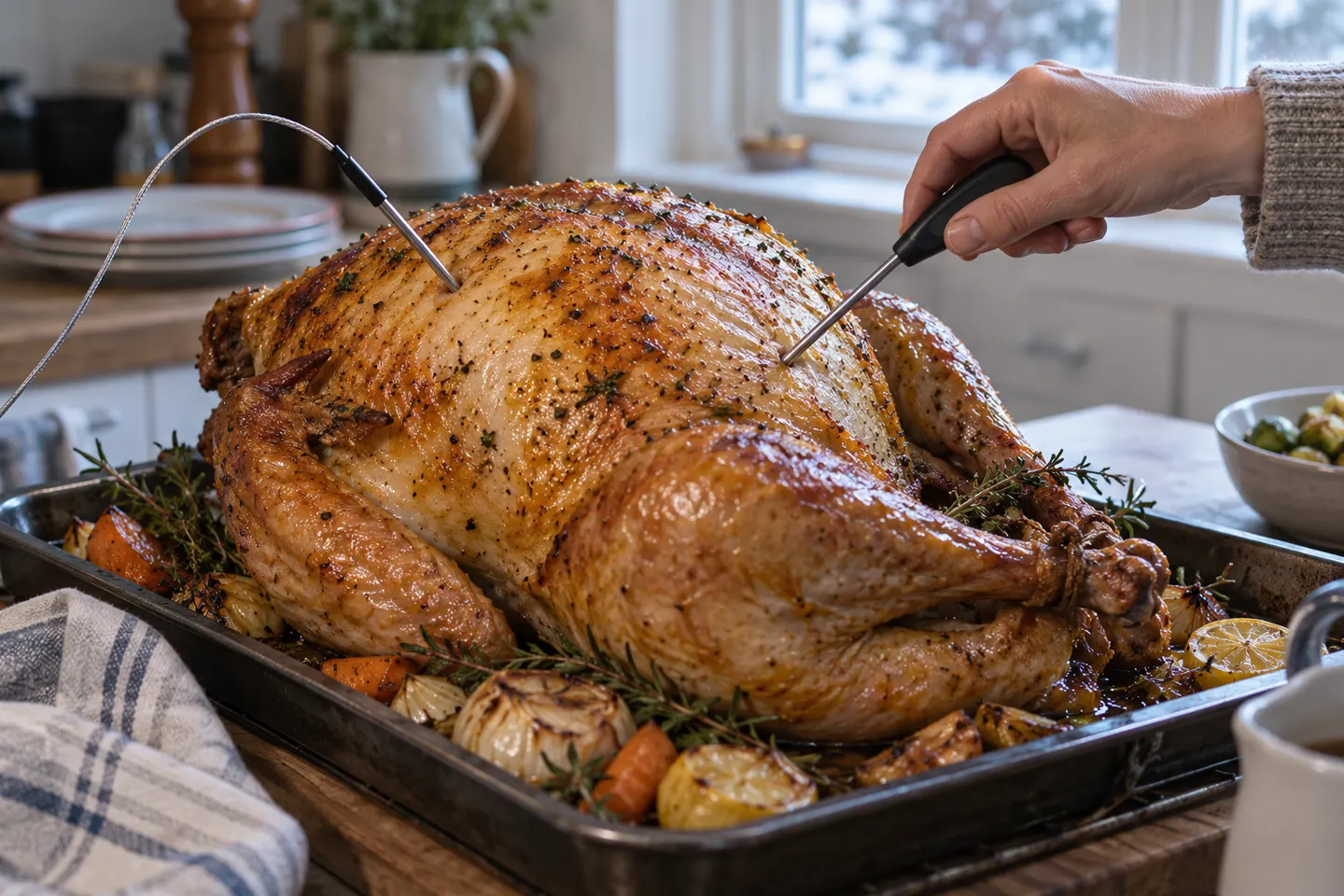
Use a leave-in probe to track the cook and an instant-read model to check more than one spot before serving.

Start with a dependable instant-read thermometer; add a leave-in or wireless probe when you want continuous monitoring.
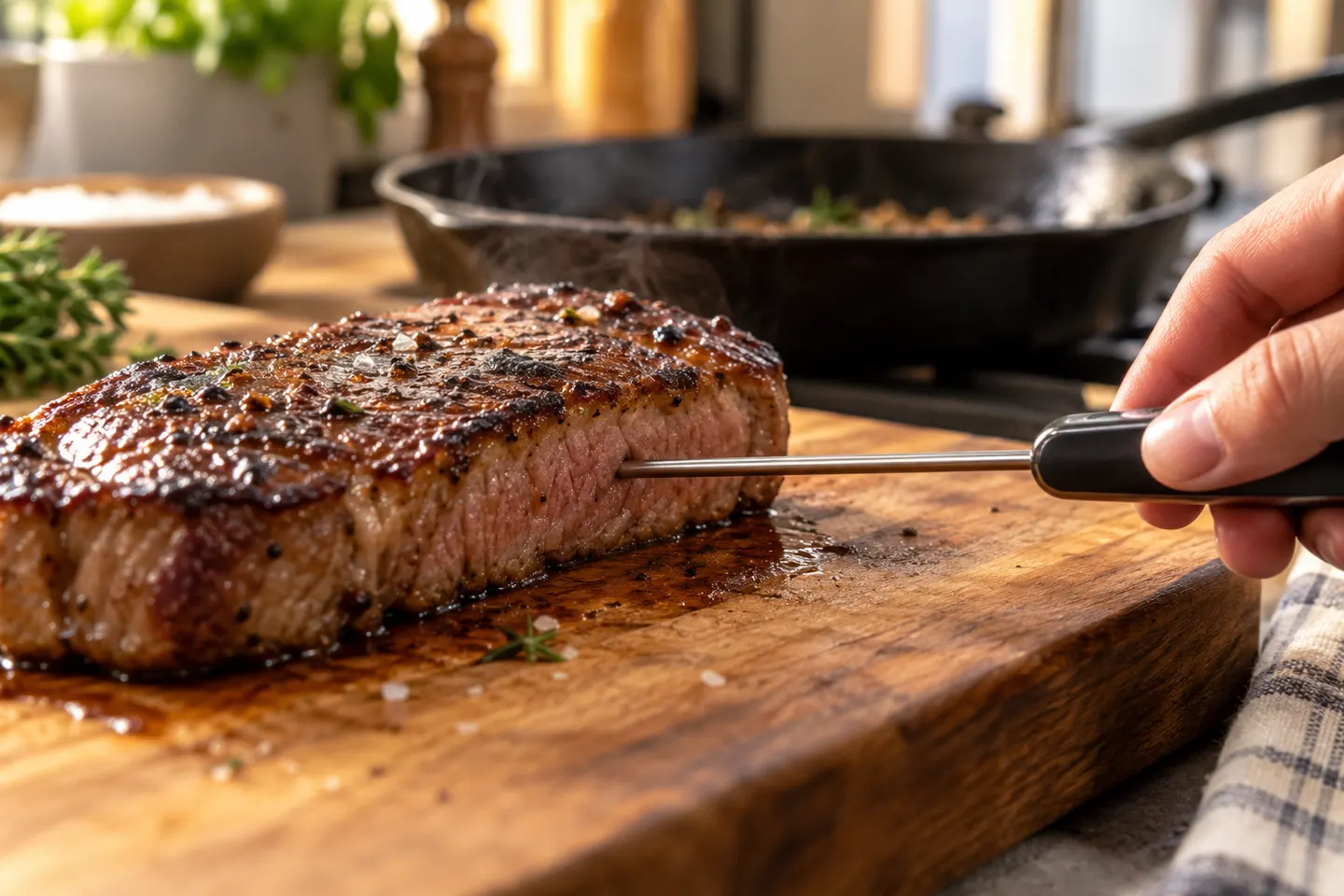
A fast instant-read probe is the most practical choice for steaks; insert it from the side into the center.