Independent buying guidance · US editionHow we work
Gearjury
All categories

Gearjury may earn a commission when you buy through a retailer link. Our guidance is based on the cited food-safety sources.

Guide

What If I Don't Have a Meat Thermometer?

If you are wondering what if I don't have a meat thermometer, the safest answer is not to guess from color, juices, firmness, or cooking time. Use a suitable food thermometer before serving meat or poultry; if you cannot get one, choose a meal that does not require you to judge whether raw meat is safely cooked.

01

Can you tell when meat is done without a thermometer?

Not reliably. USDA guidance says color and firmness cannot confirm that harmful microorganisms have been destroyed. Meat can look brown before its center reaches a safe temperature, while safely cooked meat can sometimes remain pink. Clear juices, grill marks, and cutting into the center are also not substitutes for a temperature reading.
02

What should you do if the meat is already cooking?

Do not serve it based only on appearance or the clock. If possible, pause and obtain a food thermometer that suits the food you are cooking. Keep raw and cooked foods separate, follow the recipe or package instructions, and use the USDA safe minimum internal temperature chart when you can measure the center. If you cannot verify the temperature, switch to a food that does not depend on judging raw meat for safety.

03

Why cooking time alone is not enough

A recipe's timing is an estimate, not a measurement of the food's center. Thickness, starting temperature, appliance performance, pan material, bone, and the amount being cooked can all change when food reaches its target. A timer remains useful for planning, but it cannot confirm safety.

04

Where should you check the temperature?

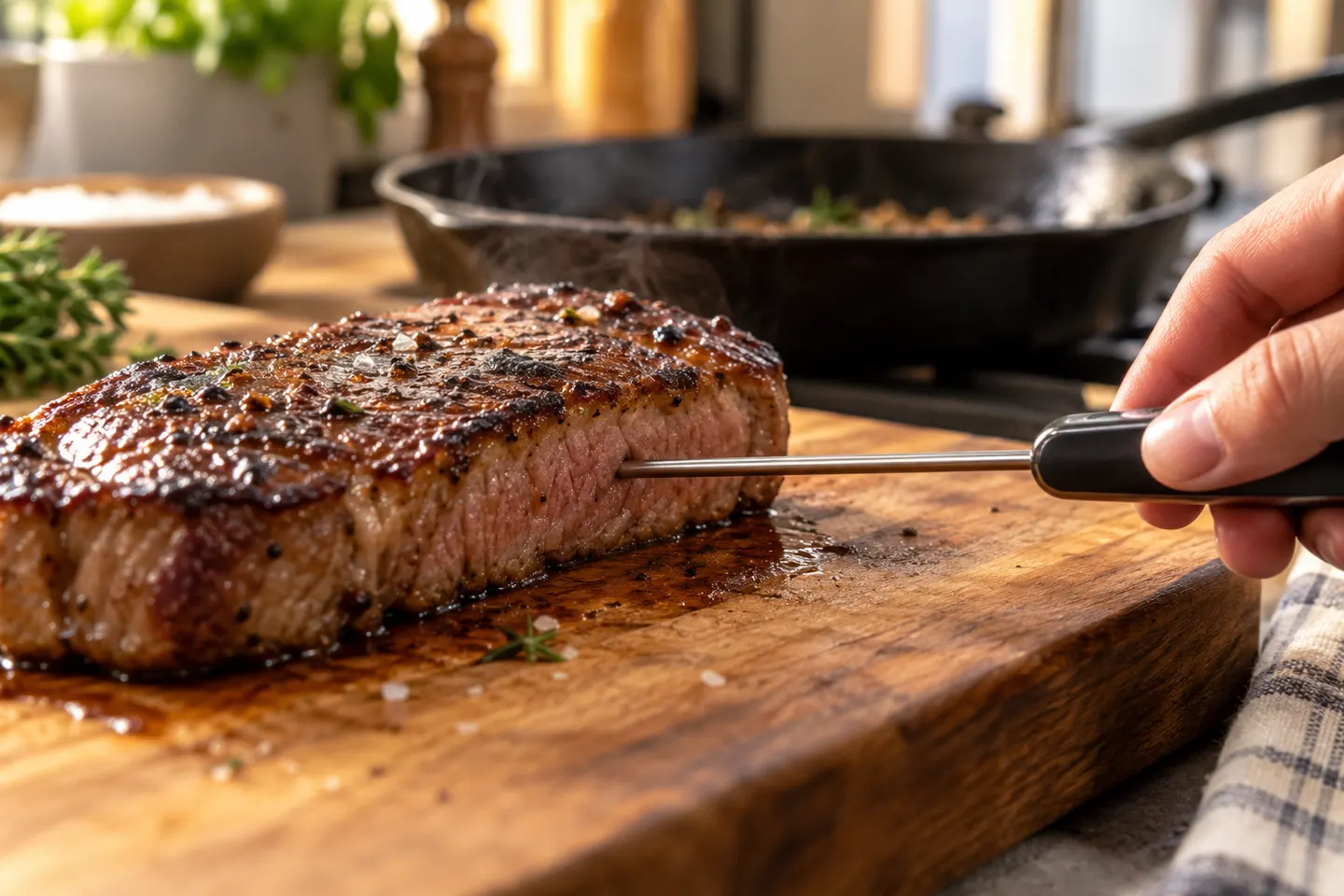
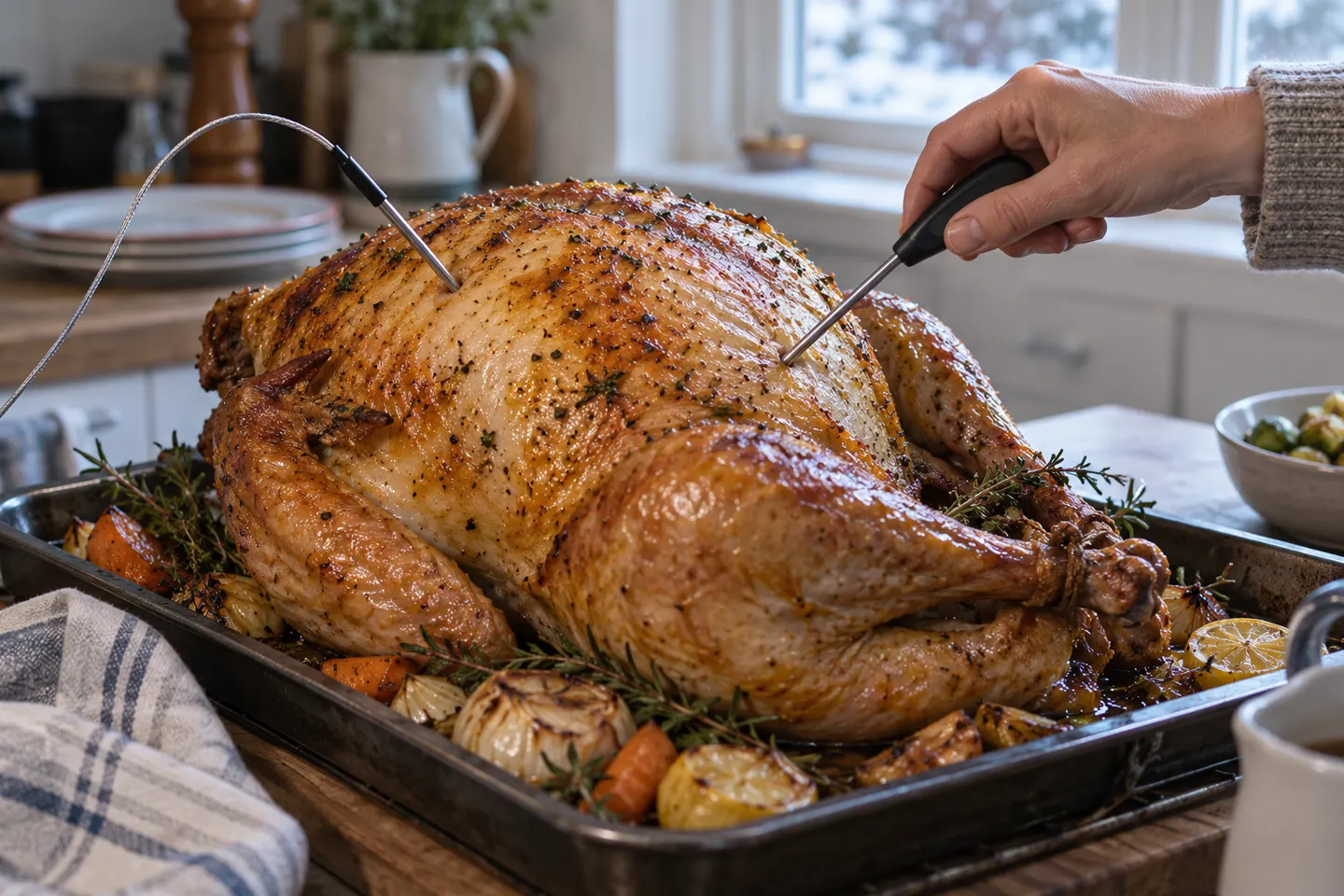
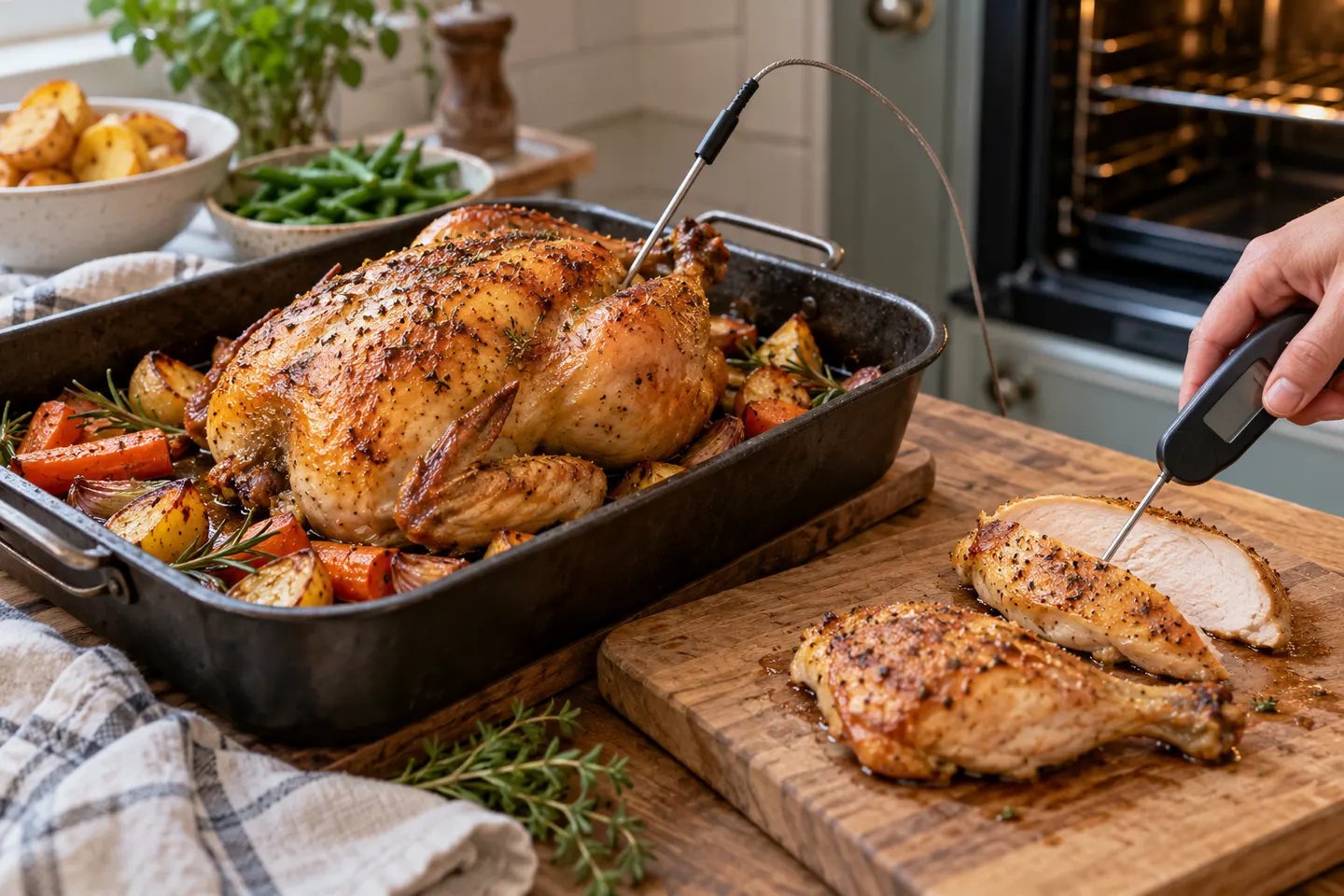
Insert the probe into the thickest part, away from bone, fat, and gristle. For a thin burger, chop, or chicken breast, insert it from the side so the sensing area reaches the center. Check several places in a large or irregular cut, and check separate pieces because they may finish at different times.

05

A food thermometer can have a variance of how much?

USDA says most food thermometers read within a range of two to four degrees Fahrenheit when used correctly. Placement still matters: a properly functioning thermometer can give a misleading result if its sensing area misses the center or touches bone. Check the manufacturer's accuracy and calibration instructions for your model.

06

How do you check a thermometer's accuracy?

USDA describes an ice-water check for most food thermometers: place the sensing area in a well-stirred ice-and-water mixture without touching the glass and allow the reading to settle. Follow the maker's instructions to adjust a calibratable model. Clean the probe according to its instructions before and after it contacts food.

Common questions

Questions before you buy

What can I use if I don't have a meat thermometer?

There is no household visual test that reliably replaces a food thermometer. Obtain a suitable thermometer before serving meat or poultry, or prepare a meal that does not require you to verify raw meat's internal temperature.

Can I tell whether chicken is cooked by its juices?

No. Juice color and the color or texture of the meat do not reliably show that chicken has reached a safe internal temperature.

Can I check meat temperature with a regular medical thermometer?

Use a thermometer designed for food and for the temperature range involved. Medical thermometers may have unsuitable ranges, probes, response times, or cleaning instructions.

How much can a food thermometer reading vary?

USDA says most food thermometers provide a reading within two to four degrees Fahrenheit. Correct placement and any calibration procedure specified by the manufacturer are essential.

Is pink meat always undercooked?

No. Color does not consistently track safety: meat can brown too early or remain pink after reaching its safe minimum internal temperature. Judge it with a correctly placed food thermometer.

Sources and how we chose