Gearjury may earn a commission when you buy through a retailer link, at no extra cost to you.
Guide
Can You Use a Meat Thermometer to Check Your Temperature?
No. If you are wondering, “Can you use a meat thermometer to check your temperature?”, choose a clinical thermometer designed and labeled for measuring human body temperature instead. A cooking probe is built for food, not for interpreting a possible fever.
GGearjury editorial team · Updated October 15, 2026· 4 min
01
Can you use a food thermometer to check your temperature?
A food thermometer should not replace a clinical thermometer. The two devices are intended for different uses, temperature ranges and measurement sites. Even if a cooking probe displays a number near normal body temperature, that does not make it suitable for deciding whether you have a fever.
02
Why a cooking thermometer is the wrong tool for a fever check
Clinical thermometers are designed for body-temperature measurement and include instructions for a specific site and method. Meat thermometers are designed to measure the internal temperature of food. Their probe shape, sensing area, response characteristics and cleaning directions may all be unsuitable for use on a person.
03
Use a thermometer intended for body temperature
Use a clinical digital or non-contact infrared thermometer whose labeling says it measures human body temperature. Follow its directions because placement, distance, the surrounding environment and recent activity can affect a reading. Clean the device between users as directed by its manufacturer.
04
What thermometer checks the surface temperature of food?
An infrared food thermometer checks surface temperature without piercing the food. It cannot show whether the center of meat has reached the necessary internal temperature, so use a probe food thermometer in the thickest part when internal doneness and food safety are the concern.
05
How to use a thermometer to check food temperature
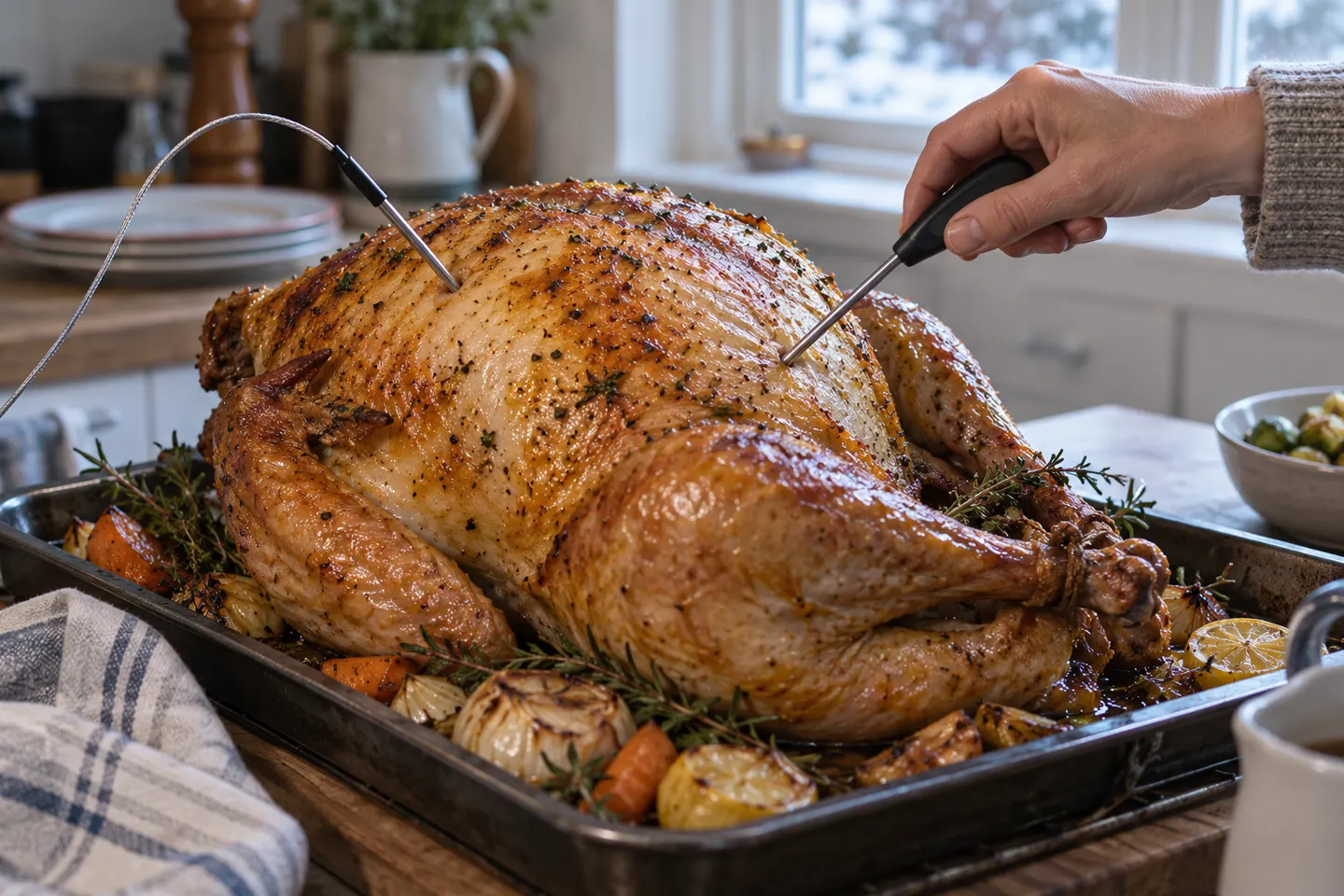
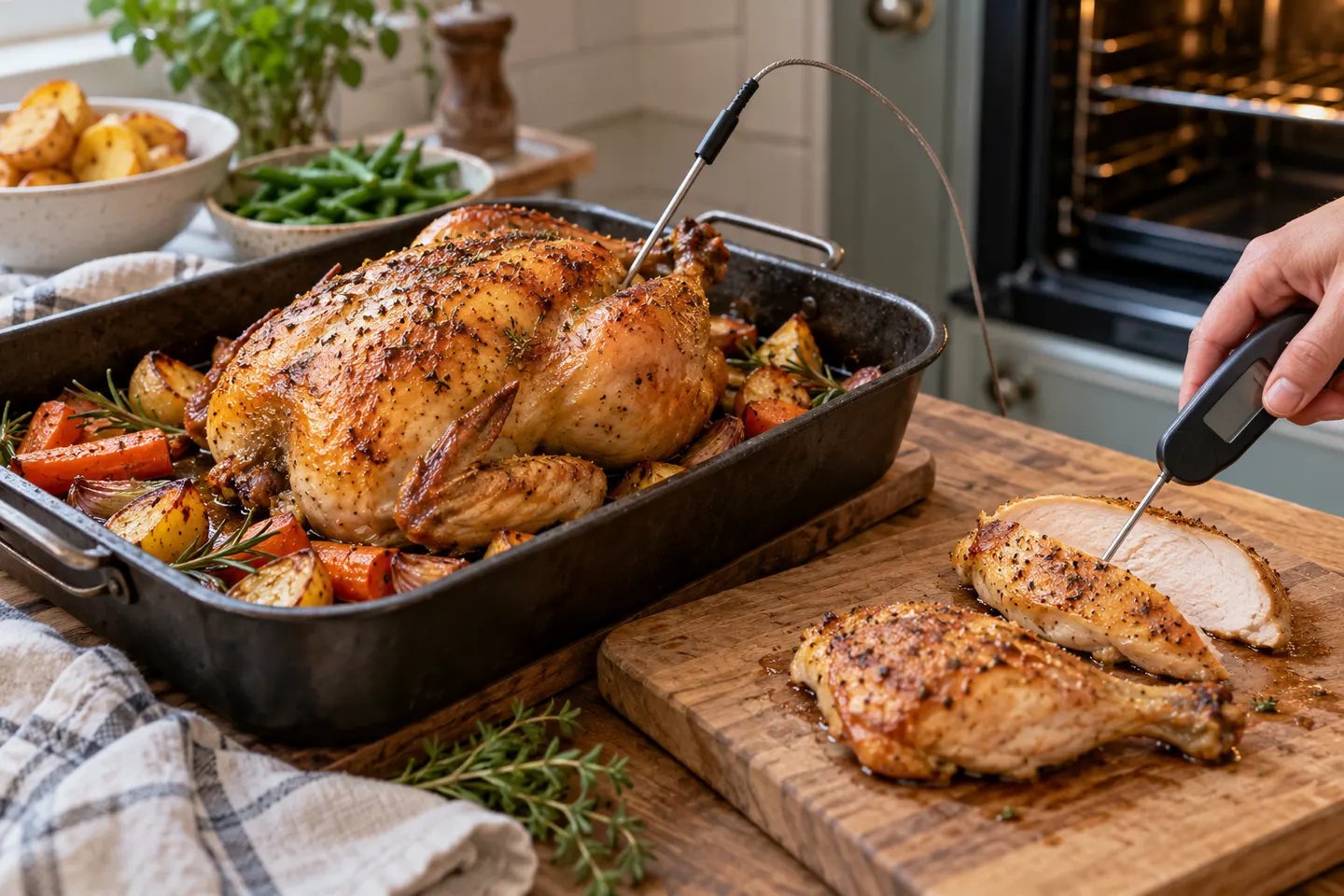
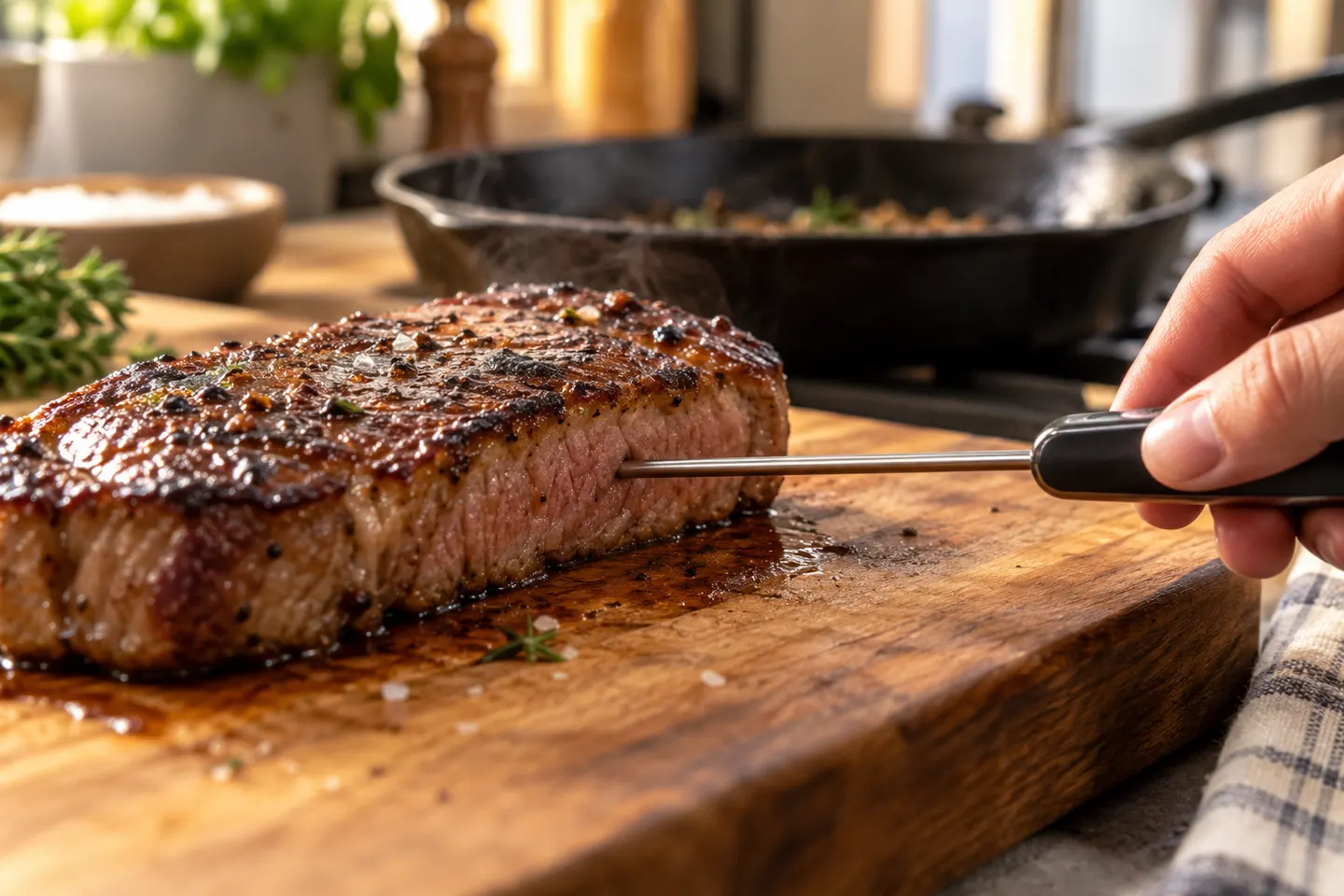
Insert the food thermometer into the thickest part, away from bone, fat and gristle. For thin foods, insert the probe from the side so its sensing area reaches the center. Check more than one spot in large or irregular pieces and follow the device instructions for insertion depth and stabilization time.
06
Two ways to check the accuracy of a food thermometer
The USDA describes ice-water and boiling-water checks. Ice water is the preferred method for most food thermometers; boiling water provides a higher-temperature reference, but the expected boiling point changes with altitude. Follow the thermometer manufacturer's calibration instructions and replace a device that cannot be corrected when accuracy is in doubt.
Common questions
Questions before you buy
Will a food thermometer check my temperature?
It may display a reading, but it is not the right device for assessing body temperature or fever. Use a clinical thermometer labeled for human body-temperature measurement.
What thermometer checks the surface temperature of food?
An infrared food thermometer measures the surface temperature of food. To check the internal temperature of meat, use a probe food thermometer in the thickest part.
Can you use a cooking thermometer to check your temperature?
No. A cooking thermometer is intended for food and should not be used as a substitute for a clinical thermometer when checking for fever.
Can you use a food thermometer to check a fever?
Do not rely on a food thermometer for a fever check. Choose a body thermometer, use the measurement site described in its instructions and seek medical advice when symptoms warrant it.
How can you check the accuracy of a food thermometer?
Use an ice-water check or, when appropriate, a boiling-water check, following USDA and manufacturer instructions. Account for altitude with boiling water and adjust the thermometer only if its instructions allow it.
A fast instant-read probe is the most practical choice for steaks; insert it from the side into the center.
Your privacy
We use cookies and similar technologies. Necessary ones keep the site working. With your permission we also use statistics cookies (Google Analytics and Microsoft Clarity) to understand which guides help readers. You can accept all, reject all or choose. You can change your choice at any time from "Cookie settings" at the bottom of every page. Cookie policy