
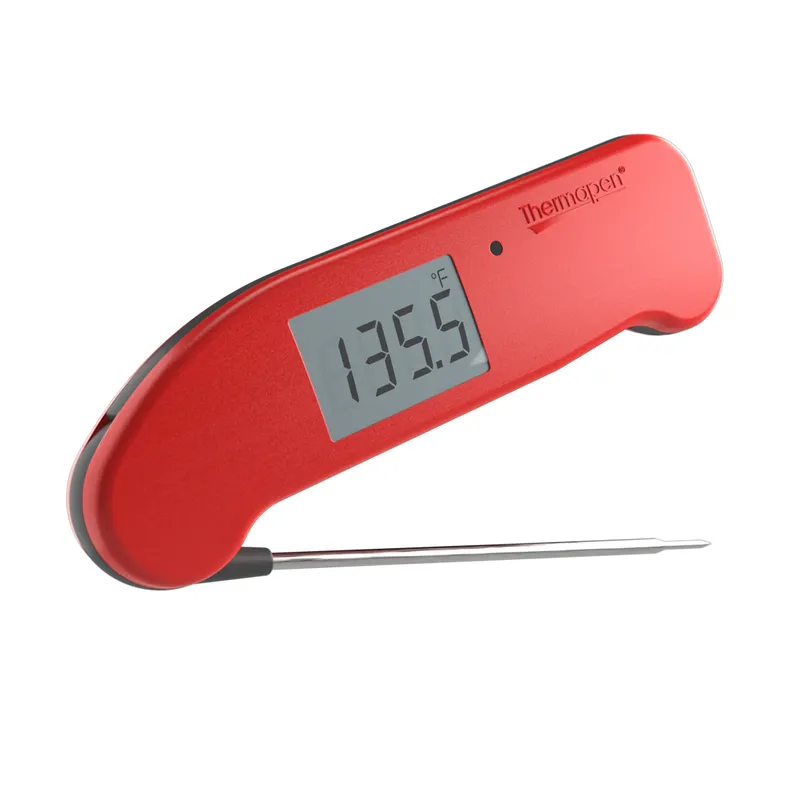
 Official manufacturer image
Our picks
Top picks
Official manufacturer image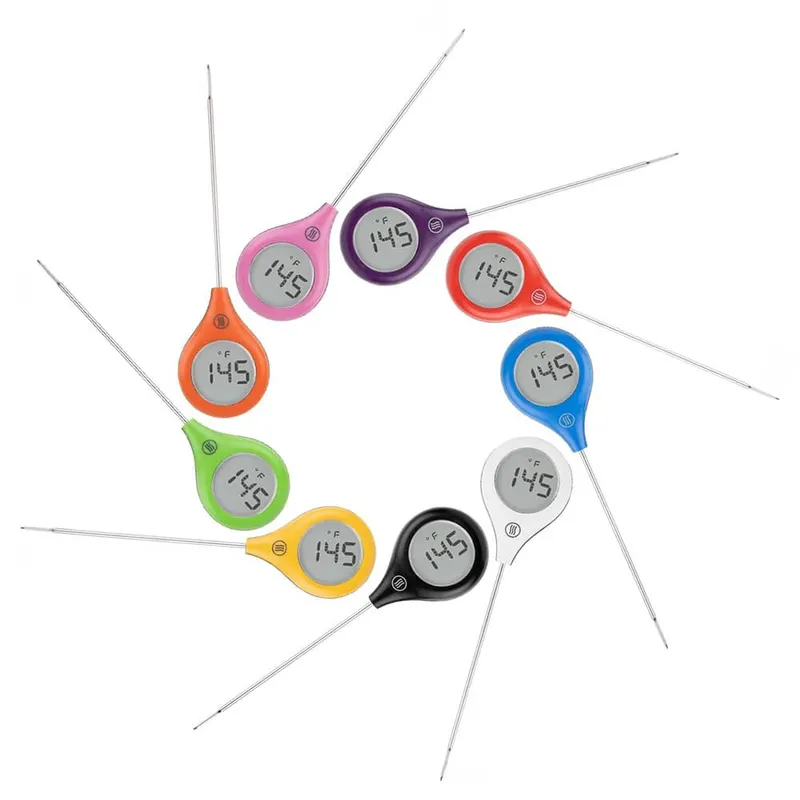 Official manufacturer image
ThermoWorks ThermoPop 2
Check price on Amazon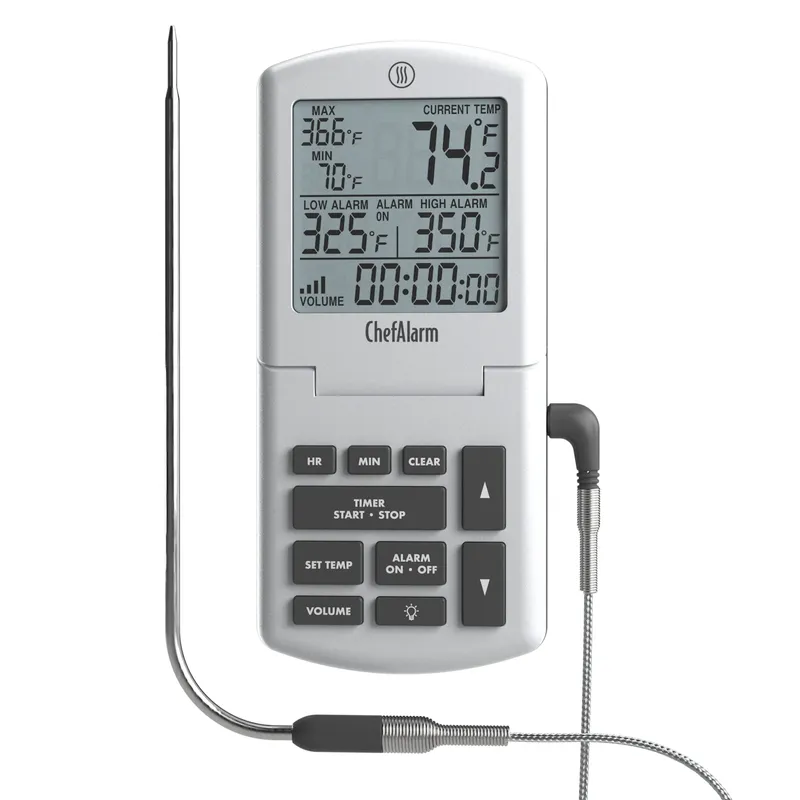 Official manufacturer image
ThermoWorks ChefAlarm
Check price on AmazonMeat thermometers
More specific
Common questions
Questions before you buy
What makes a thermometer food-safe?
It should be intended for food use, made with suitable food-contact surfaces, cleanable as directed, and operated within its stated range and environment.
Should you wash a food thermometer after every use?
Clean the probe after each food contact, especially after raw meat or poultry. Follow the maker's method and sanitize where your food-safety procedure requires it.
Can you use the same thermometer for raw and cooked food?
Yes, if the probe is thoroughly cleaned and sanitized between checks. Never move contamination from raw food to cooked food.
How can you tell whether a food thermometer is accurate?
Use the accuracy-check method specified by the manufacturer or your food-safety plan. Recheck after drops, damage, or implausible readings.