



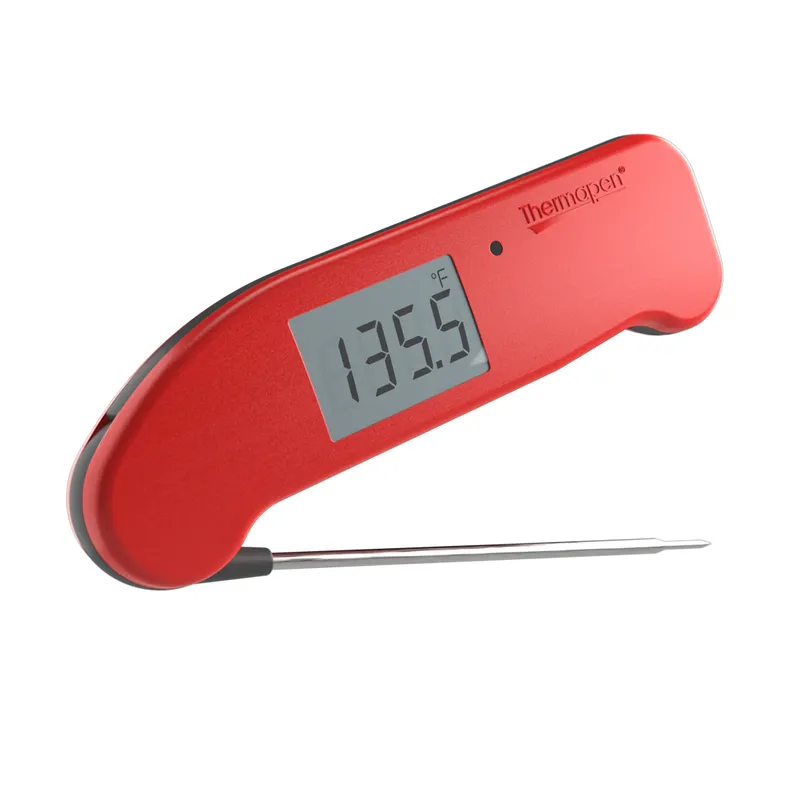
 Official manufacturer image
Our picks
Top picks
Official manufacturer image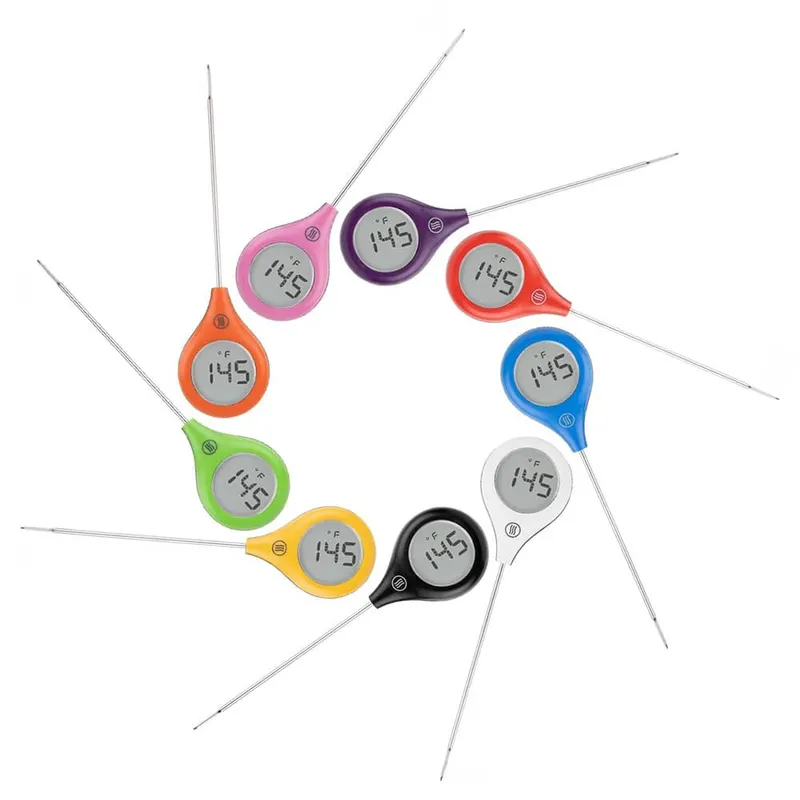 Official manufacturer image
ThermoWorks ThermoPop 2
Check price on Amazon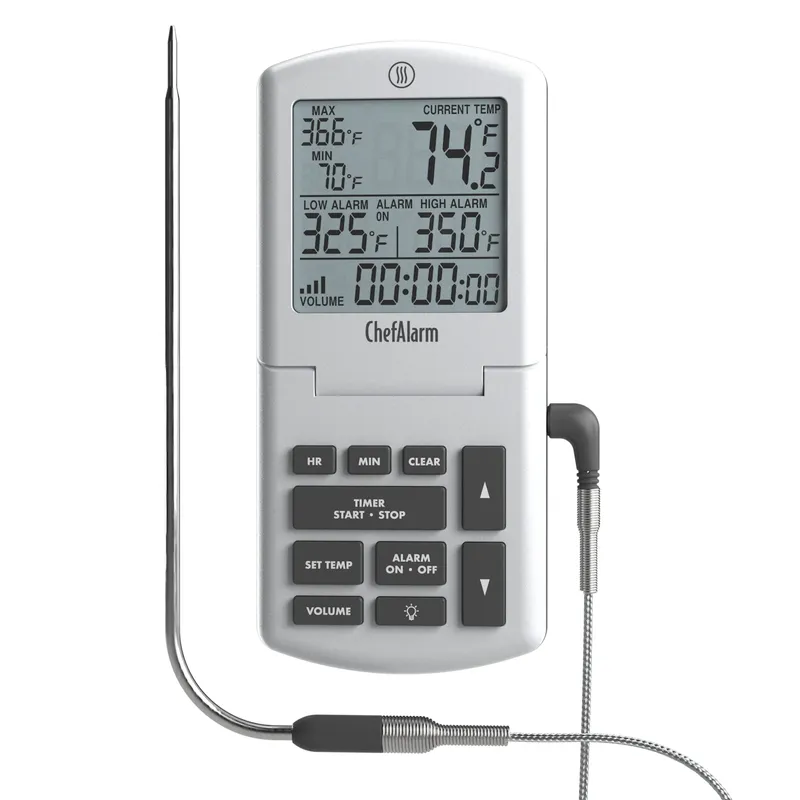 Official manufacturer image
ThermoWorks ChefAlarm
Check price on AmazonMore topics
Common questions
Questions before you buy
What temperatures does USDA recommend for meat?
The endpoint depends on the food. USDA lists 145°F plus at least a three-minute rest for whole beef, pork, veal and lamb cuts; 160°F for ground meats in that group; and 165°F for poultry.
Where should a food thermometer be inserted?
Place the sensing area in the thickest portion, away from bone, fat and gristle. For thin foods, insert from the side toward the center.
Does USDA approve specific meat thermometer brands?
USDA guidance explains thermometer types and safe use; do not treat marketing language as a brand endorsement. Choose an instrument suited to the food and check its instructions.
Should I rely on meat color instead of temperature?
No. USDA advises using a food thermometer because color and texture alone cannot confirm a safe internal temperature.