
 Official manufacturer image
Our picks
Top picks
Official manufacturer image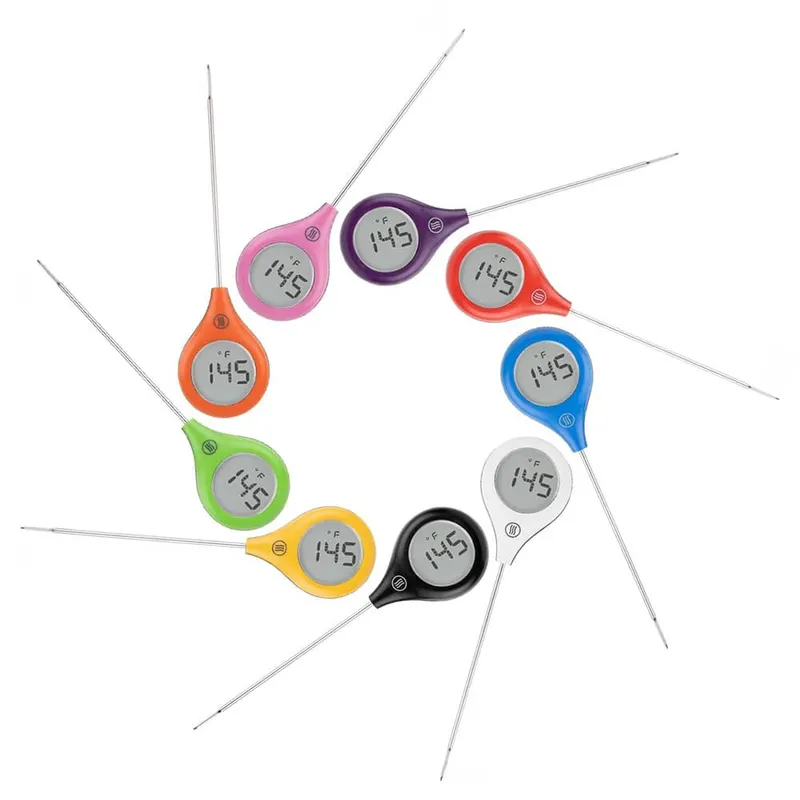 Official manufacturer image
ThermoWorks ThermoPop 2
Check price on Amazon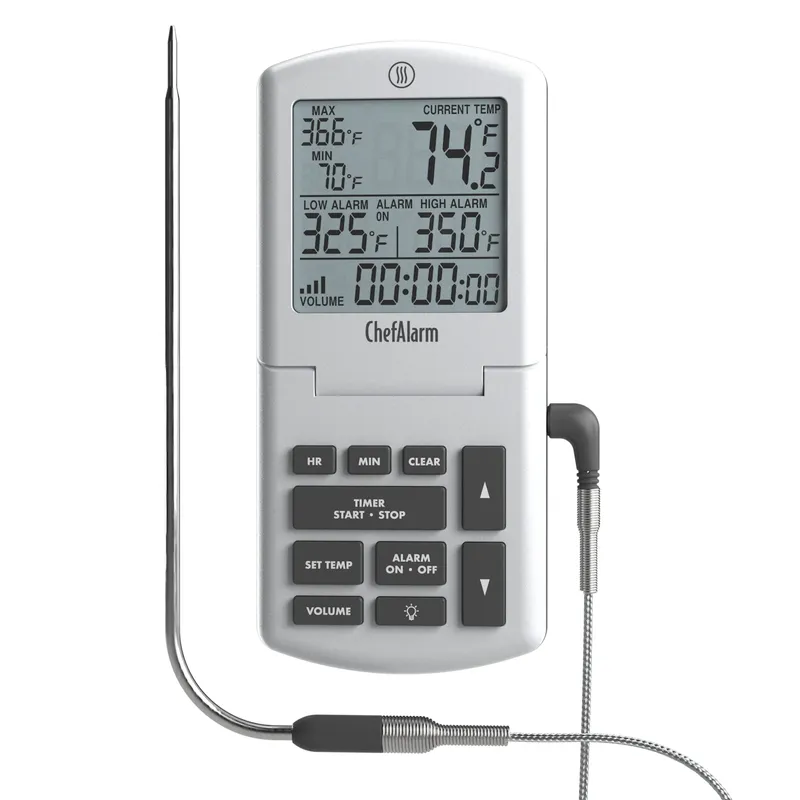 Official manufacturer image
ThermoWorks ChefAlarm
Check price on AmazonCommon questions
Questions before you buy
What are the main uses of a meat thermometer?
Use it to measure the center of meat and poultry, follow large cuts during cooking and verify several locations before serving.
Can a food thermometer be used for leftovers?
Yes. A suitable clean probe can check reheated food; compare the reading with current FoodSafety.gov guidance.
Which thermometer is used for frying oil?
Use a contact probe or clip-on frying thermometer whose published range and construction suit hot oil. Keep the sensor off the pan bottom.
Can a meat thermometer be used for bread?
A clean instant-read probe can check the interior of bread, but the target depends on the recipe and desired result rather than a universal safety number.
What is an infrared cooking thermometer used for?
It measures surface temperature from a distance. It cannot directly tell you the internal temperature of meat or a deep liquid.
Why use an air probe in an oven or smoker?
An air probe measures the cooking environment near the food, which may differ from a built-in dial located elsewhere in the cooker.