



Common questions
Questions before you buy
What is the difference between a WiFi extender and a WiFi repeater?
The terms are often used for devices that receive a router's wireless signal and rebroadcast it. Product features vary, so check whether a particular model supports a wireless repeater mode, a wired access point mode, or both.
Where should I place a WiFi range extender?
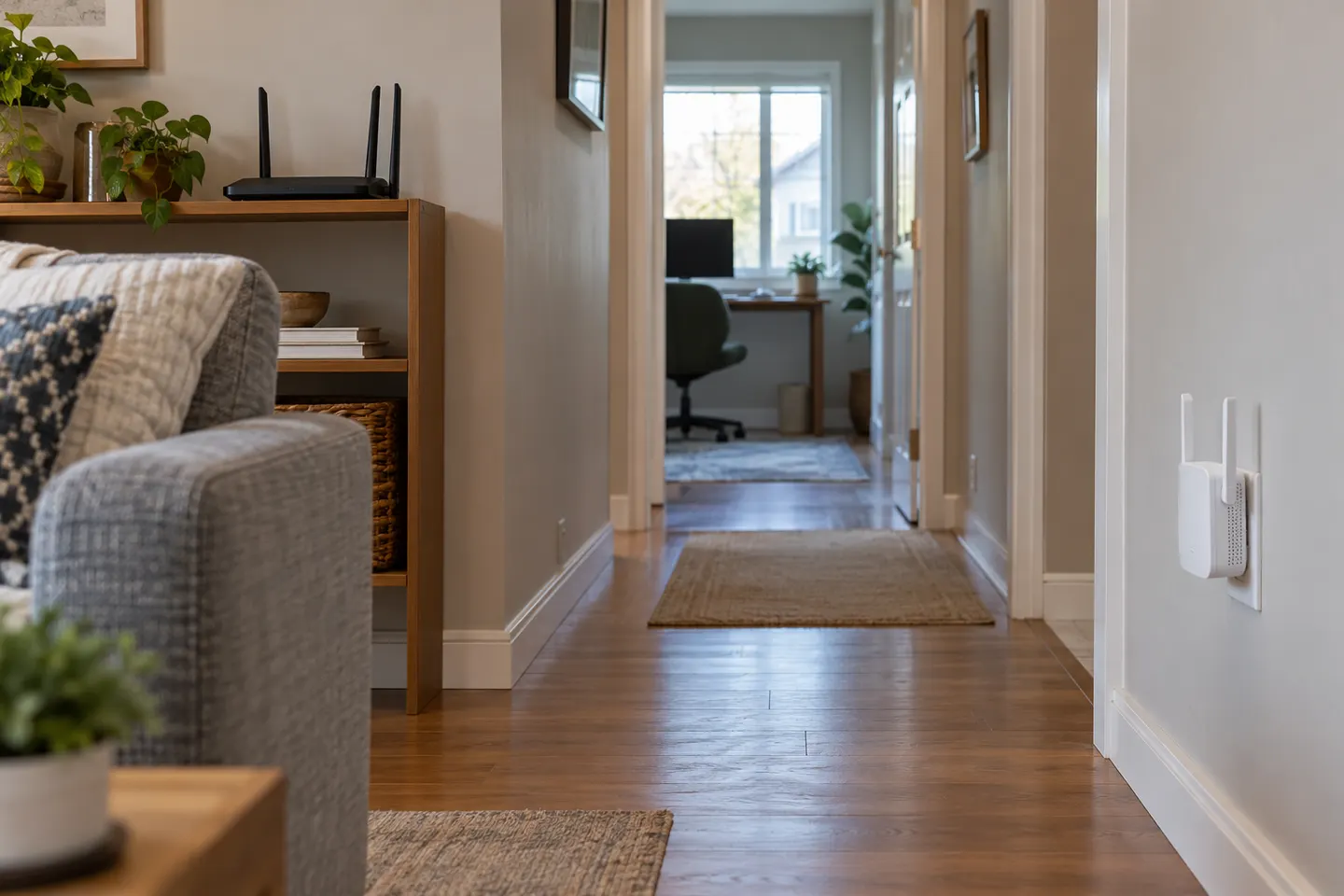
Place it where it can still receive a reliable signal from the router and can reach the area that needs coverage. A spot inside the dead zone may be too far from the original network to relay it effectively.
Will a WiFi extender work with any router?
Many extenders support common WiFi standards and are designed to work with third-party routers, but band, security and setup compatibility can differ. Confirm the exact extender's supported standards against your router before buying.
Is a wired access point better than a wireless repeater?
An access point connected to the network by Ethernet avoids relying on a wireless backhaul link. A wireless repeater is easier to place when running a cable is impractical; the right choice depends on wiring and signal conditions.