Independent buying guidance · UK editionHow we work

Gearjury may earn a commission when you buy through a retailer link. Product positions are editorial and based on the cited evidence.

Best picks

Best Laser Thermometers for Cooking in the UK

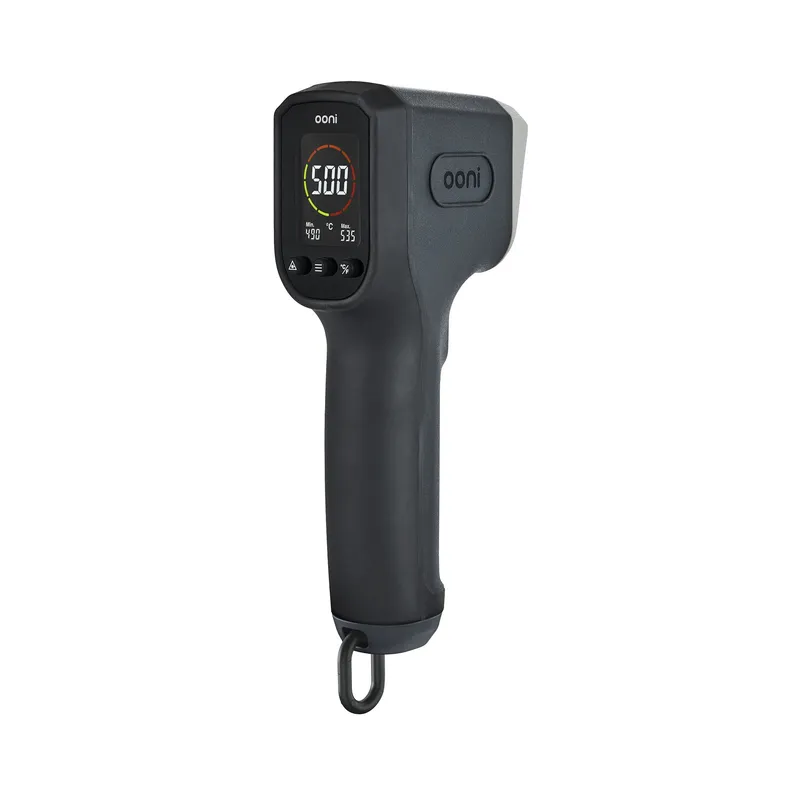
The Ooni Digital Infrared Thermometer is our first choice for pizza stones and high-heat outdoor cooking. Thermapen IR is the more versatile pick when you also need a penetration probe for food.

Quick answer

Ooni Digital Infrared Thermometer is the top pick for pizza ovens because it combines a 550°C ceiling, scan mode and adjustable emissivity. Choose Thermapen IR if one tool needs to read surfaces and food centres; ThermoWorks IR-GUN-S offers stronger 12:1 targeting, while ThermoPro TP30 and Etekcity Lasergrip 630 cover simpler general-purpose roles.

02Thermapen IROfficial manufacturer image

Best surface-and-core combination

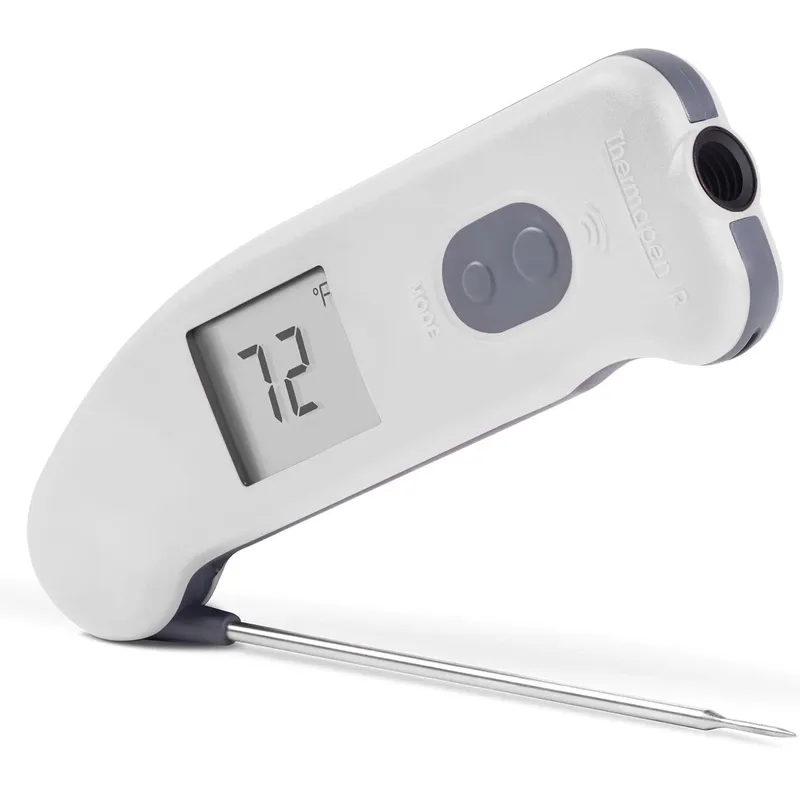
Thermapen IR

  • It combines a folding penetration probe with a separate infrared surface sensor.
  • Its infrared optics are specified at 5:1, while the probe handles internal-food checks.

Drawback: The 5:1 optics require you to work closer to a small target than a 12:1 gun.

Check price on Amazon UKSponsored link · no live price shown
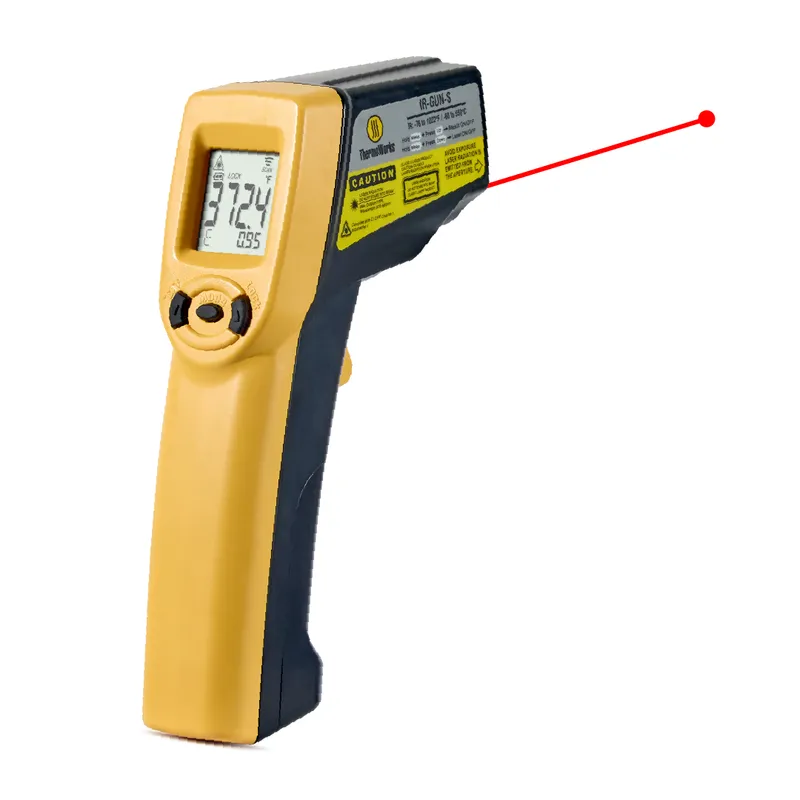
03ThermoWorks IR-GUN-SOfficial manufacturer image

Best for targeted surface checks

ThermoWorks IR-GUN-S

  • The 12:1 distance-to-spot ratio targets a smaller area from farther away than 5:1 models.
  • Its emissivity adjusts from 0.1 to 1.0 and its range reaches 550°C.

Drawback: It is a surface-only industrial-style tool and does not replace a food probe.

Check price on Amazon UKSponsored link · no live price shown
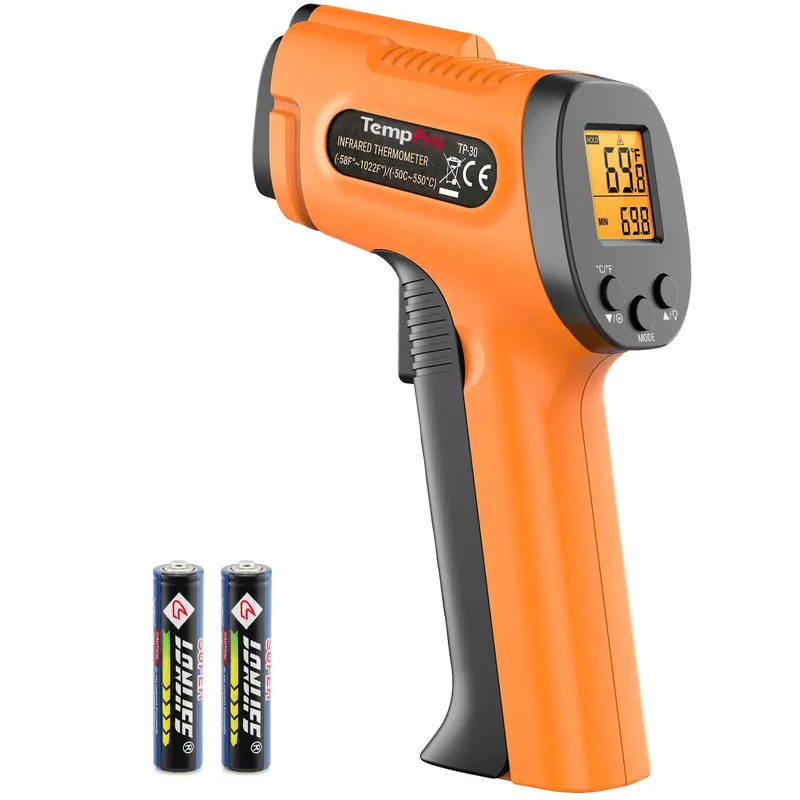
04ThermoPro TP30Official manufacturer image

Best for quick general cooking checks

ThermoPro TP30

  • The manufacturer states a response time below half a second.
  • The backlit trigger format is straightforward for pans, griddles and appliance surfaces.

Drawback: Its general-purpose design lacks an internal-food probe.

Check price on Amazon UKSponsored link · no live price shown
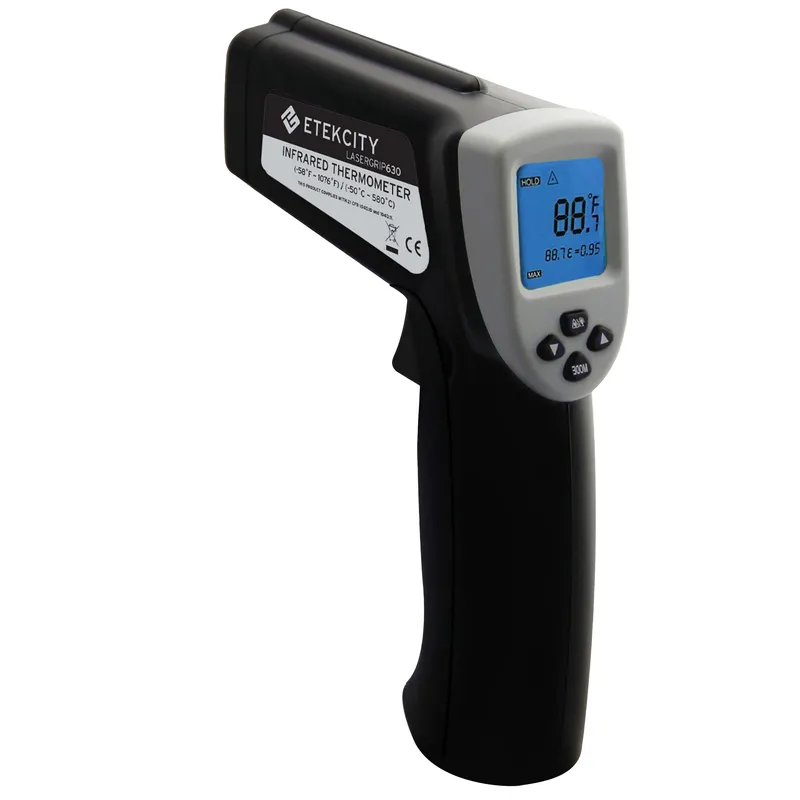
05Etekcity Lasergrip 630Official manufacturer image

Best for adjustable-emissivity basics

Etekcity Lasergrip 630

  • Etekcity provides a dedicated product page and model-specific manual.
  • Adjustable emissivity makes it more adaptable than a fixed-emissivity basic gun.

Drawback: Surface material and spot size still need attention, and it cannot check doneness inside food.

Check price on Amazon UKSponsored link · no live price shown

Compare them side by side

Ooni Digital Infrared ThermometerOfficial manufacturer imageOoni Digital Infrared ThermometerThermapen IROfficial manufacturer imageThermapen IRThermoWorks IR-GUN-SOfficial manufacturer imageThermoWorks IR-GUN-SThermoPro TP30Official manufacturer imageThermoPro TP30Etekcity Lasergrip 630Official manufacturer imageEtekcity Lasergrip 630
Measurement typeSurfaceSurface and coreSurfaceSurfaceSurface
Upper stated range550°C349.9°C infrared550°C——
Distance-to-spot10:15:112:1——
Adjustable emissivityYesYesYesYesYes
Internal-food probe—Yes———
Standout usePizza stonesSurface plus donenessSmaller distant targetsFast spot checksGeneral surfaces
Check price on Amazon UKCheck price on Amazon UKCheck price on Amazon UKCheck price on Amazon UKCheck price on Amazon UK

Common questions

Questions before you buy

What is the best cooking laser thermometer for a pizza oven?

Choose a model whose upper range covers your stone and whose optics keep the measured spot inside the target. Ooni Digital Infrared Thermometer is our leading pizza-specific option.

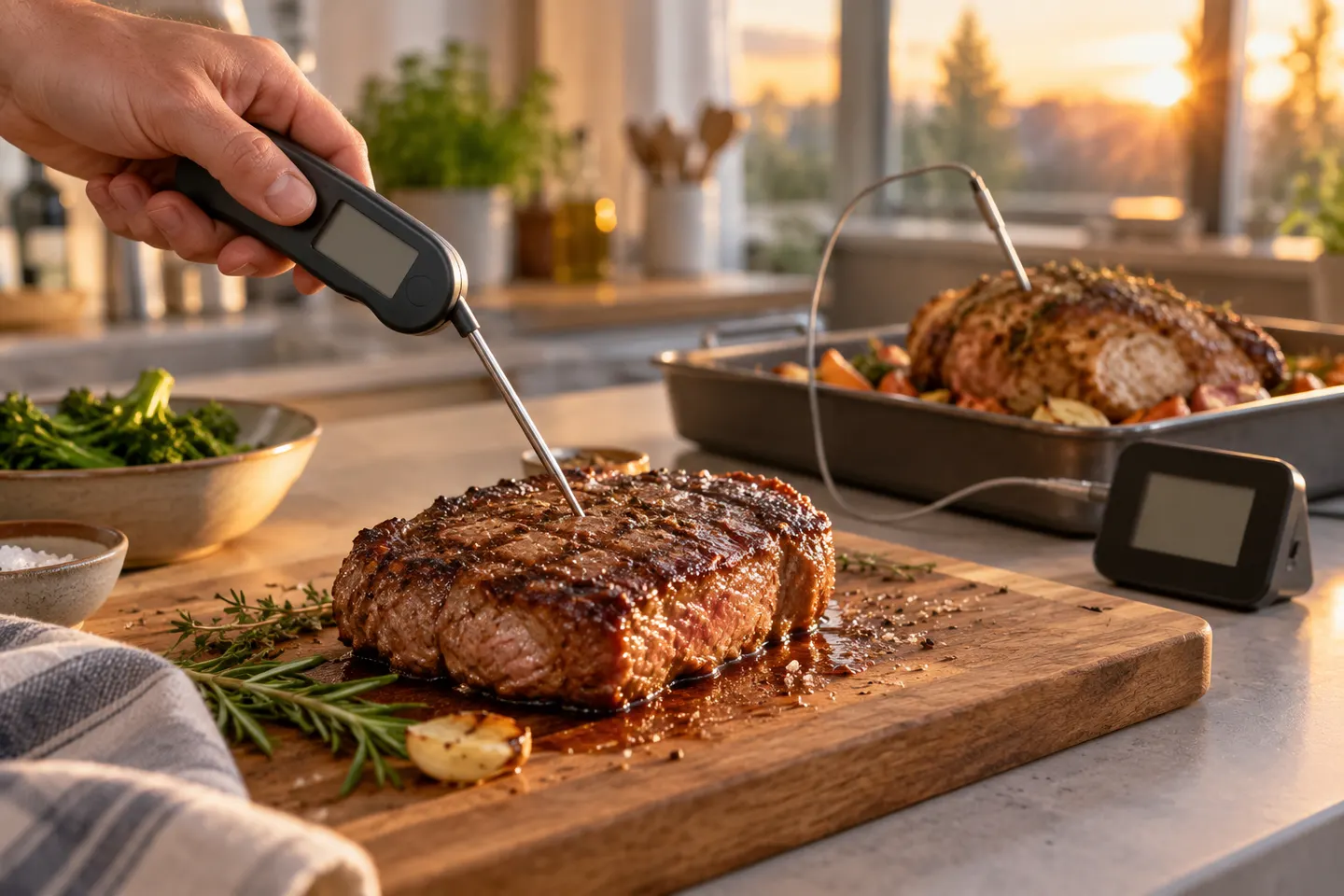
Can a laser thermometer check meat doneness?

No. The laser only aims an infrared surface reading. Use a penetration probe in the thickest part for internal temperature.

What distance-to-spot ratio is useful for cooking?

Higher ratios let you measure a smaller target from farther away. Whatever the ratio, move close enough that the target fully fills the sampled spot.

Why does emissivity matter on cookware?

Different surfaces emit and reflect infrared energy differently. Shiny bare metal is particularly difficult, so follow the instrument's material guidance.

Sources and how we chose