
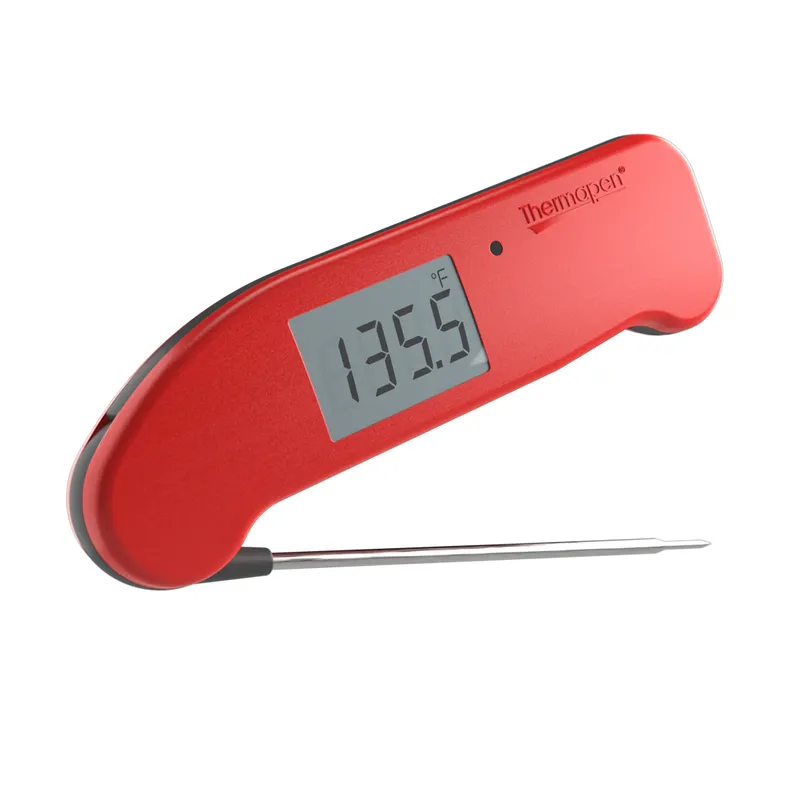
 Official manufacturer image
Our picks
Top picks
Official manufacturer image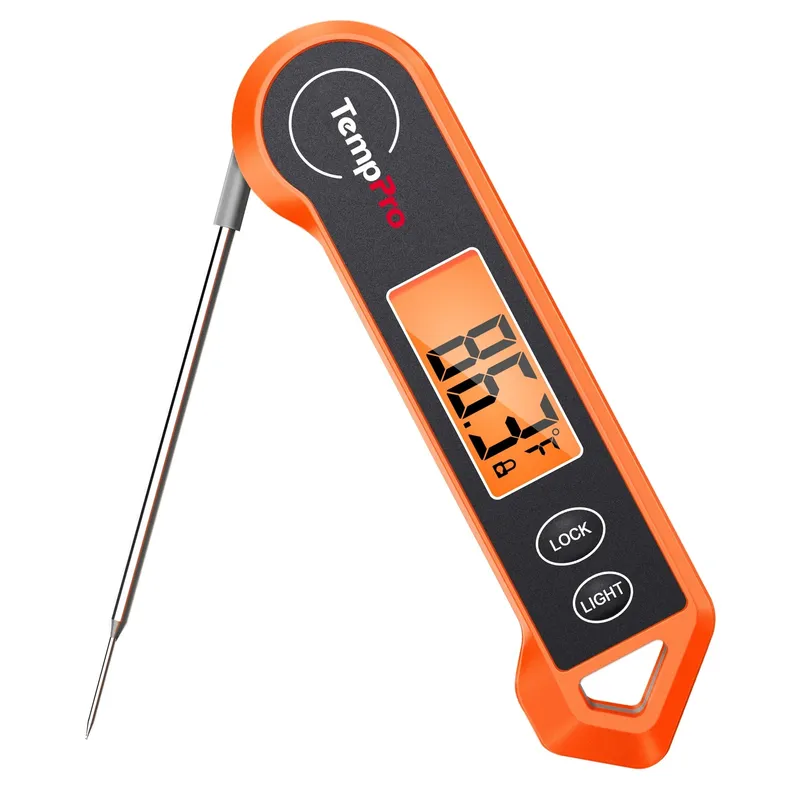 Official manufacturer image
ThermoPro TP19H
Check price on Amazon UK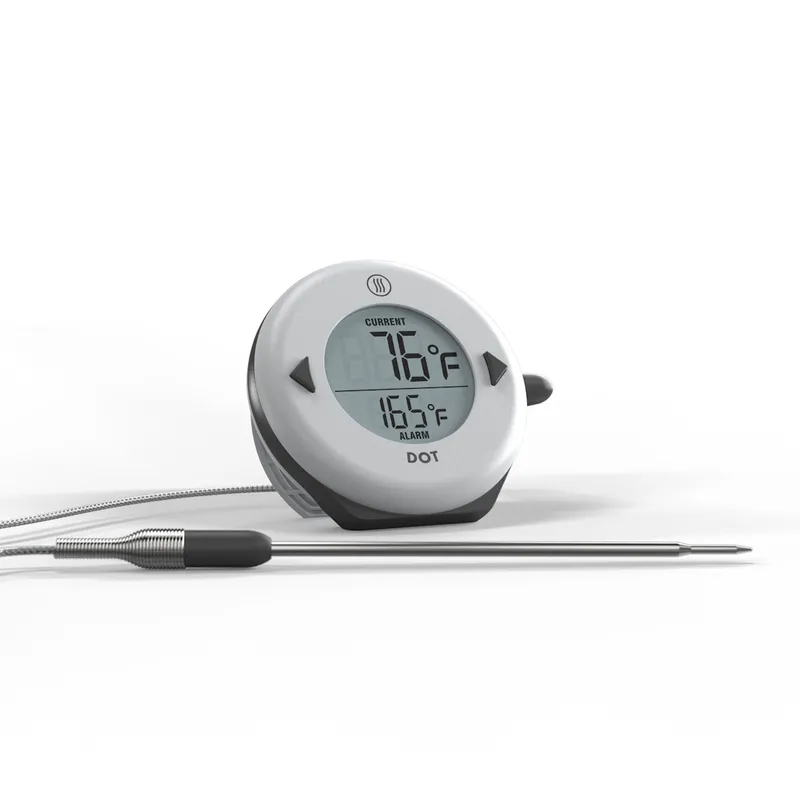 Official manufacturer image
ThermoWorks DOT
Check price on Amazon UKCommon questions
Questions before you buy
Where do you put a thermometer in fish?
Insert it into the thickest edible section, often from the side of a fillet, and keep the sensing area away from the tray, bone and cavity.
What type of thermometer is best for cooking fish?
A quick instant-read probe with a thin tip is easiest for fillets. A suitably thin leave-in probe can help with a thick whole fish or large portion.
Can an infrared thermometer tell if fish is cooked?
No. It reads the surface, not the centre. Use a clean penetration probe to verify internal temperature.
How do I avoid damaging a thin fish fillet with a probe?
Use the thinnest suitable tip and enter from the side so more of the sensing area sits within the flesh.