Find the thickest part of the chicken breast
Insert the probe from the side into the centre of the thickest breast. This approach makes it easier to keep the sensing zone in meat rather than entering the cavity.

Gearjury may earn a commission when you buy through a retailer link. Editorial conclusions are based on cited evidence.
Guide
Check a whole chicken in two places: the centre of the thickest breast and the innermost thigh near the body. Keep the sensing tip clear of bone, joints and the empty cavity.
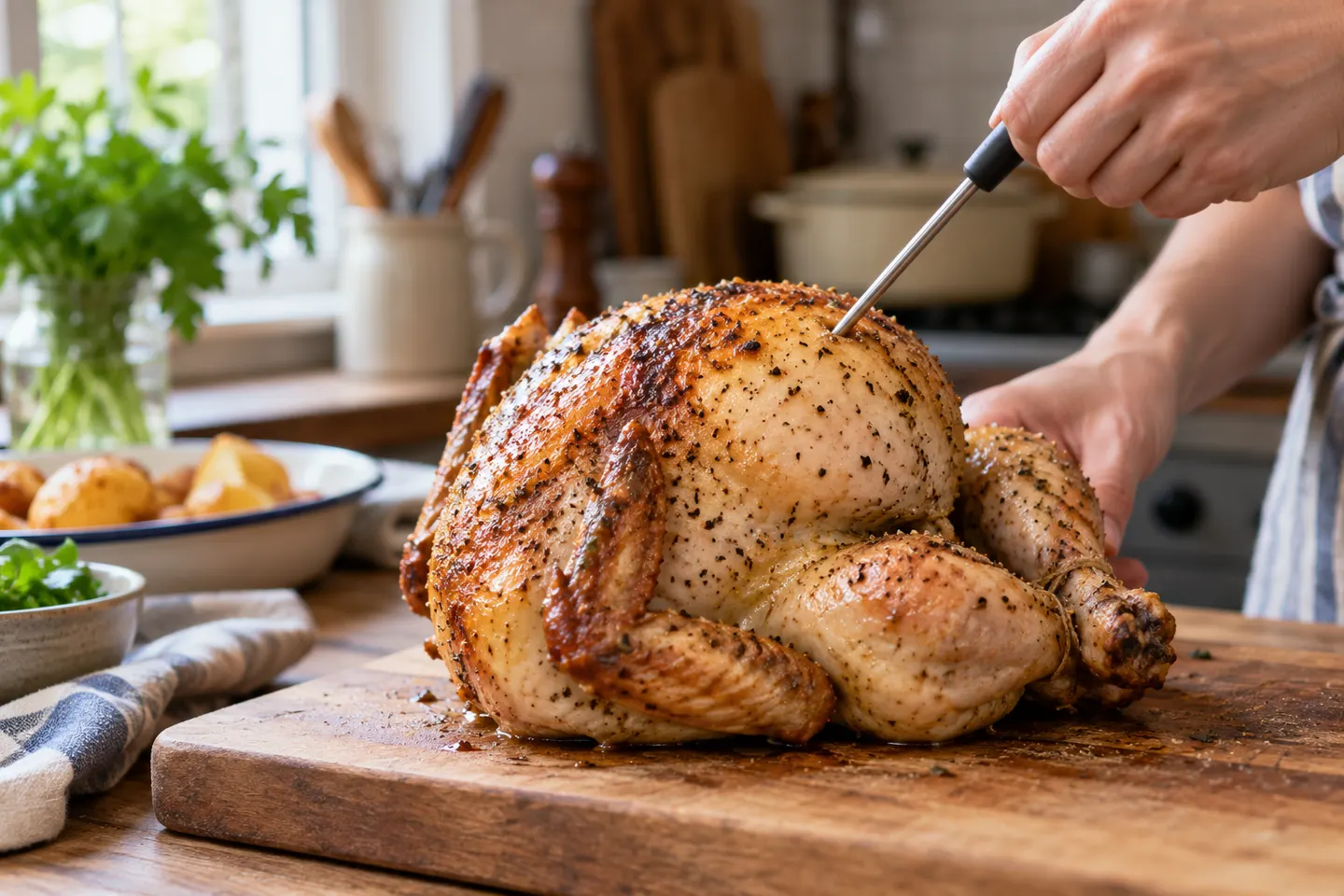
Insert the probe from the side into the centre of the thickest breast. This approach makes it easier to keep the sensing zone in meat rather than entering the cavity.
Probe the thickest inner thigh where the leg meets the body, without touching the hip joint or thigh bone. The breast and thigh can finish at different times.
Bone and hot metal can skew a reading. If the chicken is stuffed, check the centre of the stuffing separately because it is another dense area that must cook safely.
Measure both sides and move the tip slightly within each thick section. Base your decision on the lowest stable reading, not the first or highest number.
The FSA lists equivalent combinations, including 70°C for two minutes and 75°C for 30 seconds. Match the lowest reading to the required holding time.
Common questions
Check the centre of the thickest breast and the innermost thigh near the body. Avoid bones, joints and the cavity.
Check both because they differ in thickness and may heat at different rates. Repeat on both sides of the bird.
Keep cooking until every required location meets safe guidance, while protecting faster-cooking areas from excess browning if needed.
No. Colour and juices can mislead, so confirm the internal time-and-temperature combination with a suitable food thermometer.
Keep exploring
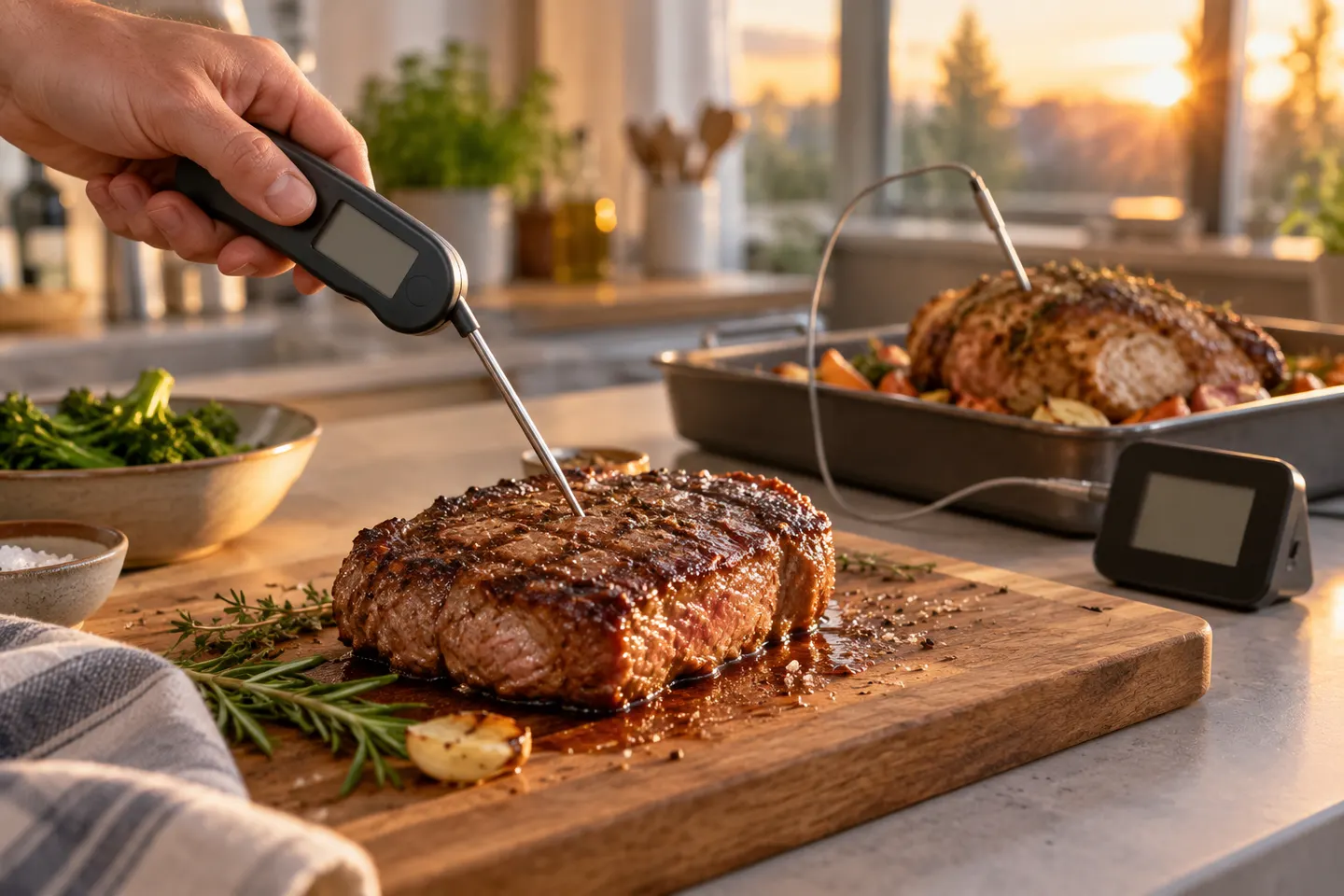
Pick a folding digital thermometer for rapid checks or a leave-in digital probe for alarms during a roast. Accuracy and sensing-tip placement matter more than extra presets.

Thermapen ONE is our top all-round pick for fast spot checks. ThermoPro TP19H is the simpler alternative, while DOT and MEATER Pro suit cooks who need continuous monitoring.

An instant-read thermometer suits quick checks; a leave-in or wireless probe is better for tracking a roast without repeatedly opening the oven.