Use temperature and time together
UK guidance gives equivalent safe combinations rather than one magic number. Examples include 70°C held for two minutes and 75°C held for 30 seconds; consult the current FSA table for alternatives.

Gearjury may earn a commission when you buy through a retailer link. Editorial conclusions are based on cited evidence.
Guide
For pork, the Food Standards Agency lists safe combinations such as 70°C for two minutes or 75°C for 30 seconds. Measure the coolest part and account for both temperature and holding time.
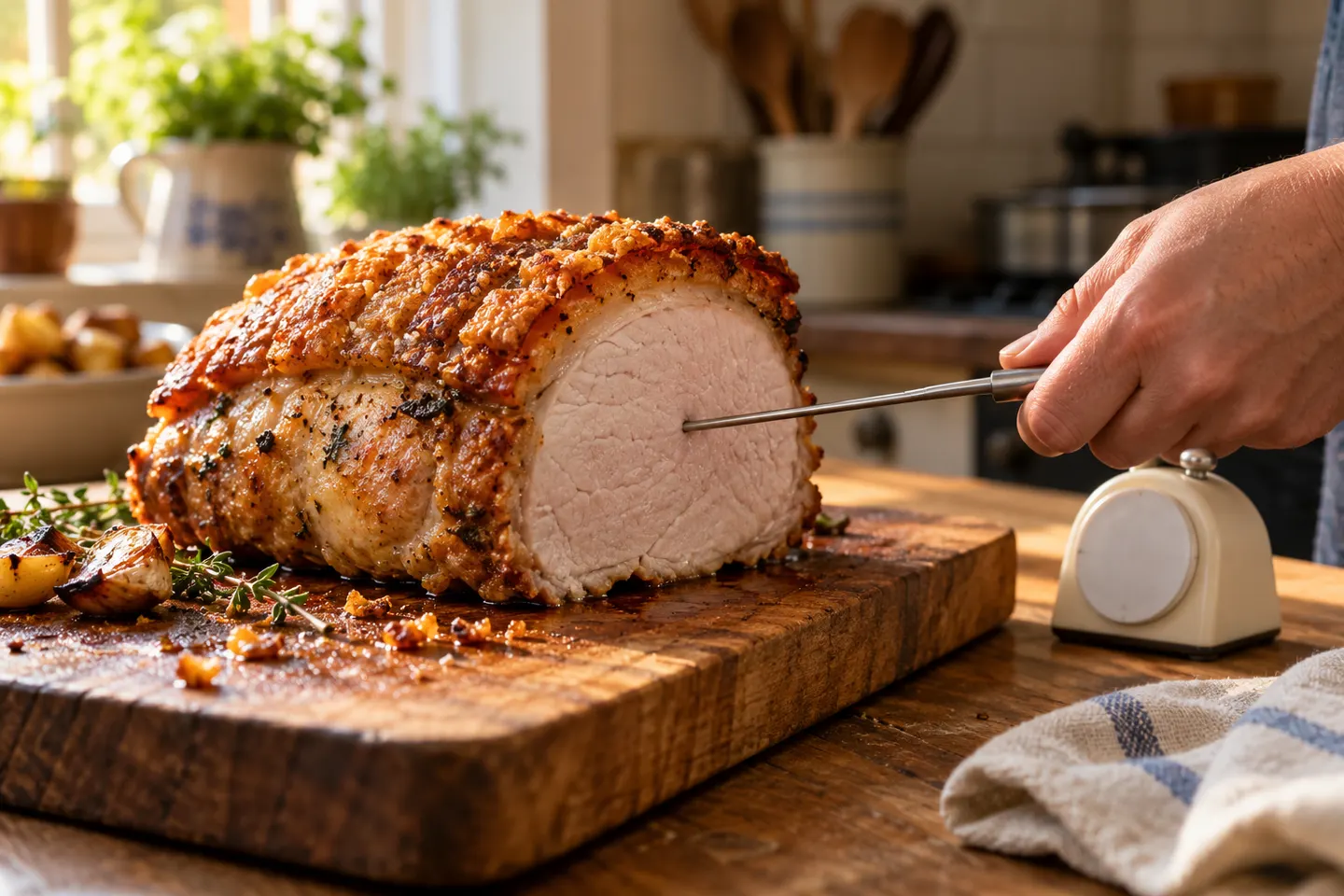
UK guidance gives equivalent safe combinations rather than one magic number. Examples include 70°C held for two minutes and 75°C held for 30 seconds; consult the current FSA table for alternatives.
Insert the sensing area into the centre of the thickest part, preferably from the side for a narrow loin. Avoid bone, the roasting tin and large seams of fat.
A joint may not heat evenly, especially when rolled or stuffed. Take readings in several thick areas and judge safety by the lowest stable temperature.
Processing can move surface contamination into the centre. Cook these products thoroughly and follow pack instructions alongside current food-safety guidance.
Resting can improve carving and temperature may continue to change, but do not remove pork early unless your cooking method uses a validated time-and-temperature approach.
Common questions
The FSA provides combinations including 70°C for two minutes or 75°C for 30 seconds. Use the coolest part of the pork and the corresponding holding time.
Put the sensing area in the centre of the thickest section, away from fat pockets, bone and the pan. For a narrow loin, inserting from the side helps reach the centre.
Colour alone does not prove safety or undercooking. Verify an appropriate internal time-and-temperature combination with a food thermometer.
Only use a probe specifically rated for leave-in cooking. An instant-read thermometer should be inserted for checks and then removed.
Keep exploring
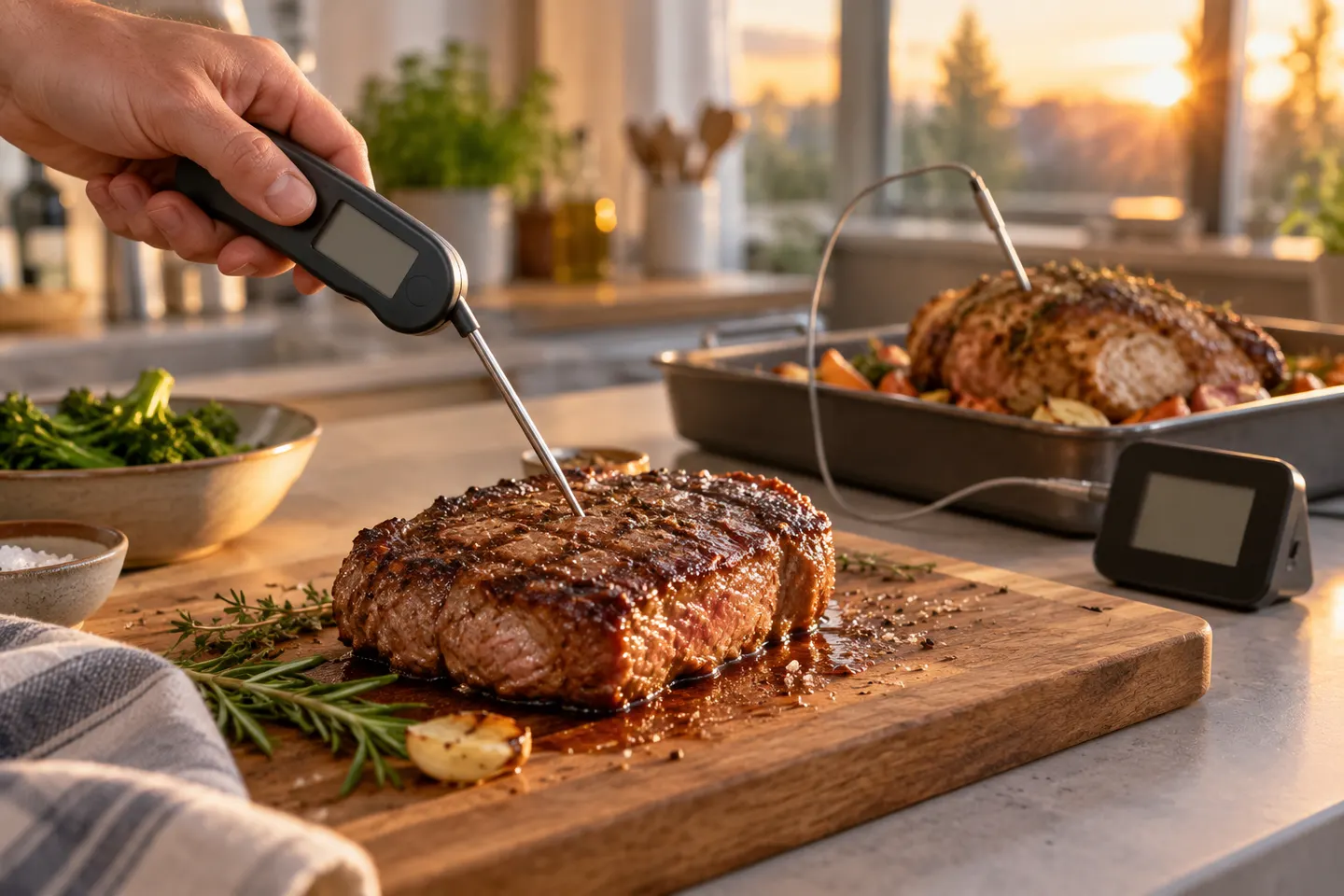
Pick a folding digital thermometer for rapid checks or a leave-in digital probe for alarms during a roast. Accuracy and sensing-tip placement matter more than extra presets.

Thermapen ONE is our top all-round pick for fast spot checks. ThermoPro TP19H is the simpler alternative, while DOT and MEATER Pro suit cooks who need continuous monitoring.

An instant-read thermometer suits quick checks; a leave-in or wireless probe is better for tracking a roast without repeatedly opening the oven.