Which meat thermometer is best for quick checks?
Pick a fast instant-read probe with a clearly stated accuracy band and a thin tip. It should stabilise quickly enough that you can check several locations without cooling the oven or grill for long.

Gearjury may earn a commission when you buy through a retailer link. Editorial conclusions are based on cited evidence.
Guide
Choose an instant-read model for steaks and quick checks, a wired alarm for oven roasts, or a wireless probe when remote monitoring matters. Accuracy and correct placement matter more than extra modes.
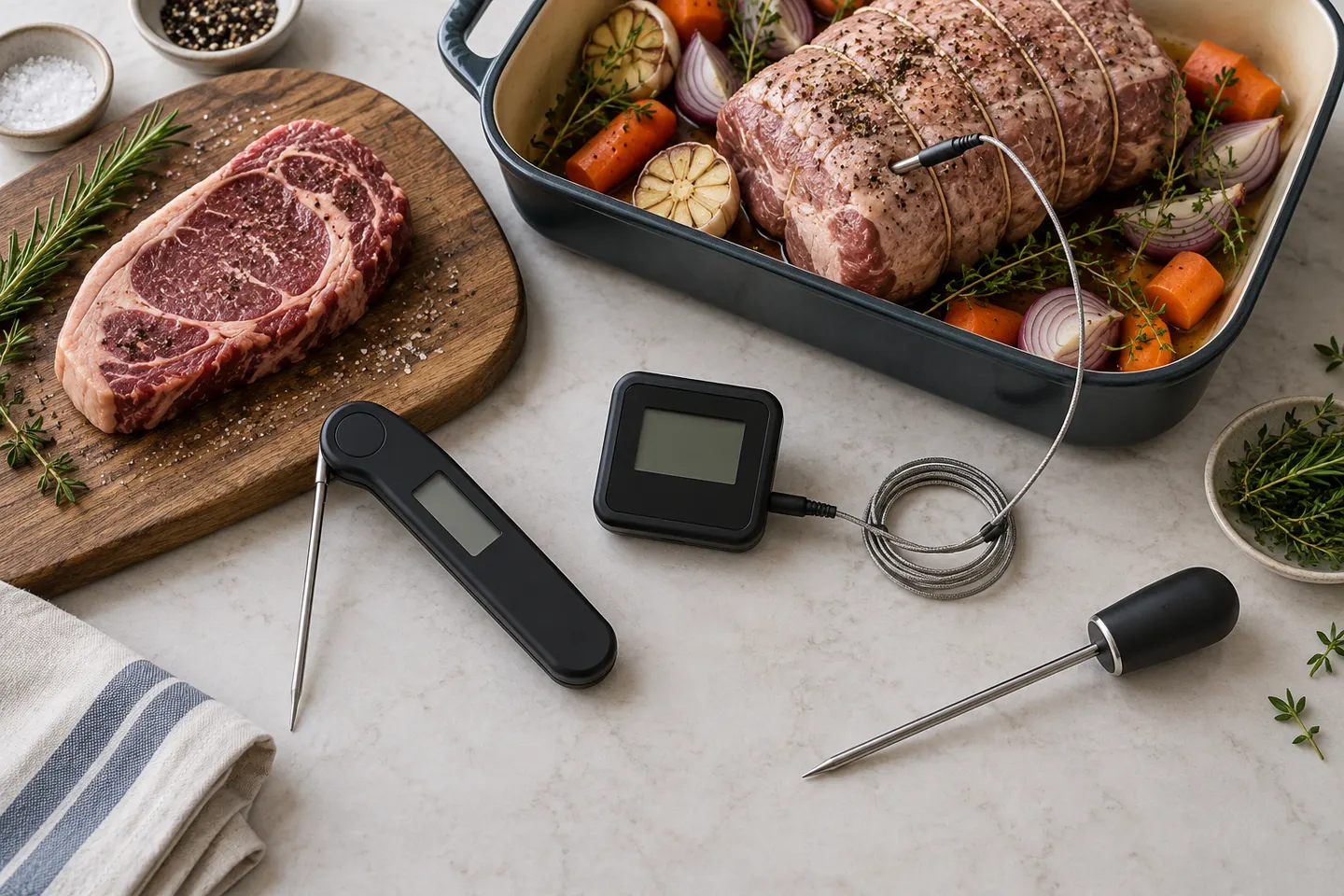
Pick a fast instant-read probe with a clearly stated accuracy band and a thin tip. It should stabilise quickly enough that you can check several locations without cooling the oven or grill for long.
A wired oven probe provides continuous food temperature and a target alarm without requiring an app. Confirm the probe and cable heat limits, and keep the display outside the oven.
Wireless probes reduce cable clutter and can notify a phone or receiver. Check connection method, usable range through your cooker, probe thickness, battery life and whether an account or internet connection is required.
Thin burgers and fish need a fine sensing tip and shallow insertion capability. Large roasts can accommodate thicker leave-in probes, while multi-probe systems suit separate foods or food-and-oven monitoring.
Prefer a published accuracy specification across cooking temperatures and check the manual's calibration-test method. Water resistance helps cleaning, but it does not mean the whole instrument is dishwasher-safe.
Common questions
A fast instant-read probe is the most versatile first thermometer because it handles quick checks across many foods. Add a leave-in alarm if you cook large roasts regularly.
Use a purpose-built leave-in probe with an external display, receiver or app. Verify the cable and probe heat limits before putting it in the oven.
Choose a narrow-tip instant-read probe with its sensing area close to the tip. Insert from the side so the sensor reaches the centre.
Wireless is useful when you want remote alerts or no cable across the door. Wired models are often simpler and avoid charging a probe, so the better choice depends on your cooker and monitoring distance.
Keep exploring

Thermapen ONE is our top all-round pick for fast spot checks. ThermoPro TP19H is the simpler alternative, while DOT and MEATER Pro suit cooks who need continuous monitoring.
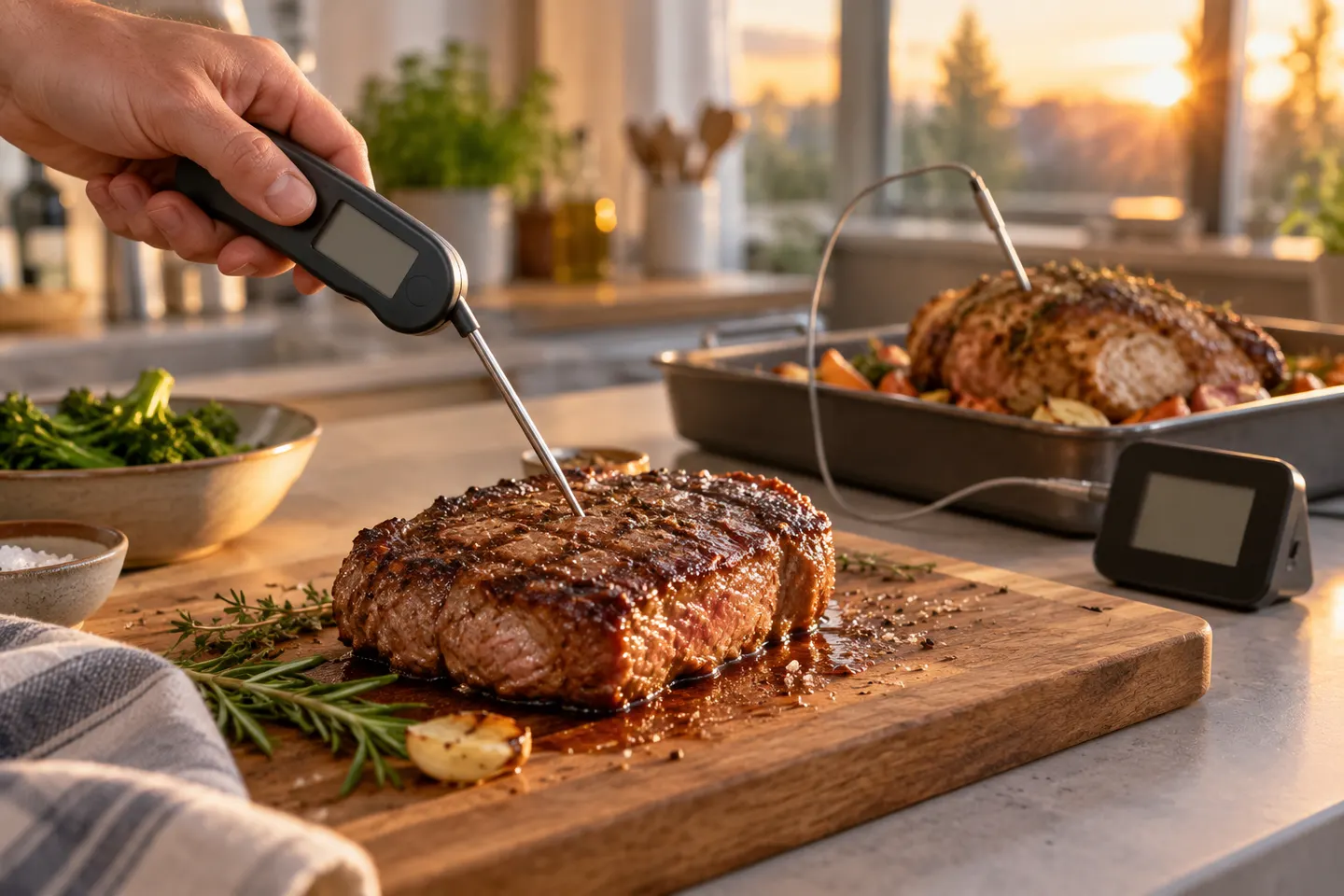
Pick a folding digital thermometer for rapid checks or a leave-in digital probe for alarms during a roast. Accuracy and sensing-tip placement matter more than extra presets.

An instant-read thermometer suits quick checks; a leave-in or wireless probe is better for tracking a roast without repeatedly opening the oven.