Check the thermometer's temperature range
Sugar work can exceed ordinary meat-cooking temperatures. Read the exact instrument's upper limit before starting; never assume every food thermometer covers confectionery stages.

Gearjury may earn a commission when you buy through a retailer link. Editorial conclusions are based on cited evidence.
Guide
Yes, if the thermometer's published range covers your recipe and its probe can be held safely in the syrup without touching the pan. A clip-on sugar thermometer is easier for continuous monitoring.
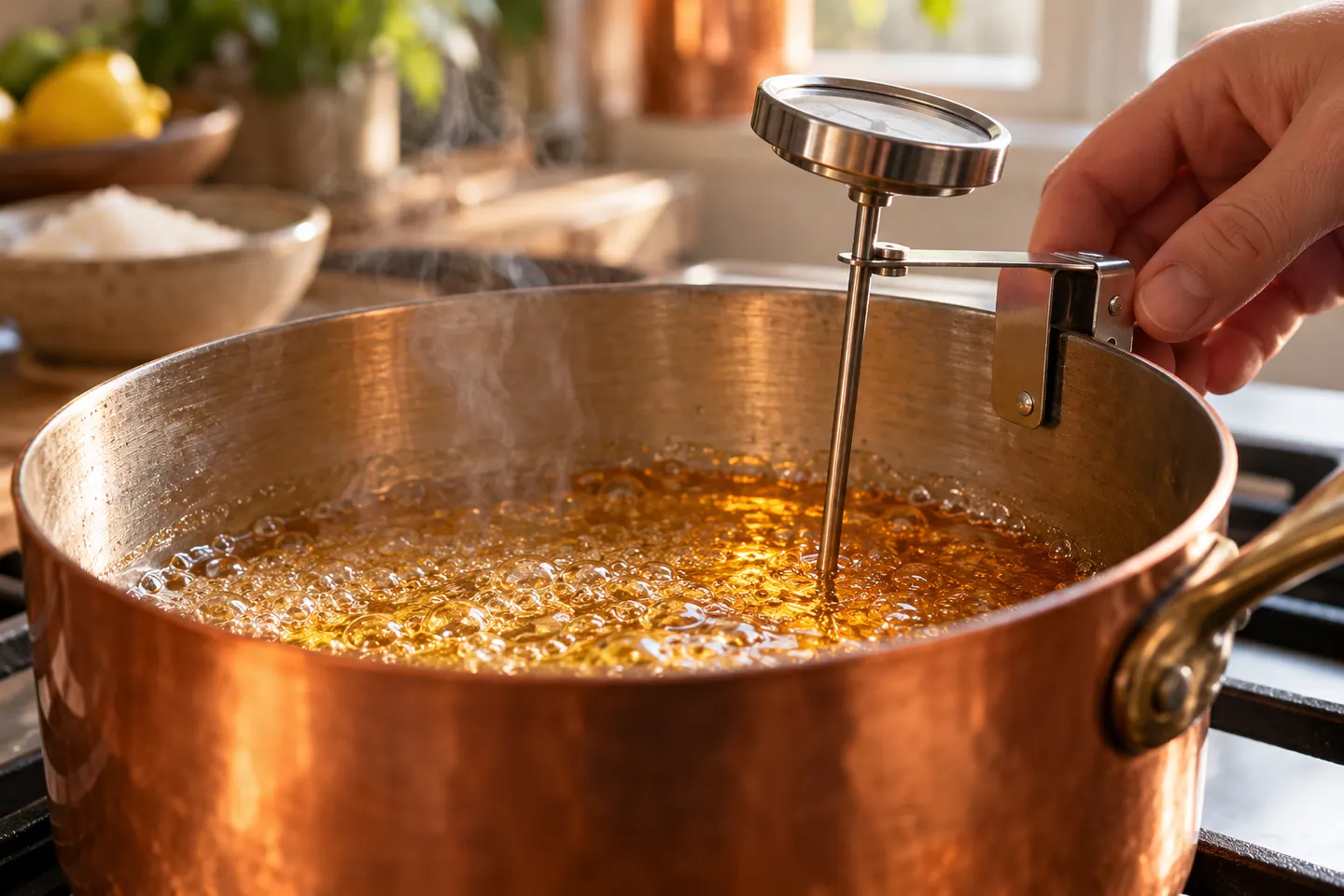
Sugar work can exceed ordinary meat-cooking temperatures. Read the exact instrument's upper limit before starting; never assume every food thermometer covers confectionery stages.
A sugar thermometer usually clips to the pan for continuous readings and has a long probe or protected glass body. An instant-read meat thermometer is better for brief checks and must be held safely.
Immerse the stated sensing section without touching the base or side of the pan. A shallow batch may not cover enough of a long probe, which makes the tool a poor match.
Keep plastic housings and cables away from steam, flame and the hot pan. Clean hardened sugar according to the maker's instructions and never immerse a display unless it is rated for that.
Jam can be checked with a suitable food thermometer, but setting also depends on recipe and pectin. Chocolate tempering needs fine control in a lower range, so response and accuracy around the target matter more than a very high maximum.
Common questions
Yes, if its stated range and immersion requirements suit the batch. A pan-clipped thermometer is often easier because jam needs monitoring while it boils.
Not necessarily. They may overlap in range, but sugar thermometers are commonly designed to stay clipped in a pan while many meat thermometers are intended for momentary checks.
A probe thermometer can measure liquids when its manual permits it and the sensing zone is immersed correctly. Do not submerge the display or touch the pan.
Yes, if it is accurate in the tempering range and the sensor can be immersed in the chocolate. A quick response helps when the temperature changes rapidly.
A leave-in fridge thermometer measures air over time more usefully. A probe can check a food-simulant liquid if its manufacturer allows it, but a brief air reading can be misleading.
No. Food thermometers are not medical devices and are not designed or validated to measure human body temperature; use an appropriate clinical thermometer.
Only a sensor specifically rated for oven-air temperatures should be used. A meat probe, cable or handheld body may have different heat limits.
Keep exploring
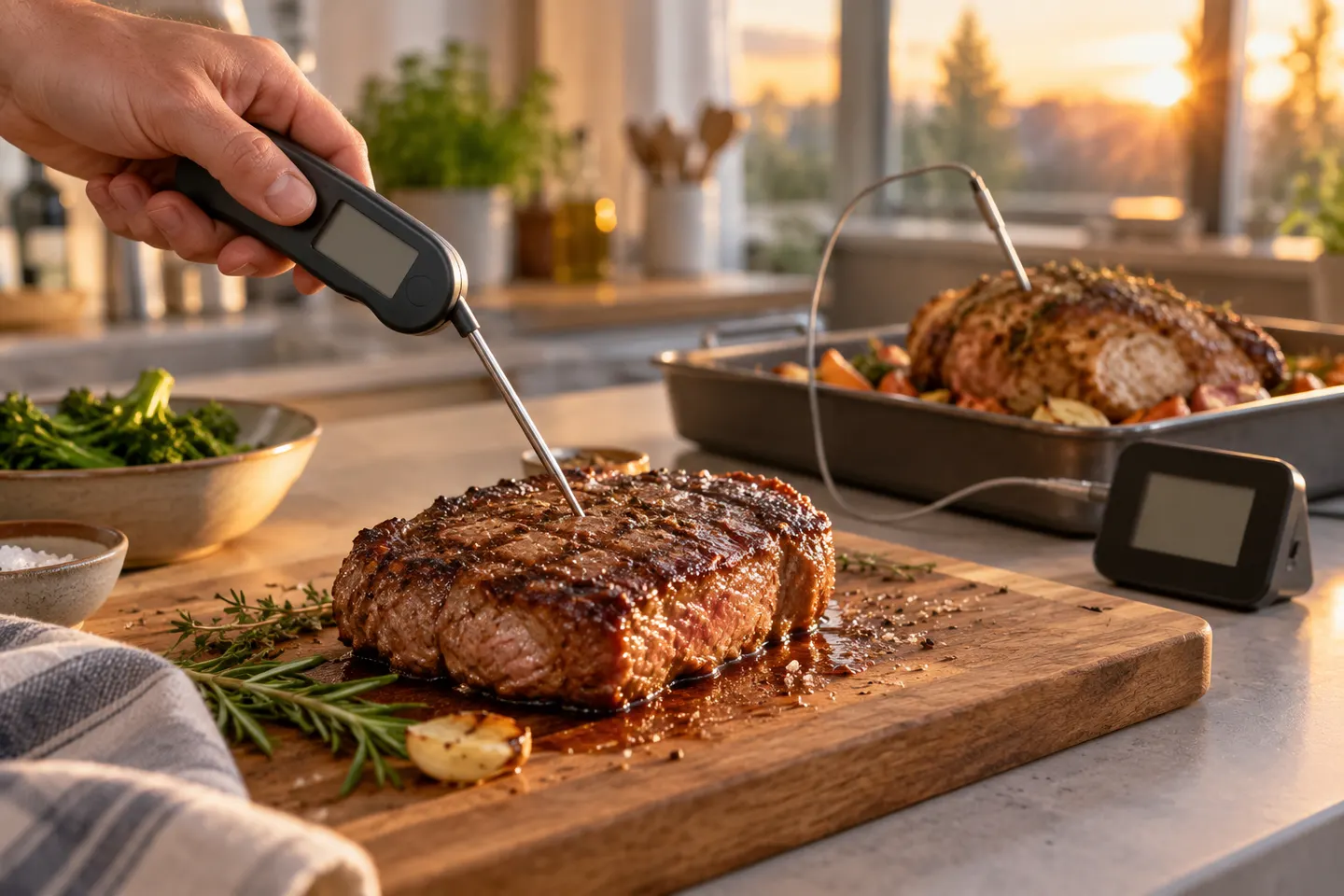
Pick a folding digital thermometer for rapid checks or a leave-in digital probe for alarms during a roast. Accuracy and sensing-tip placement matter more than extra presets.

Thermapen ONE is our top all-round pick for fast spot checks. ThermoPro TP19H is the simpler alternative, while DOT and MEATER Pro suit cooks who need continuous monitoring.

An instant-read thermometer suits quick checks; a leave-in or wireless probe is better for tracking a roast without repeatedly opening the oven.