Can you use a meat thermometer for water?
Yes, when the expected water temperature falls inside the thermometer's measurement range. Check the manual for minimum immersion depth and whether the probe, cable joint or body is water-resistant.

Retailer links may earn Gearjury a commission without changing the price you pay.
Guide
Yes, a suitable probe can measure water within its published range. Immerse only the sensing section, keep an unrated display or plug dry and do not let the tip touch the vessel.
Yes, when the expected water temperature falls inside the thermometer's measurement range. Check the manual for minimum immersion depth and whether the probe, cable joint or body is water-resistant.
Place the sensing section below the surface but keep any unsealed display or connector dry. Hold the probe away from the side and base, which can be hotter or colder than the water itself.
Gently stir to reduce hot and cold layers, then let the number stabilise. Avoid splashing, steam burns and contact with a heating element.
Use a thermometer designed for the task when working with very hot sugar solutions, deep frying, laboratory measurements or a narrow target that demands documented accuracy.
After measurement, clean the immersed section according to the product instructions and dry it before storage. Never submerge the electronics merely because the metal stem can enter water.
Common questions
Yes, if the water falls within the stated range and you immerse the sensing area correctly. Keep components dry unless they are explicitly rated for immersion.
Not unless the manufacturer gives the complete unit an appropriate waterproof or immersion rating. A washable probe does not automatically make the display waterproof.
The pan can be at a different temperature from the liquid, so contact may produce a reading that does not represent the water.
A properly prepared ice slurry is a useful reference check. Boiling water requires correction for altitude and atmospheric pressure, so it is less universal.
Keep exploring
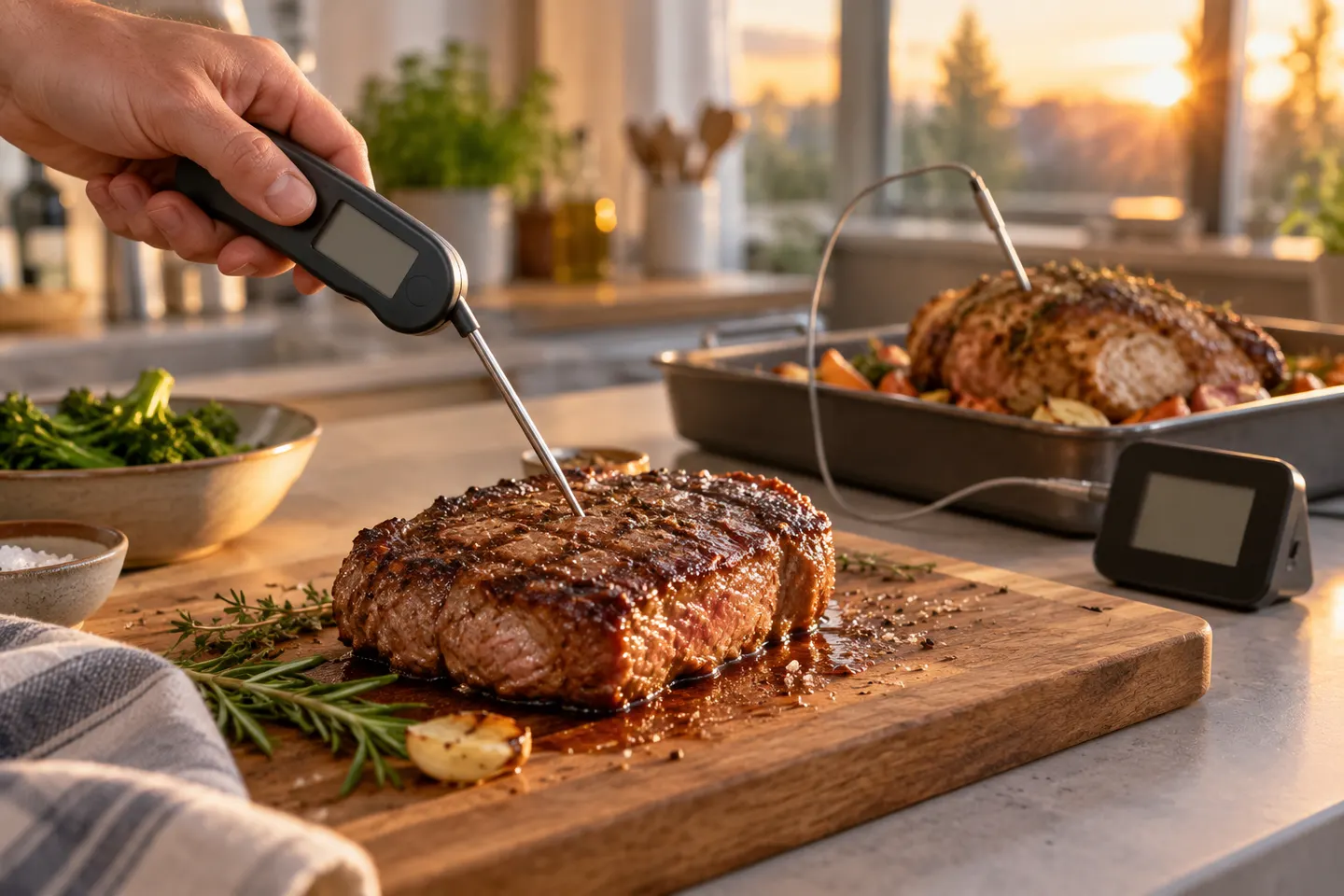
Pick a folding digital thermometer for rapid checks or a leave-in digital probe for alarms during a roast. Accuracy and sensing-tip placement matter more than extra presets.

Thermapen ONE is our top all-round pick for fast spot checks. ThermoPro TP19H is the simpler alternative, while DOT and MEATER Pro suit cooks who need continuous monitoring.

An instant-read thermometer suits quick checks; a leave-in or wireless probe is better for tracking a roast without repeatedly opening the oven.