Independent buying guidance · UK editionHow we work

Gearjury may earn a commission from qualifying purchases. Our recommendations are based on published evidence.

Buying guide

How to Choose an Air Purifier: What to Look For and What Size You Need

Learn how to choose an air purifier by room volume, CADR, filtration, noise and upkeep, including what size air purifier you need.

How to Choose an Air Purifier: What to Look For and What Size You Need

Quick answer

  • Start with room size in m². Check which air-change rate the manufacturer uses, because a figure at one air change per hour is not comparable with one at five.
  • Compare CADR like with like. Manufacturers state it in m³/h or cfm, so convert before ranking.
  • For a bedroom, check sleep-mode noise and whether the display lights switch off, not only the maximum noise.
  • Budget for filters: annual cost equals the filter price multiplied by replacements per year, using the manufacturer's interval.

Start with room size and clean air delivery rate

Match the stated coverage to your room

Manufacturers often publish more than one room size, each tied to a different air-change rate. Core 300S, for example, lists 50 m² at two air changes per hour and 100 m² at one. Blueair Blue Pure 511 recommends around 16 m² at 4.8 air changes per hour. Use the figure that matches your room and expected use, and treat maximum sizes as the upper limit rather than a bedroom recommendation.

Compare CADR in the same units

Clean air delivery rate (CADR) is the volume of filtered air a unit delivers. Vital 100S states 243 m³/h. WINIX ZERO Compact states 250 m³/h. Philips AC0820/10 states 190 m³/h. Blueair Blue Pure 511 states 123 cfm for pollen and dust, which is roughly 209 m³/h by standard conversion (our calculation). Core 300S does not publish a CADR in our source, so its airflow cannot be compared directly.

For the wider context on room air cleaners, see the air purifier category.

Filtration and limits

A filter's job depends on the type of pollutant and the filter stack, so check what each manufacturer lists for pre-filter, particle and any other stages. A unit that performs well for dust may not be the right choice if you need a particular kind of protection. Our sources do not support medical or health-outcome claims, so treat any health need as a question for your doctor.

Noise by mode and lights

A low minimum noise figure is not the same as a low sleep-mode noise level. Figures from our sources:

  • Core 300S: 22 dB in Sleep Mode, with display lights off.
  • Vital 100S: 23 dB in Sleep Mode, with lights off in darkness. One gallery caption gives 24 dB, so confirm before buying.
  • Philips AC0820/10: 19 dB(A) in sleep mode, with display lights dimmed. Range 19–49 dB(A).
  • Blueair Blue Pure 511: range 24–49 dB. Sleep-mode figure not stated.
  • WINIX ZERO Compact: range 26.5–53.7 dB. Sleep-mode figure not stated.

If noise matters at night, compare sleep-mode figures first and the top-speed range second. For model-by-model detail, see the Core 300S, Vital 100S and Zero Compact comparison.

Placement

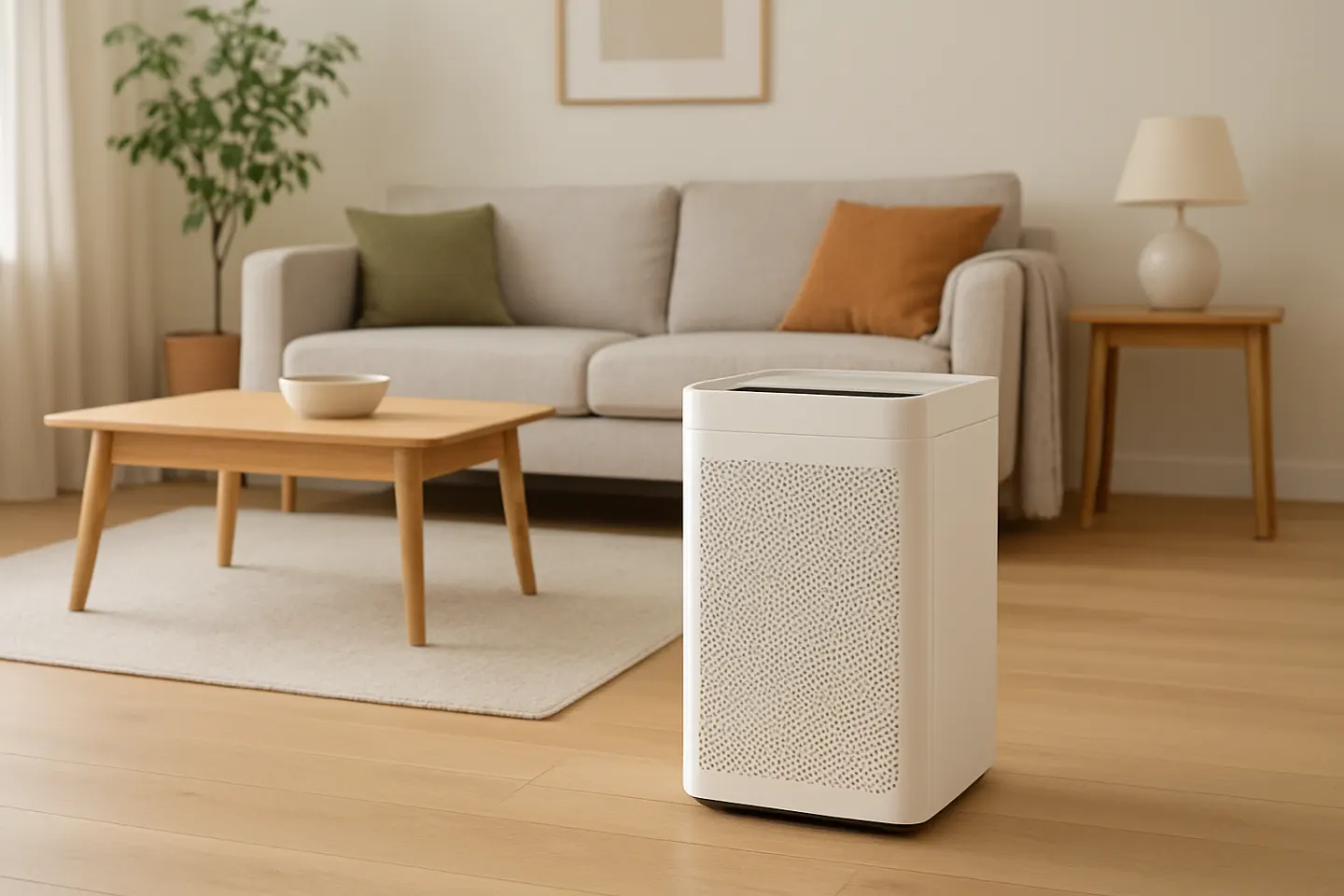
Place the unit in open floor space, away from walls and furniture that block the intake and outlet, following each manufacturer's clearance guidance. Keep the room door closed while the unit runs if you are judging the room's clean-air time.

Filters and running costs

Replacement intervals from manufacturer sources differ: Core 300S 6–8 months, Vital 100S 8–12 months, Blueair Blue Pure 511 six months, WINIX ZERO Compact and Philips AC0820/10 twelve months. Power figures also vary: WINIX ZERO Compact 12–55 W, Blueair Blue Pure 511 16 W, Philips AC0820/10 up to 20 W. Vital 100S and Core 300S do not publish power in our source, so their running cost cannot be calculated from it.

We have no verified filter prices, so we cannot state a cost. To estimate one, use this method: filter price × replacements per year (12 ÷ interval in months) + your electricity use. Compare the totals, not the purchase prices.

How we chose

Gearjury has not tested these air purifiers physically. The figures above come from manufacturer product pages consulted on 13 October 2026 and from the EPA's general guidance on room air cleaners. Where a manufacturer gives conflicting or missing figures, we say so rather than fill the gap.

Compare the key criteria

Criterion What to check Why it matters
Room size Air-change rate behind the m² figure Makes sizes comparable
CADR m³/h or cfm, same unit for all models Shows airflow
Sleep-mode noise dB in sleep mode, not only top speed Matters for bedrooms
Lights Display dims or switches off in sleep Affects night-time use
Filter interval Manufacturer months between replacements Drives yearly cost
Power Watts by mode, if published Affects running cost
Data gaps Figures not published Shown as — in comparisons

Your checklist

  • Confirm the room size in m² and the air-change rate behind it.
  • Convert CADR to one unit before comparing models.
  • Check sleep-mode noise and whether display lights turn off.
  • Note the filter replacement interval and calculate yearly filter cost.
  • Check the power range if running cost matters.
  • Confirm that the model is sold for the UK market and check the manufacturer's current figures.
  • Place the unit in open floor space with clearance around the intake and outlet.

Common questions

Questions before you buy

How to pick the best air purifier for your home?

Start with the room size in square metres, then check the clean air delivery rate (CADR), which manufacturers state in m³/h or cfm. Next, check noise in the mode you will use at night, and the filter replacement interval. Our sources do not name one best model, because the right choice depends on your room and priorities.

What is the 2/3 rule for air purifiers?

Our sources do not document a 2/3 rule, so we do not apply one. Use the manufacturer's room size and air-change figures instead, and remember that a maximum room size is not the same as a recommendation for a quiet bedroom.

What to avoid when buying an air purifier?

Avoid judging a unit by one headline figure. A maximum room size without its air-change rate, or a low noise figure without a matching CADR, can mislead. Check the filter replacement interval and cost, and whether sleep-mode noise is stated at all.

How much should I spend on an air purifier?

We have no verified prices, so we cannot give a figure. Work out the total instead: purchase price plus filter price multiplied by replacements per year, using the manufacturer's interval. Compare totals over a year, not sticker prices alone.

Is it better to have one large air purifier or multiple small ones?

Our sources do not compare one large unit with several small ones, so we cannot say which is better. Check each unit's room size and CADR. If several units share one room, compare their combined output and noise rather than assuming the figures simply add up.

Can air purifiers help with asthma?

We make no medical or health-outcome claim for any model in this guide. If asthma affects you or someone in your home, speak to your doctor or asthma nurse before relying on an air purifier.

Sources and how we chose