
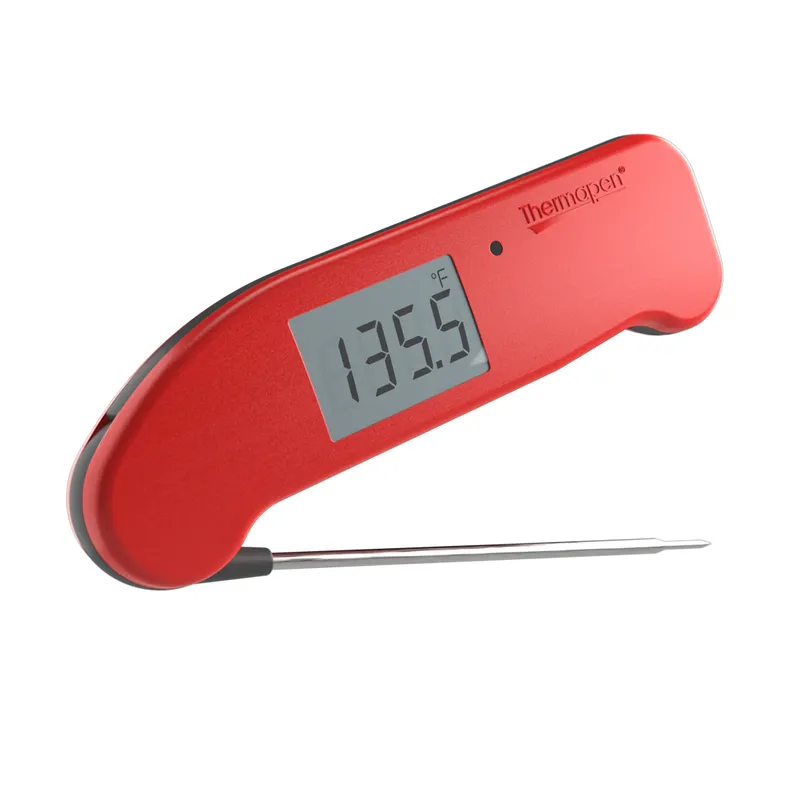
 Official manufacturer image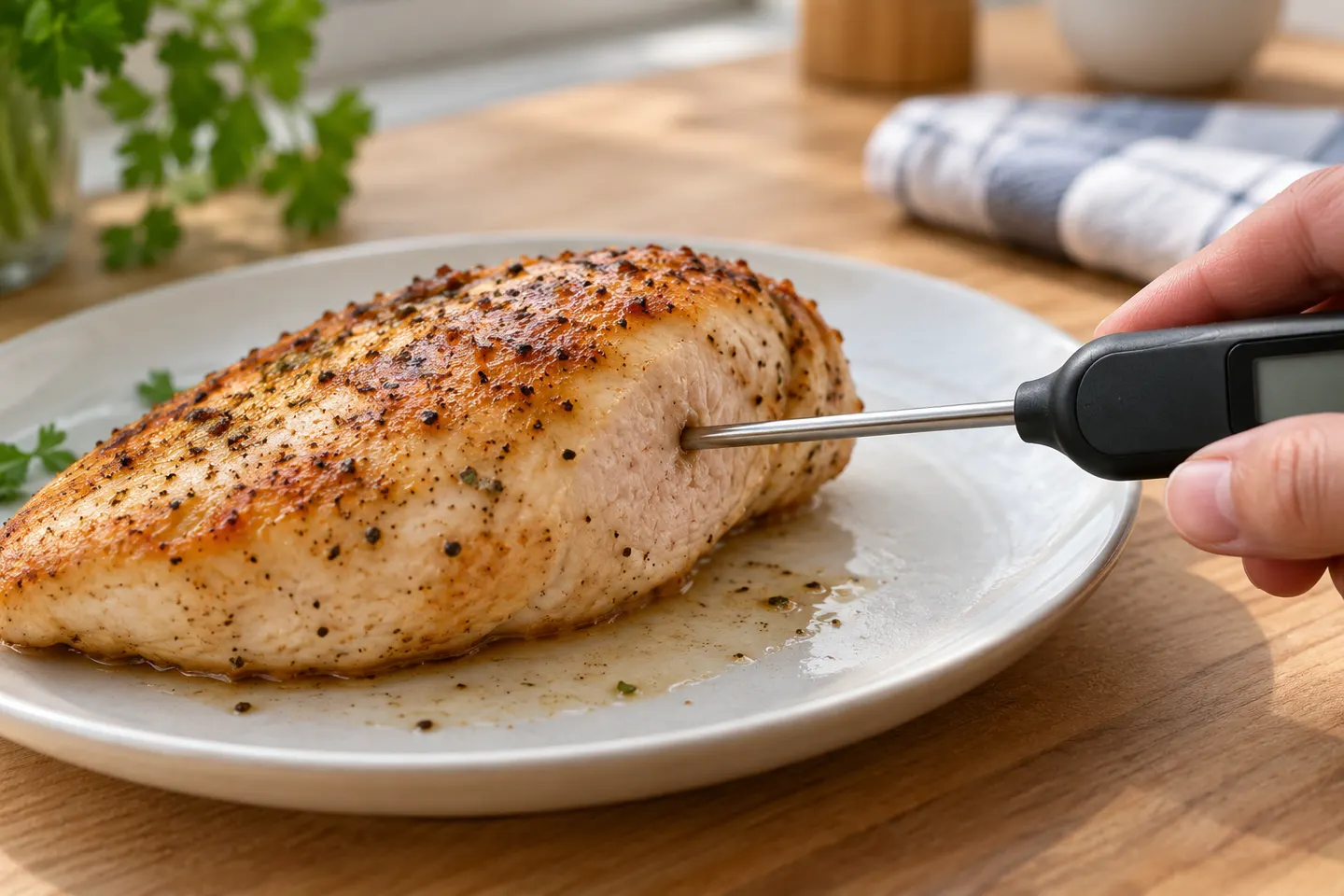
Our picks
Top picks
Official manufacturer image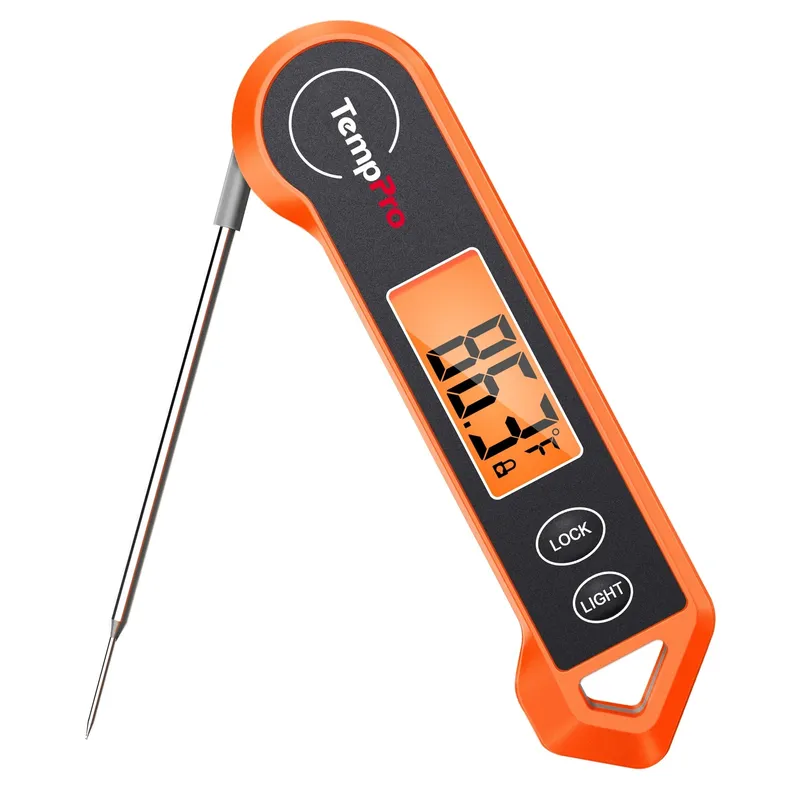 Official manufacturer image
ThermoPro TP19H
Check price on Amazon UK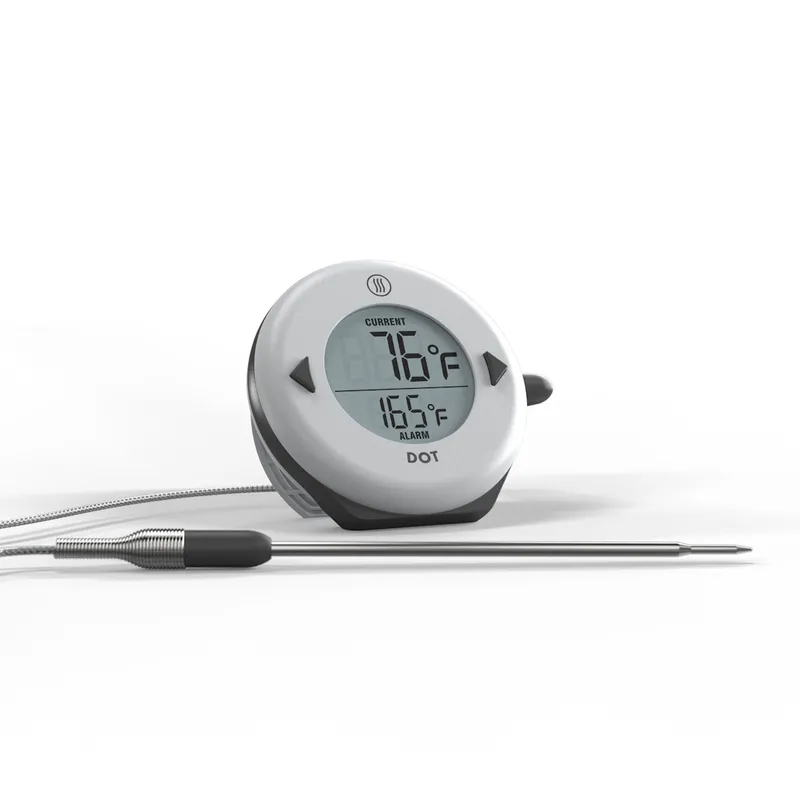 Official manufacturer image
ThermoWorks DOT
Check price on Amazon UKMeat thermometers
More specific
Meat thermometers
Buying guide
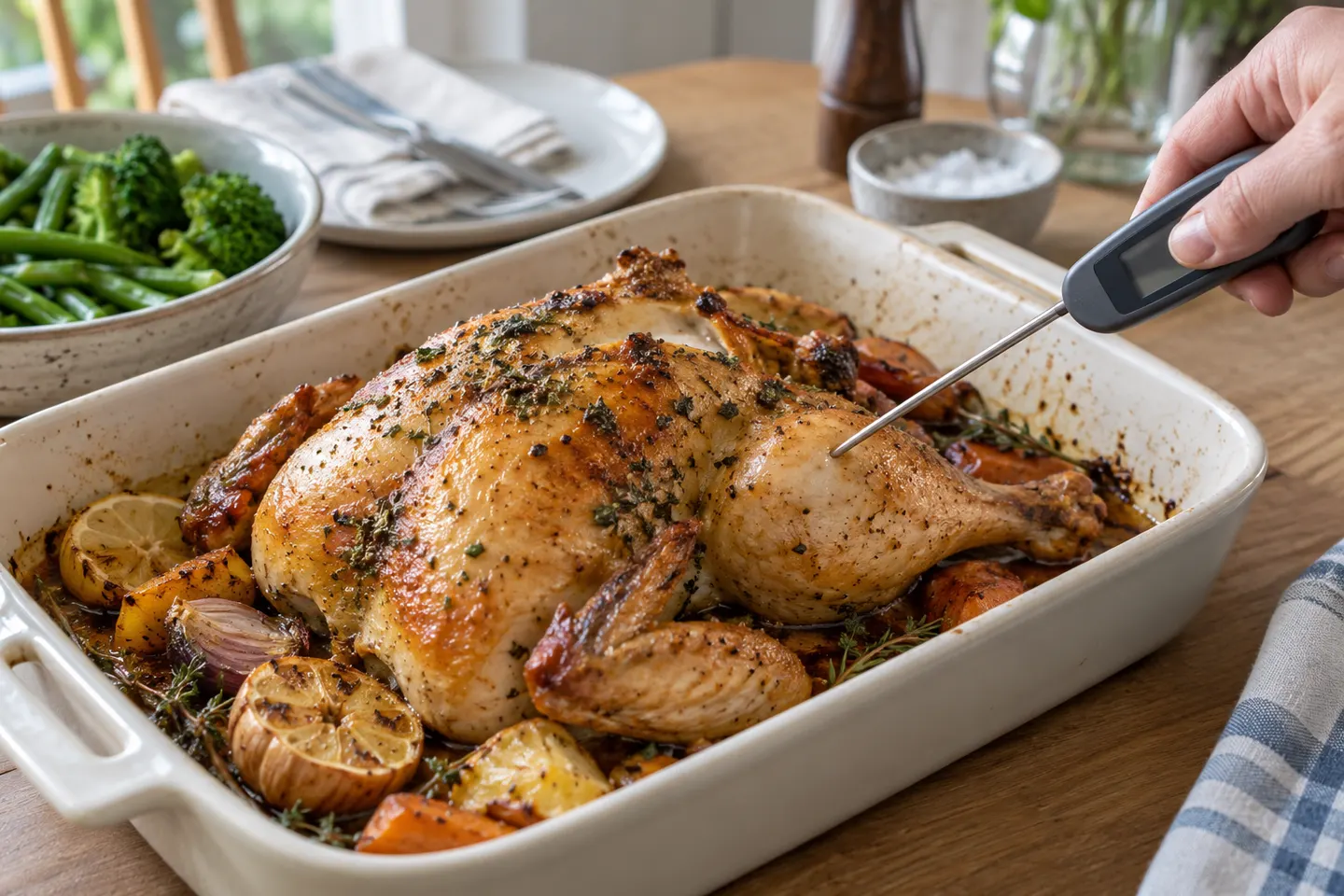
Meat Thermometer Temperature for Cooked Chicken
For chicken, the UK Food Standards Agency advises a core temperature of 70°C for two minutes, or an equivalent time-and-temperature combination. Check the thickest part without touching bone.
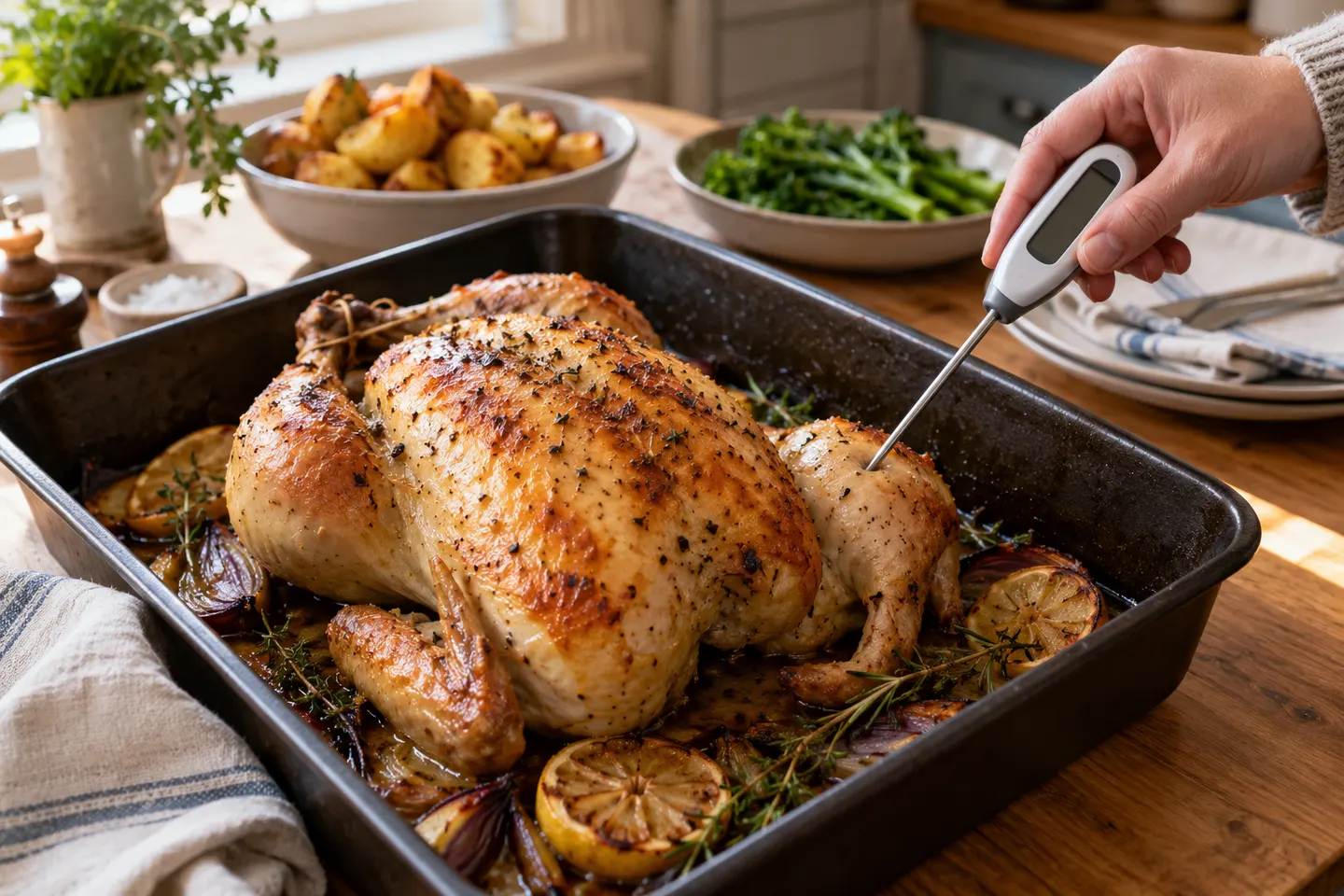
How to Use a Meat Thermometer for Chicken
Insert a clean probe into the thickest part without touching bone. Check both the breast and the innermost thigh on a whole bird, then clean the probe before any repeat check.
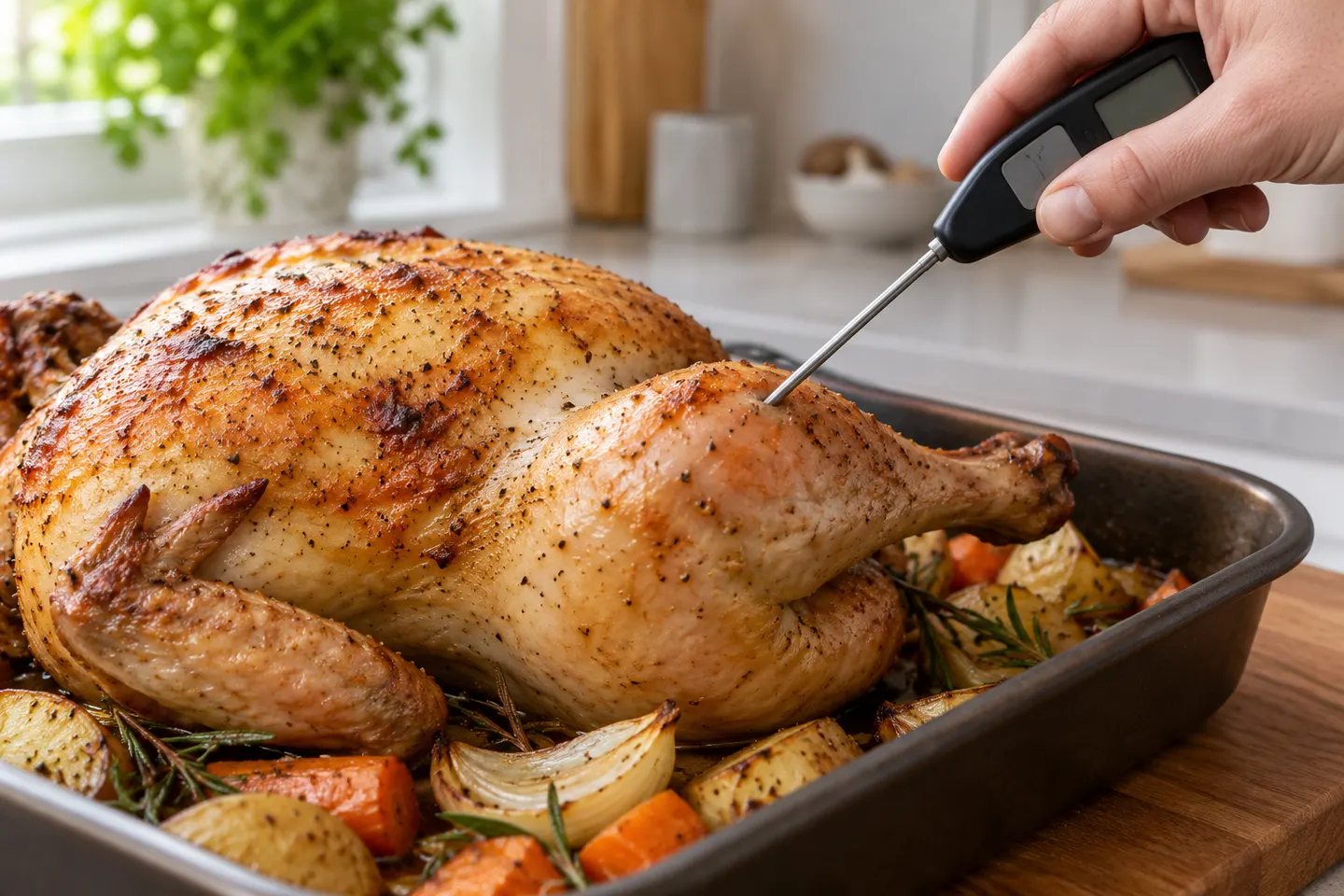
Where to Insert a Meat Thermometer in a Whole Chicken
Check the thickest breast meat and the inner thigh near the body, keeping the sensing tip away from bone. Test more than one place because poultry does not heat evenly.
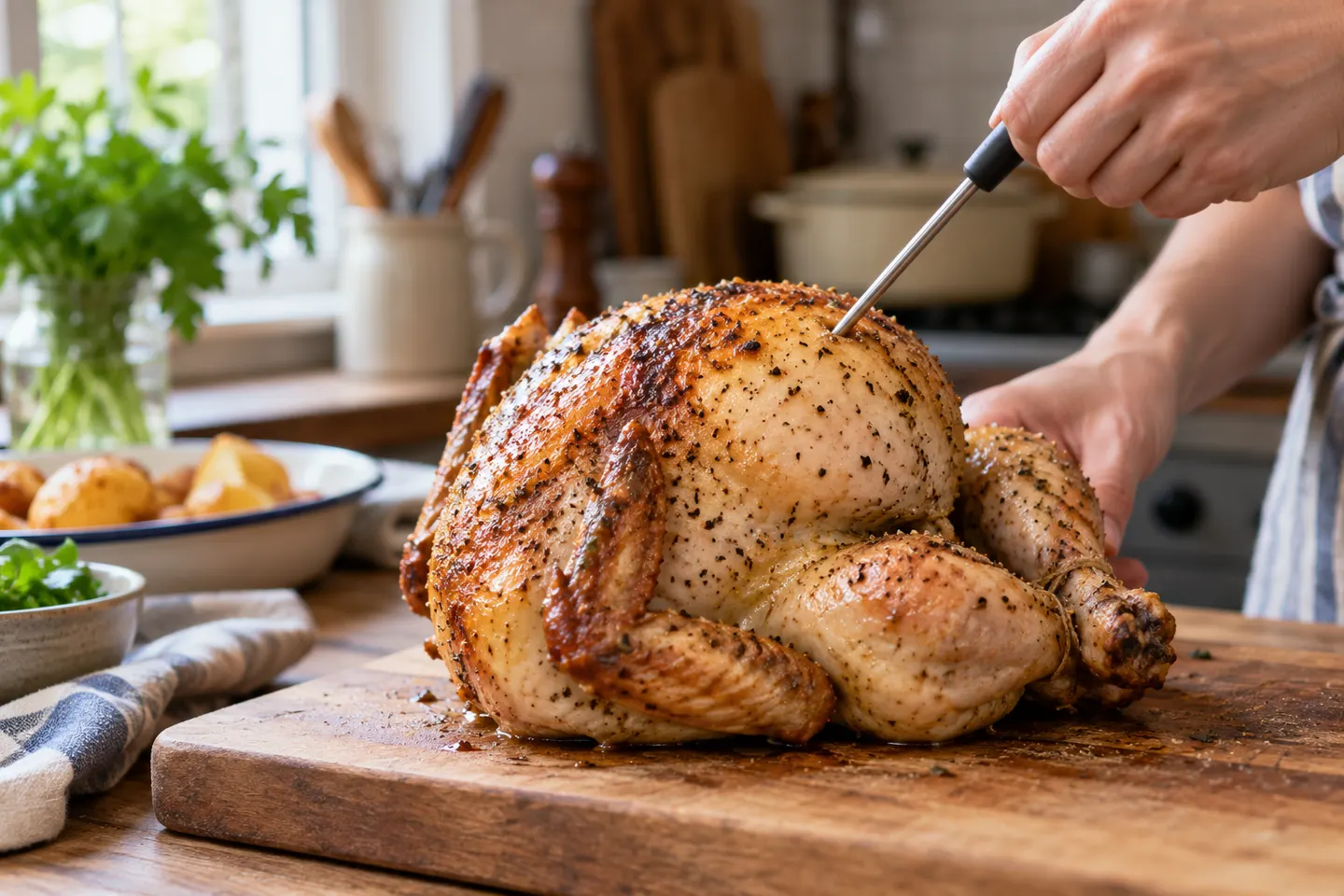
Where to Insert a Meat Thermometer in a Whole Chicken
Check a whole chicken in two places: the centre of the thickest breast and the innermost thigh near the body. Keep the sensing tip clear of bone, joints and the empty cavity.
Common questions
Questions before you buy
Where should a thermometer go in a chicken breast?
Place the sensing tip in the thickest central section, away from bone and the cooking surface. Approach from the side if the breast is shallow.
What temperature should chicken breast reach in the UK?
The Food Standards Agency gives 70°C for two minutes or equivalent combinations, including 75°C for 30 seconds. Measure in the middle of the food.
Can chicken look pink when the thermometer says it is cooked?
Colour alone is not a dependable safety test. Verify correct placement, check another thick spot and follow official time-temperature guidance.
Should I wash the thermometer after checking chicken?
Yes. Clean and disinfect the probe after contact with raw or partly cooked poultry to prevent cross-contamination.