
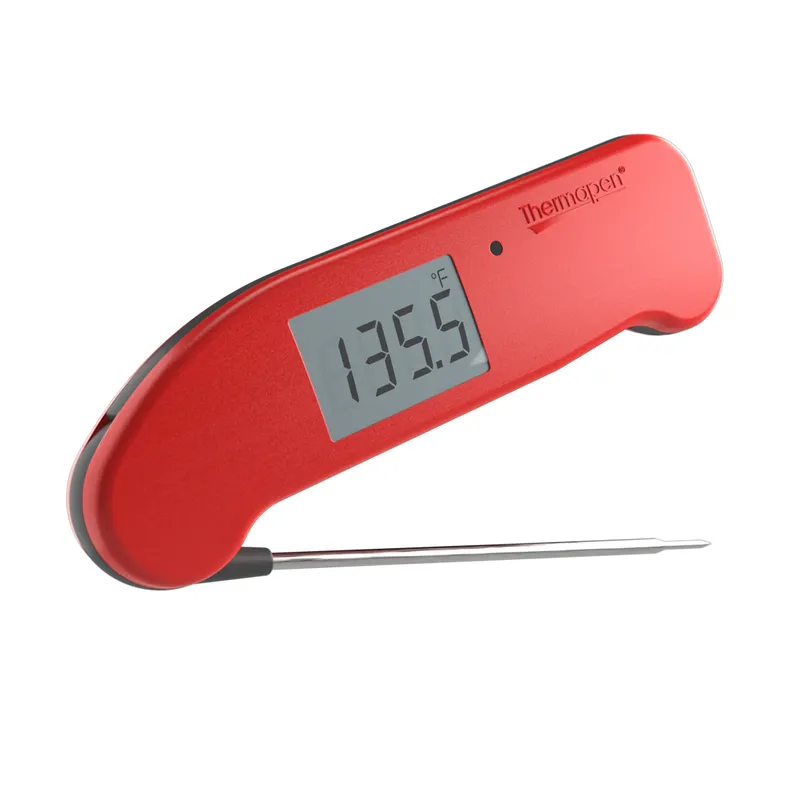
 Official manufacturer image
Our picks
Top picks
Official manufacturer image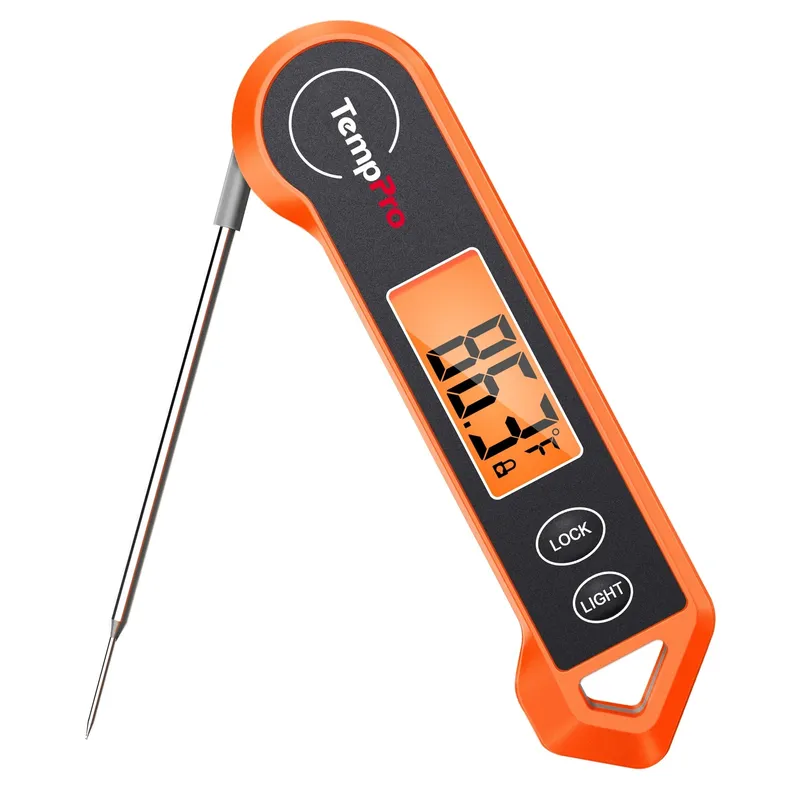 Official manufacturer image
ThermoPro TP19H
Check price on Amazon UK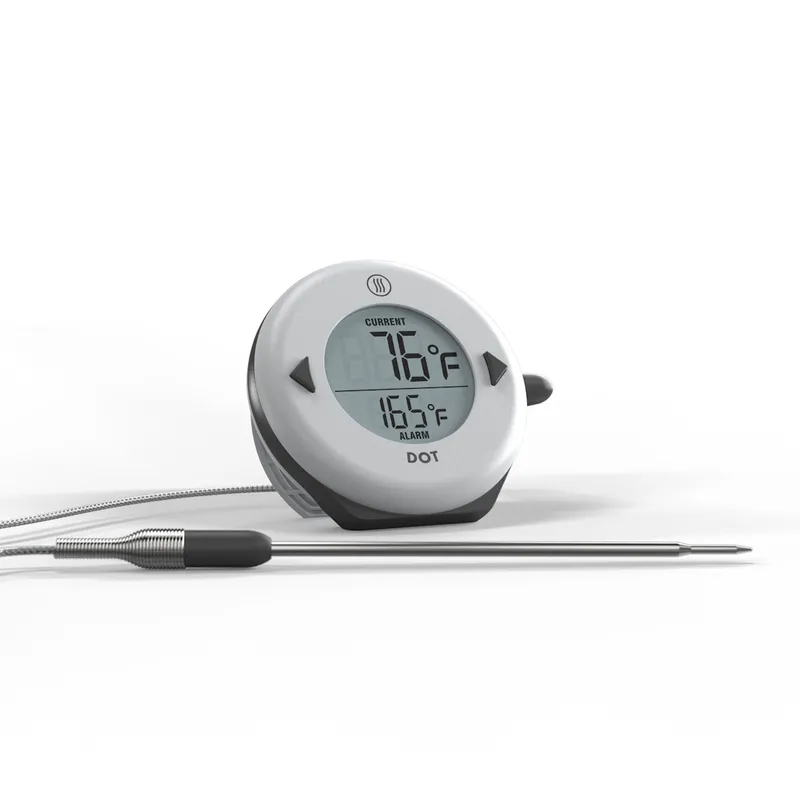 Official manufacturer image
ThermoWorks DOT
Check price on Amazon UKMeat thermometers
More specific
Meat thermometers
Buying guide
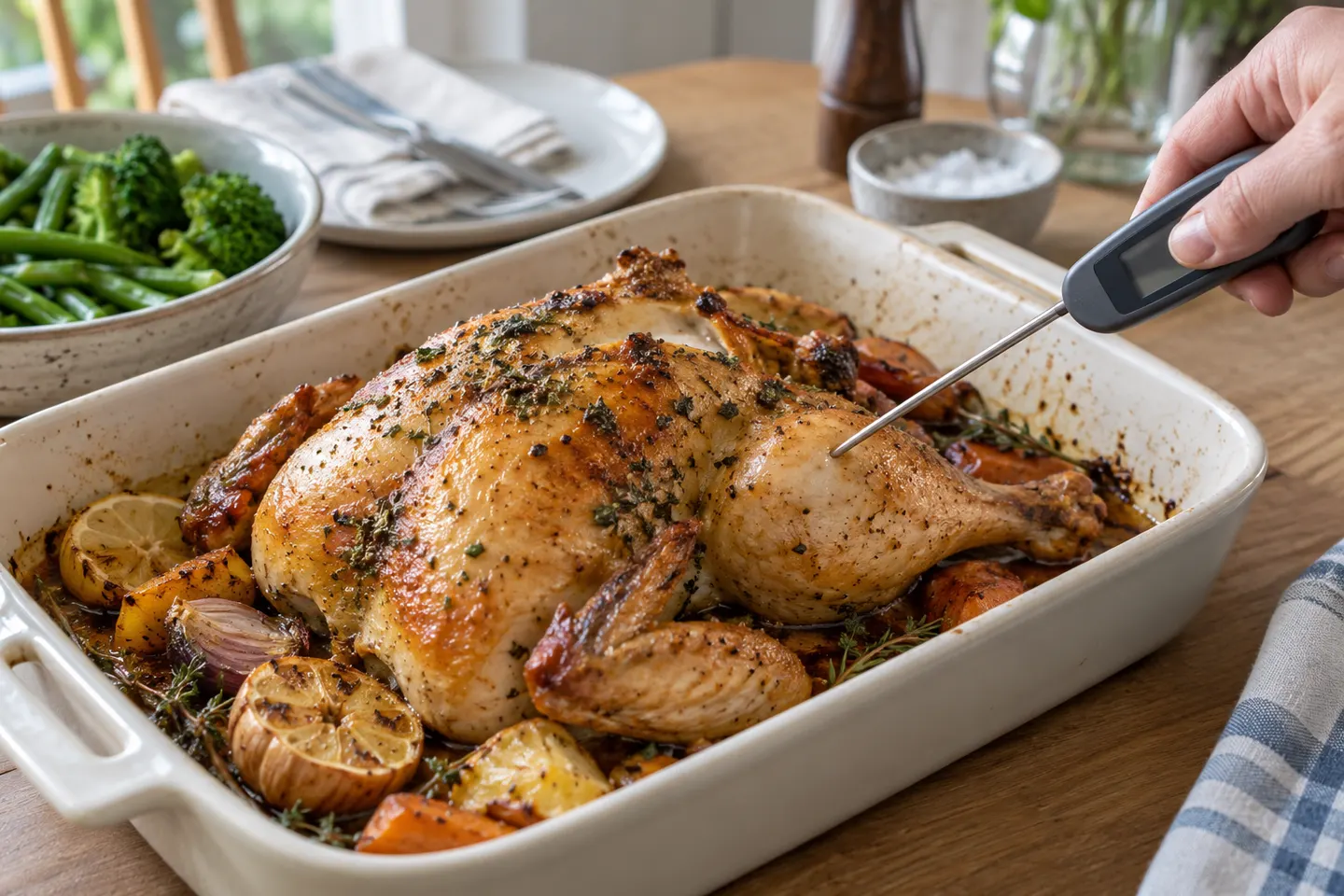
Meat Thermometer Temperature for Cooked Chicken
For chicken, the UK Food Standards Agency advises a core temperature of 70°C for two minutes, or an equivalent time-and-temperature combination. Check the thickest part without touching bone.
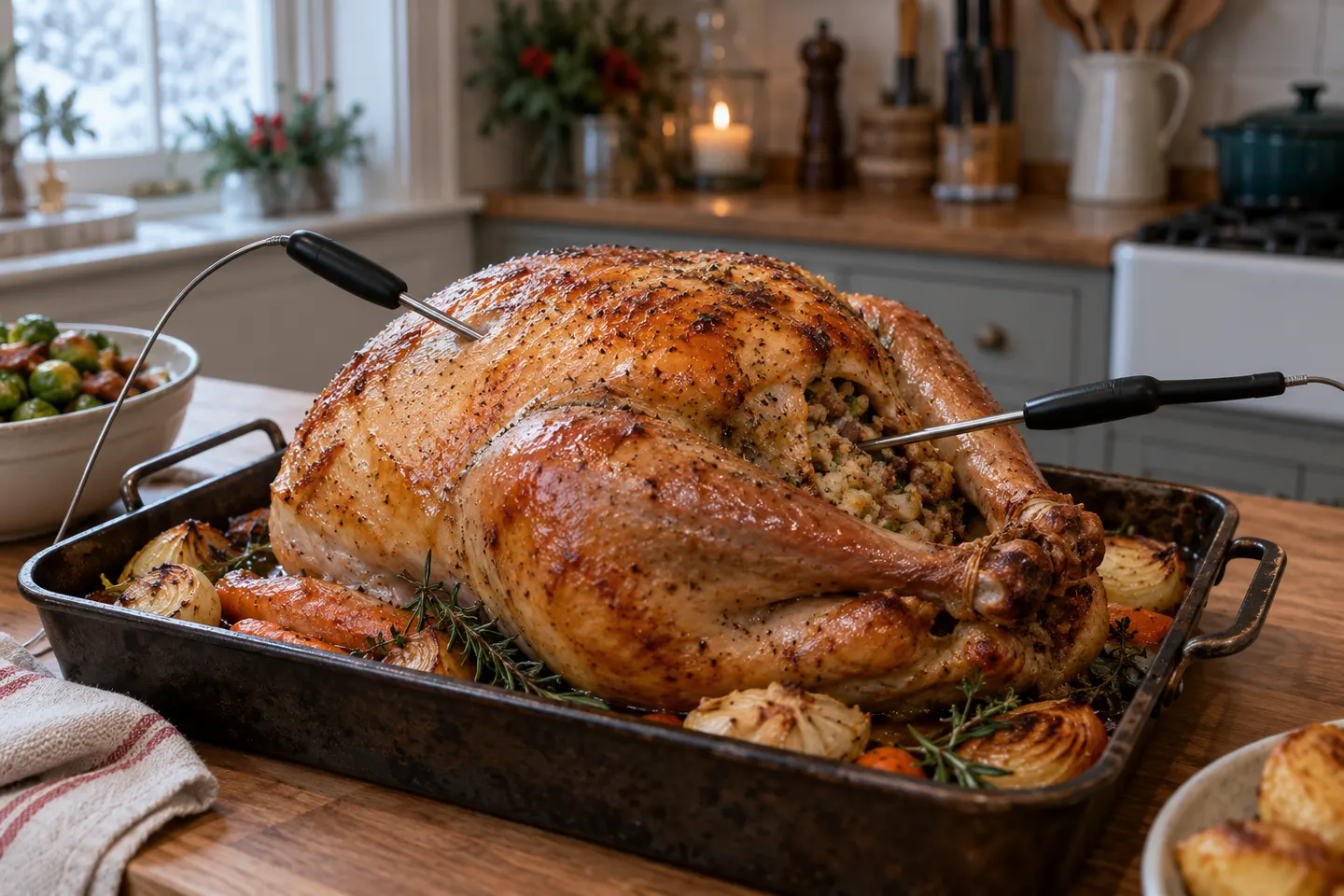
What Meat Thermometer Temperature Should Turkey Reach?
The Food Standards Agency gives equivalent safe cooking combinations, including seventy degrees Celsius for two minutes. Check the thickest areas and the centre of any stuffing.
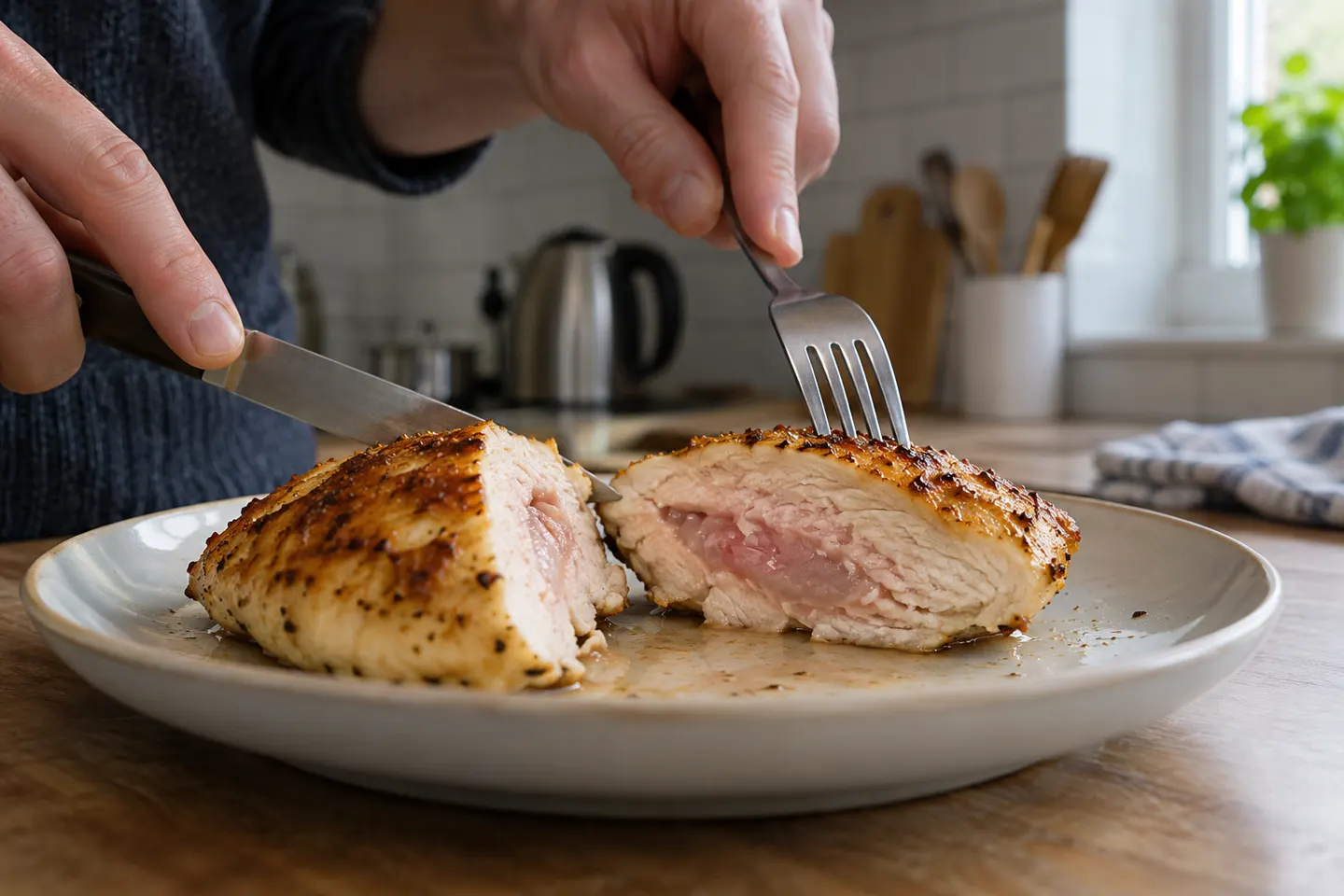
How to Check the Temperature of Food Without a Thermometer
You cannot reliably measure a food's internal temperature without a thermometer. Visual checks can reveal obvious undercooking, but they cannot confirm that the centre met a safe time-and-temperature combination.
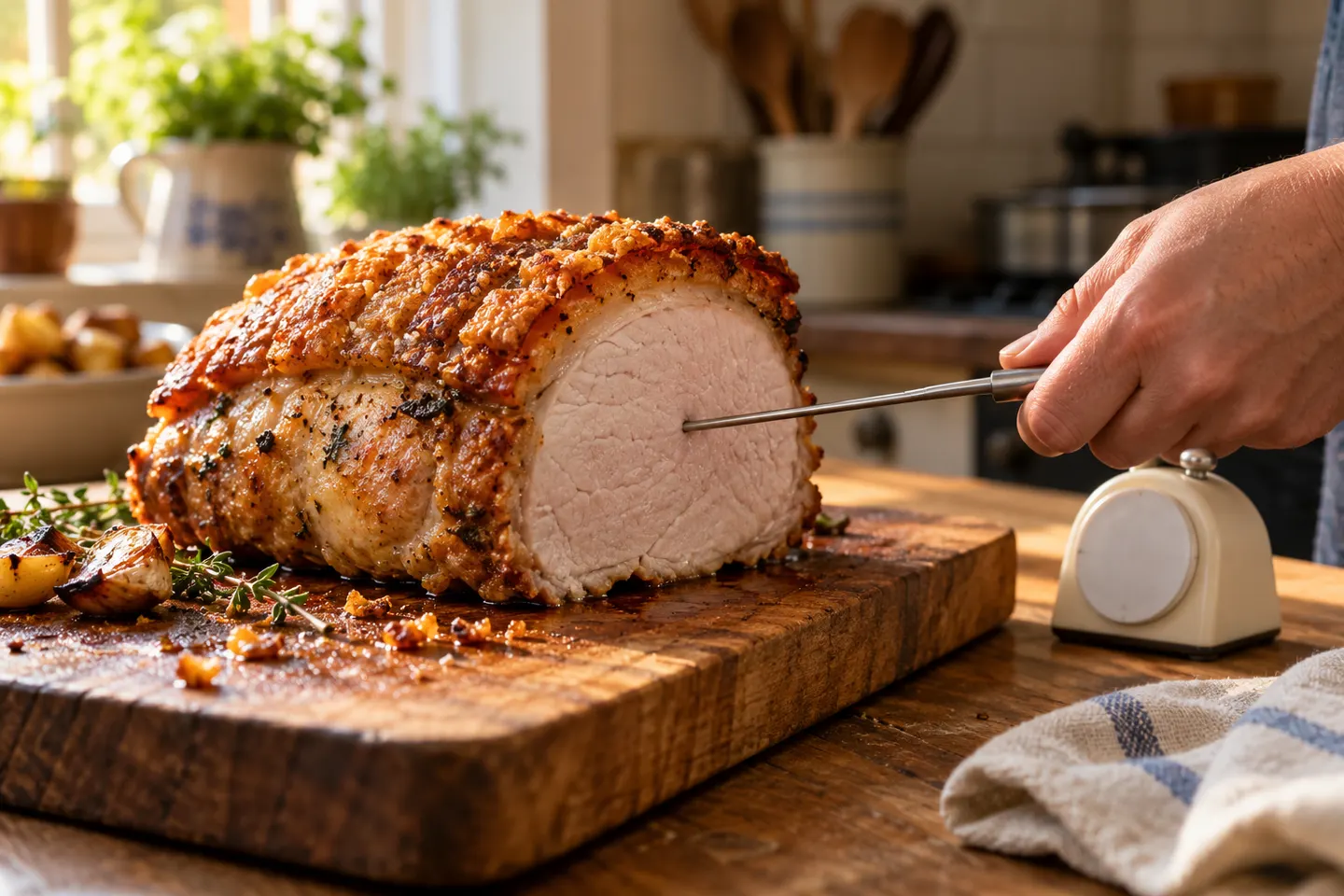
Meat Thermometer Temperature for Pork and Pork Loin
For pork, the Food Standards Agency lists safe combinations such as 70°C for two minutes or 75°C for 30 seconds. Measure the coolest part and account for both temperature and holding time.
Common questions
Questions before you buy
Where is the sensing area on a food temperature probe?
It varies by design. Some sense near the tip; dial probes may average over a longer stem section. Check the manual before choosing insertion depth.
Why do meat thermometer temperatures vary between spots?
Food heats unevenly, and bone, fat, air pockets and the cooking surface affect local readings. Sample several points and use the coolest relevant centre.
Can you replace a wired food probe?
Many alarm thermometers accept model-specific replacement probes. Match the connector and probe series exactly; similar-looking probes may use different calibration curves.
How can you check a temperature probe?
Use the verification or calibration procedure supplied by its maker. Do not assume a single casual comparison proves accuracy across the full range.