



 Official manufacturer image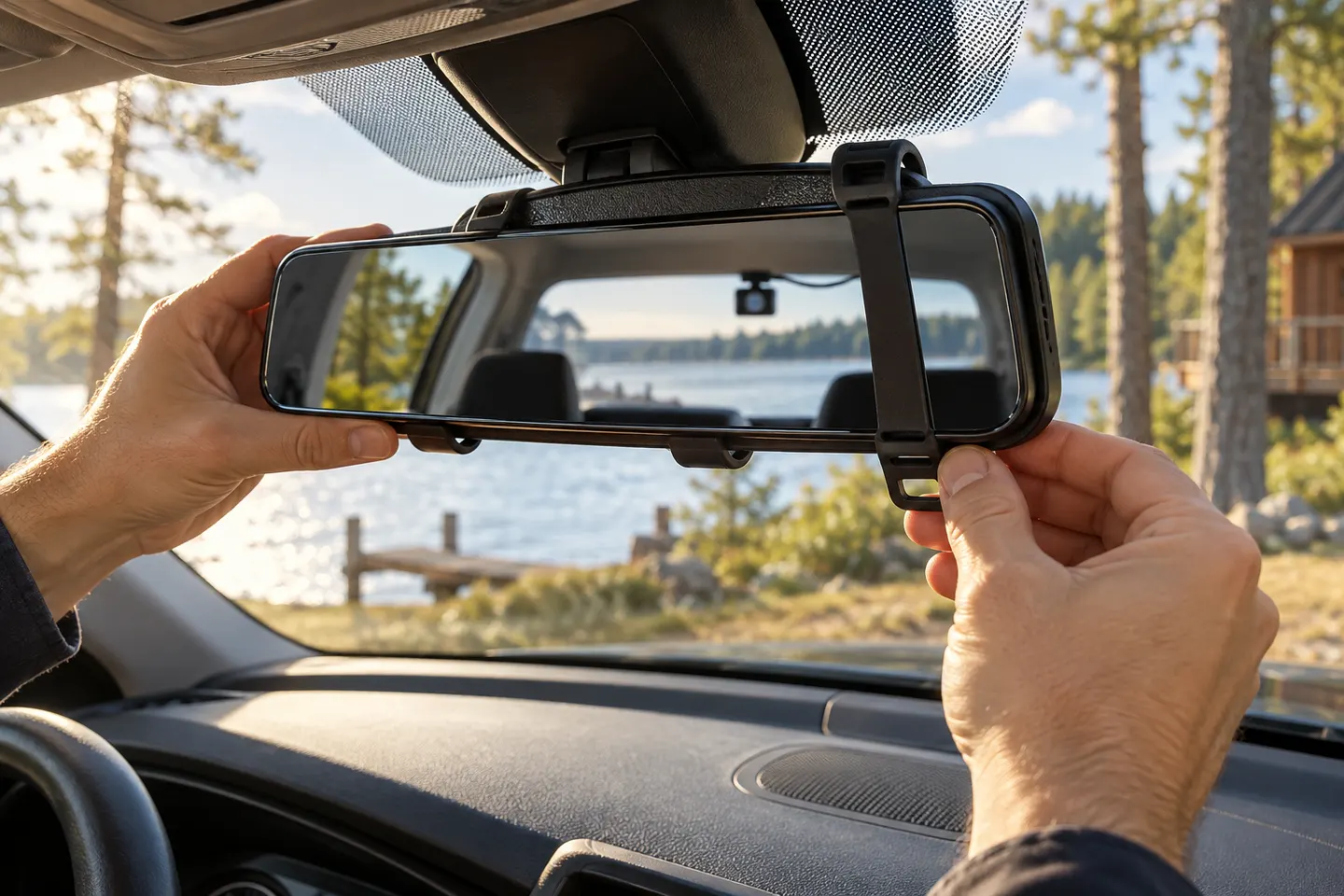
Our picks
Top picks
Official manufacturer image Official manufacturer image
Garmin Dash Cam X310
Check price on Amazon UK Official manufacturer image
VIOFO A329S 2CH
Check price on Amazon UKBy feature
 Front rear
 Front rear wireless
 Rear
RearShow all (5)
Common questions
Questions before you buy
Can you attach a dash cam to a rear-view mirror?
Mirror-format cameras are designed to attach over or replace the interior mirror. A conventional dash cam should use its approved mount rather than an improvised mirror attachment.
Is a rear-view mirror dashcam legal in the UK?
The key requirements include maintaining a clear view and proper control. Installation details vary, so ensure the unit and wiring do not obstruct the road view and seek vehicle-specific advice if uncertain.
Does a mirror dashcam affect automatic dimming?
A clip-on unit can cover or replace the original reflective surface, so the factory dimming function may no longer help. Check the device's own brightness and night settings.
What happens if the mirror dash cam screen fails?
You may lose the digital rear view even if recording continues. The vehicle must retain the required safe visibility, so understand whether an optical reflection or other mirrors remain usable.