Check the required temperature range
Read the candy recipe and confirm the thermometer covers its target with room to spare. Do not assume a meat-focused device tolerates every sugar or oil temperature.

 Best picksGood Meat Thermometers for Every Kind of Cook
 Best picksBest WiFi Extenders: Which Range Extender Should You Buy?
 Best picksBest Dash Cams for Cars in 2026
 Best picksBest Radar Detectors for Cars: Models Compared
 Best picksBest Air Purifier for Bedroom in the US: Quiet Models Compared
Gearjury may earn a commission from qualifying purchases through retailer links.
Guide
Sometimes. A suitable digital probe must cover the recipe's temperature, withstand immersion as directed and be held off the pan; many meat-only designs are a poor fit.
Read the candy recipe and confirm the thermometer covers its target with room to spare. Do not assume a meat-focused device tolerates every sugar or oil temperature.
The maker must permit the sensing section to sit in hot liquid. Do not immerse a handle, cable joint or wireless section beyond the indicated line or depth.
Use an appropriate clip or hold the probe so the sensing area stays in the syrup without touching the bottom or side. Contact with the pan can produce an unrepresentative reading.
Candy stages can pass quickly. A clipped leave-in probe with a clear display or alarm is easier to follow than repeatedly inserting a short handheld probe over bubbling syrup.
Follow the care instructions. Warm water can help dissolve sugar from washable metal sections, but do not soak electronics or unsealed transitions.
Common questions
It must cover the highest target in your specific recipe without exceeding its published probe limit. Check both the recipe and model documentation.
It can spot-check syrup if its range and immersion instructions allow, but a clipped continuous-reading probe is often easier and safer to monitor.
The metal pan can be hotter than the syrup around the sensor, producing a misleading reading and risking damage.
Only when the manufacturer expressly supports that liquid, temperature and insertion method. Many wireless probes require a minimum insertion depth unsuitable for a shallow pan.
Keep exploring
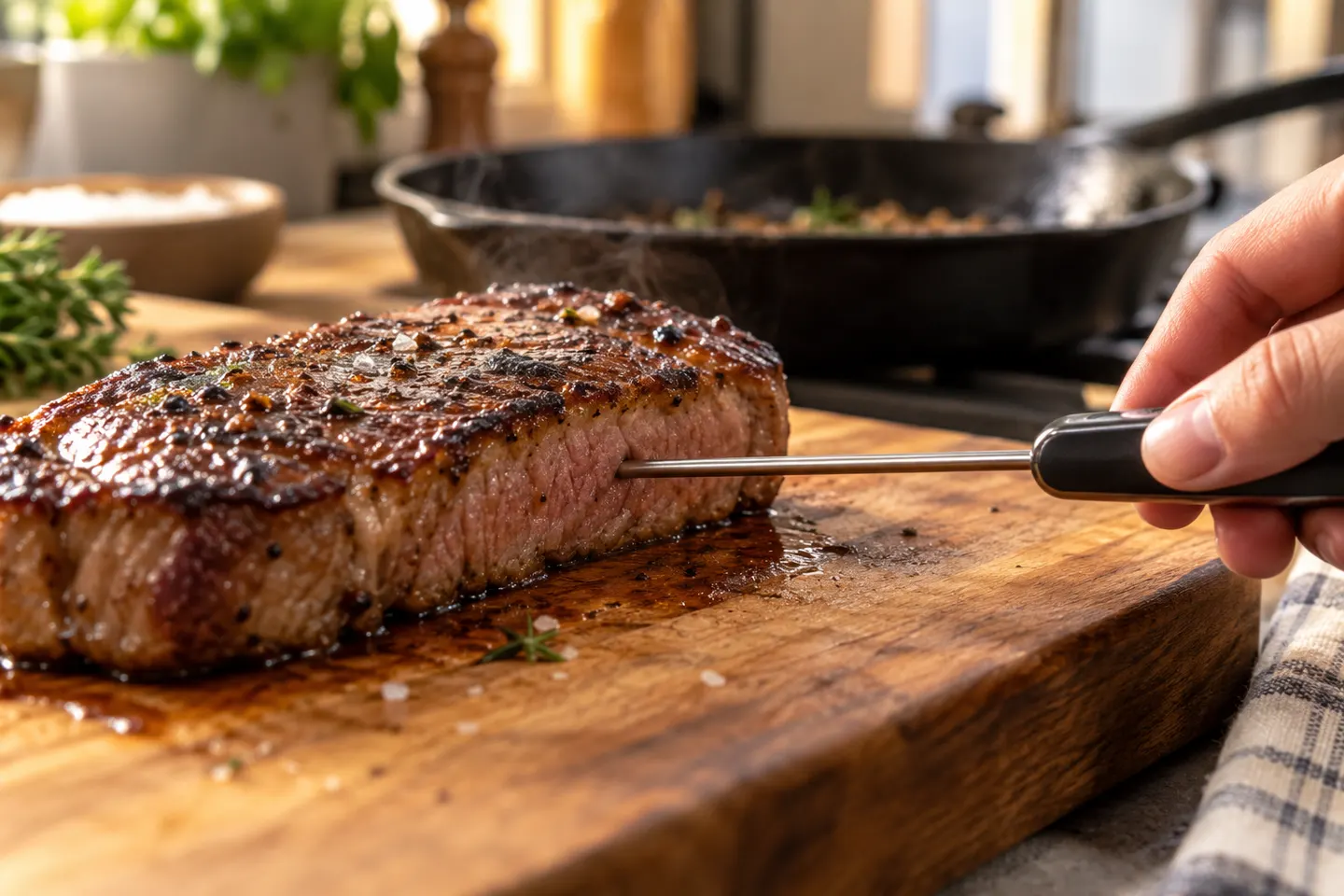
A fast instant-read probe is the most practical choice for steaks; insert it from the side into the center.
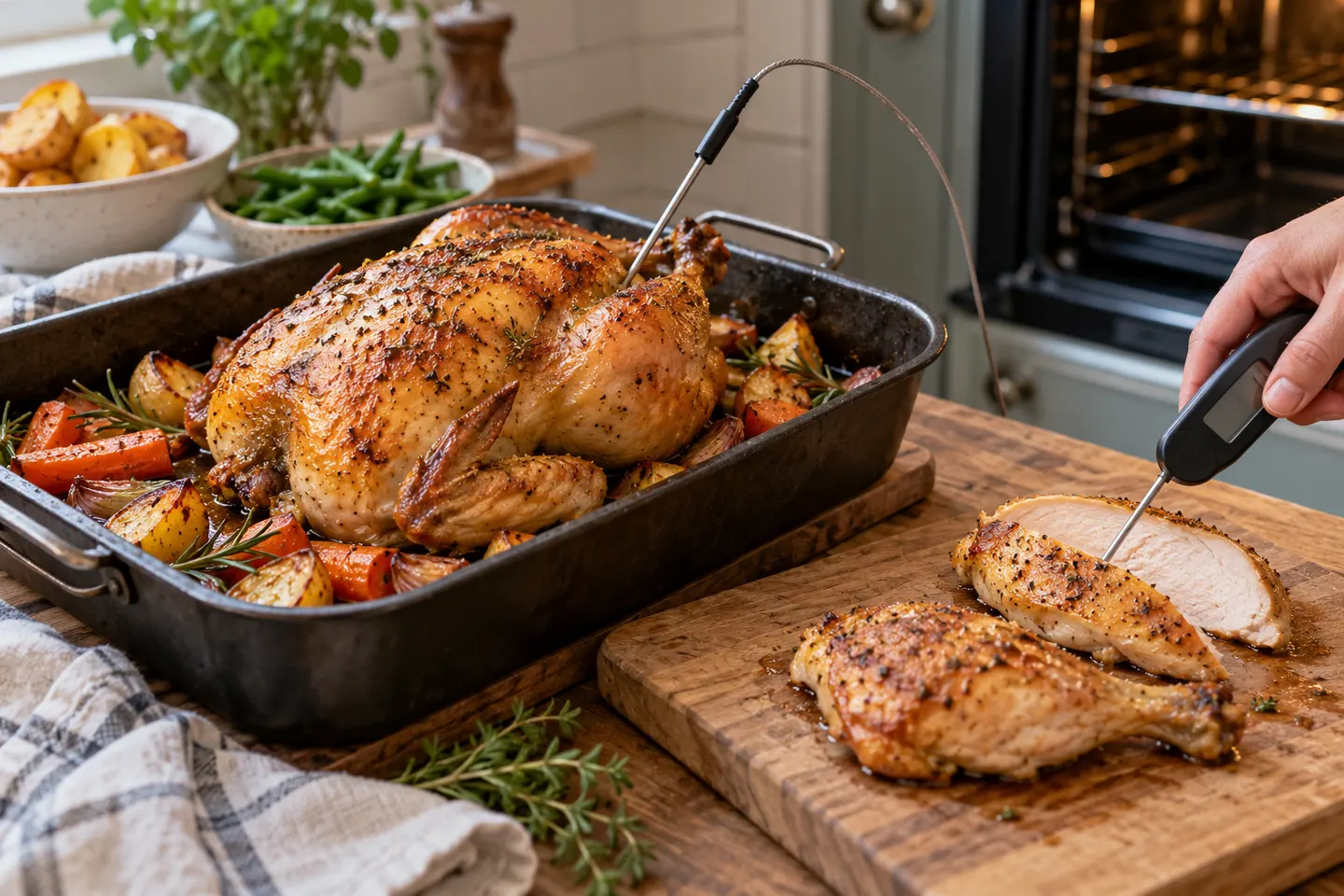
A fast, thin probe works well for portions; a heat-safe leave-in probe makes a whole roast easier to monitor.
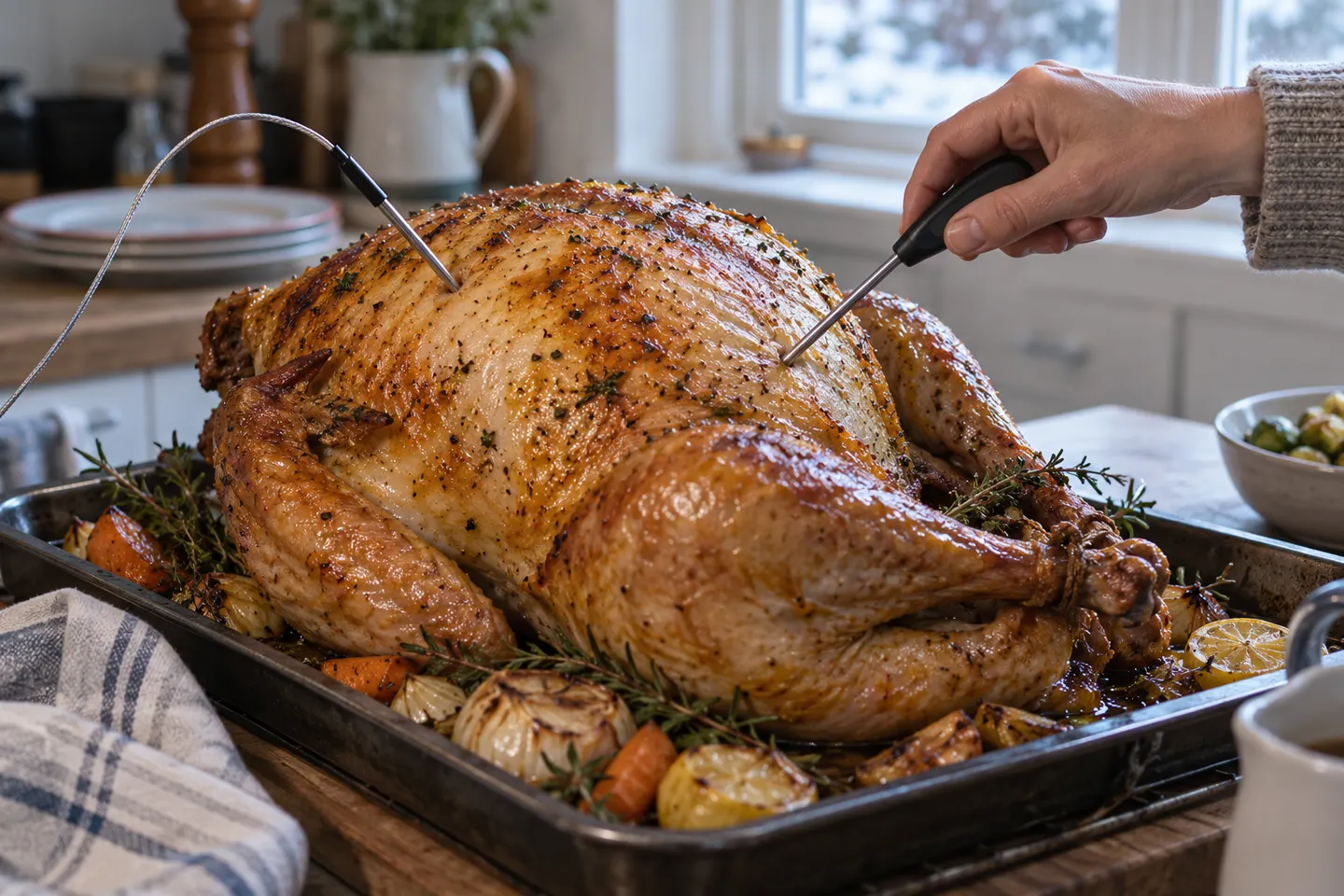
Use a leave-in probe to track the cook and an instant-read model to check more than one spot before serving.
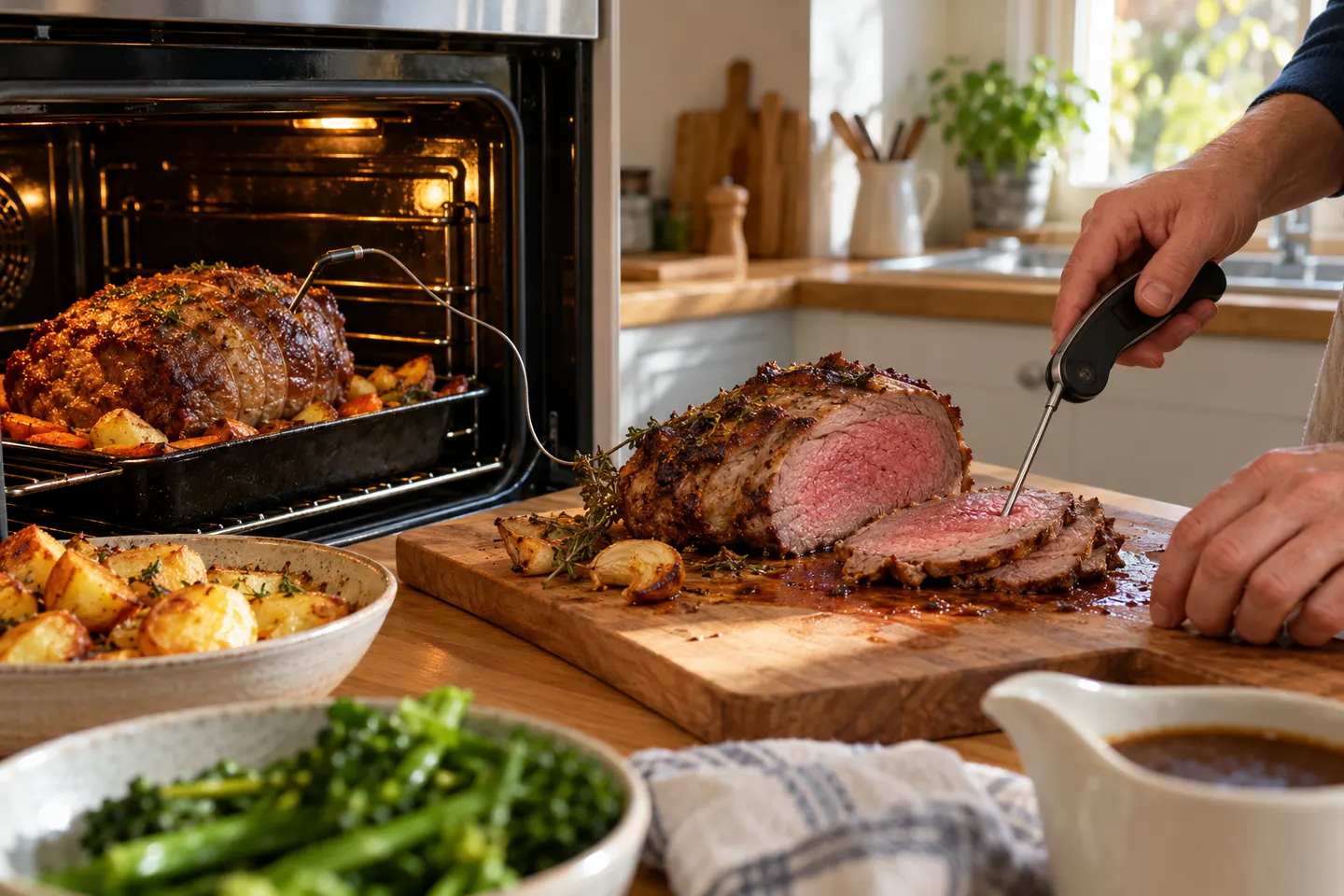
Start with a dependable instant-read thermometer; add a leave-in or wireless probe when you want continuous monitoring.