Identify the temperature scale and tick marks
Check whether the outer or inner ring shows Fahrenheit, and note the value between numbered marks. Do this before placing the dial where steam or an oven door makes it harder to see.

 Best picksGood Meat Thermometers for Every Kind of Cook
 Best picksBest WiFi Extenders: Which Range Extender Should You Buy?
 Best picksBest Dash Cams for Cars in 2026
 Best picksBest Radar Detectors for Cars: Models Compared
 Best picksBest Air Purifier for Bedroom in the US: Quiet Models Compared
Gearjury may earn a commission from eligible retailer links. Instructions rely on cited guidance and the product manual.
Guide
Identify the scale, place the full sensing area in the center of the food, wait until the needle stops moving, then read at eye level. Check another spot in large cuts.
Check whether the outer or inner ring shows Fahrenheit, and note the value between numbered marks. Do this before placing the dial where steam or an oven door makes it harder to see.
Many bimetal dial thermometers average temperature along a section of the stem rather than only at the tip. Look for a dimple or consult the manual so the entire sensing area reaches the food's center.
Avoid bone, the pan and large fat pockets. For a thin burger or chicken breast, insert through the side so the sensing zone lies across the middle.
Dial thermometers respond more slowly than many digital probes. Keep the stem steady and wait for the pointer to stop moving before interpreting the mark.
View the dial at eye level to reduce parallax error. In a roast or whole bird, repeat the measurement in another thick area because one point may not represent the coldest spot.
USDA describes an ice-water check for many food thermometers. If the model has an adjustment nut, follow its instructions; replace a damaged or nonadjustable unit that remains inaccurate.
Common questions
They divide the interval between printed numbers. Count the spaces and use the unit marked on that ring; dial layouts differ, so inspect yours closely.
Insert the full sensing zone into the center of the thickest area. On many bimetal models that zone extends several inches up the stem.
A bimetal instant-read dial can take noticeably longer than a digital thermocouple. Wait until the needle stabilizes rather than using a fixed guess.
The food may have hot and cold spots, or the stem may be touching bone or the pan. Reposition it, allow it to settle and check calibration if differences persist.
Keep exploring
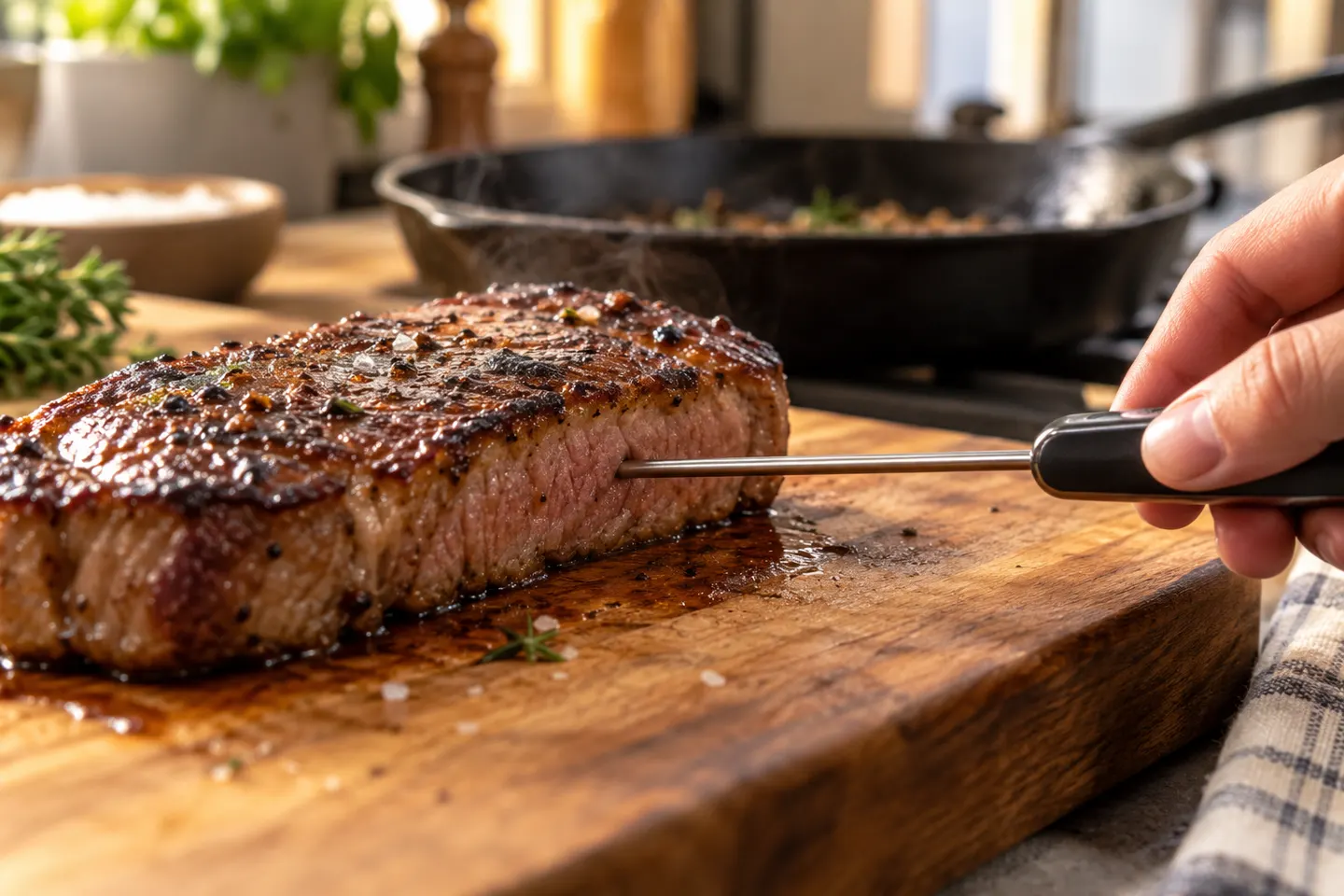
A fast instant-read probe is the most practical choice for steaks; insert it from the side into the center.
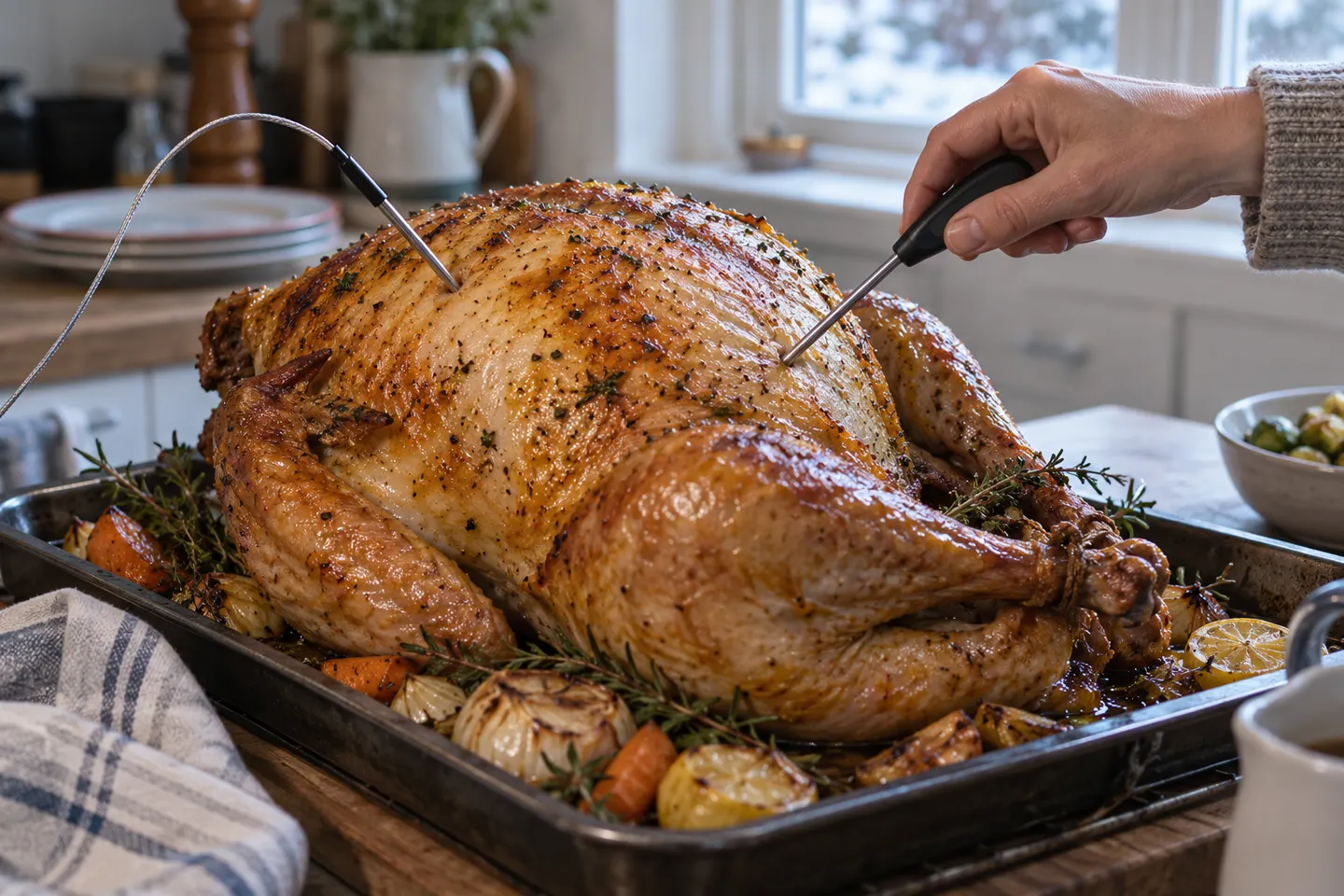
Use a leave-in probe to track the cook and an instant-read model to check more than one spot before serving.
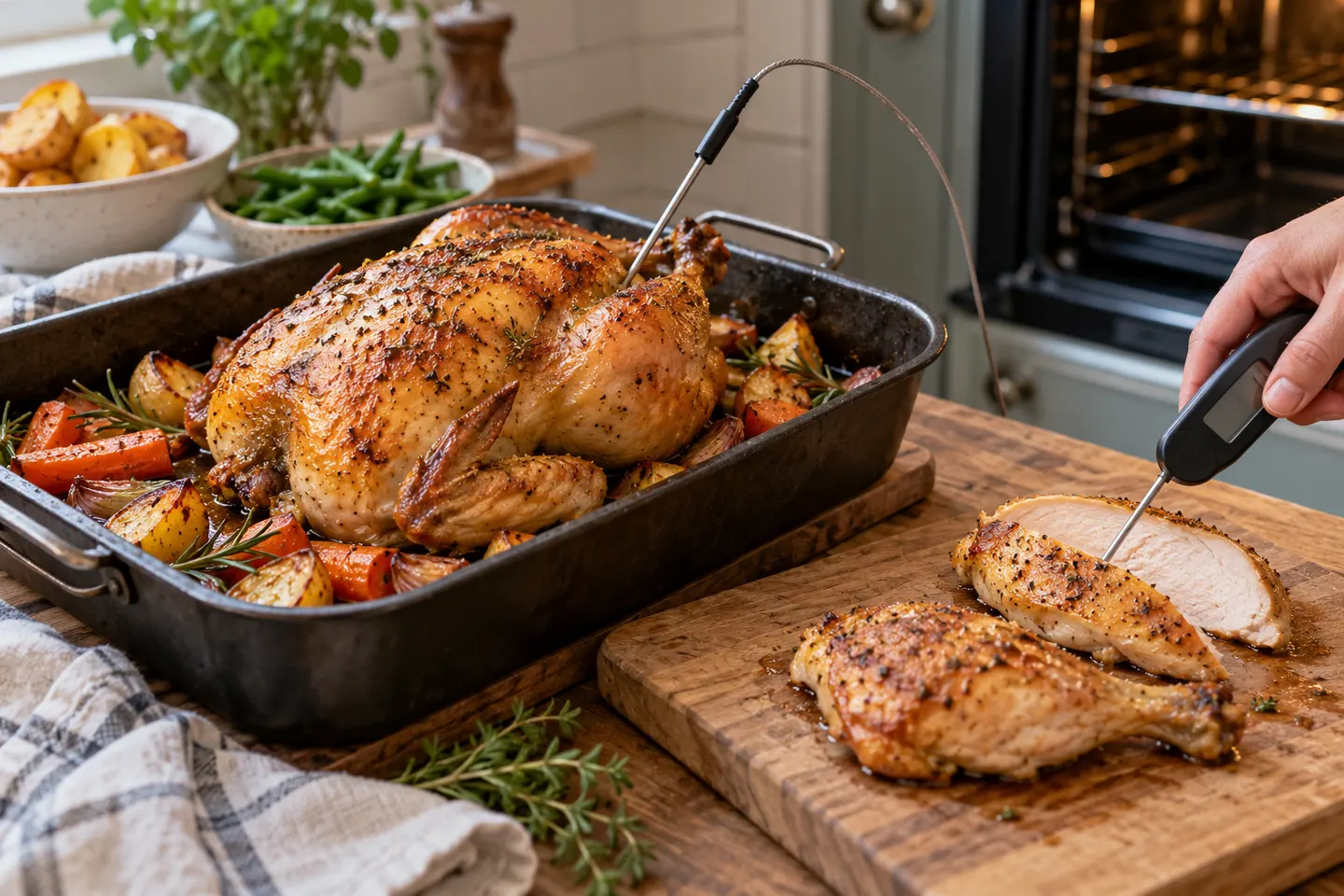
A fast, thin probe works well for portions; a heat-safe leave-in probe makes a whole roast easier to monitor.
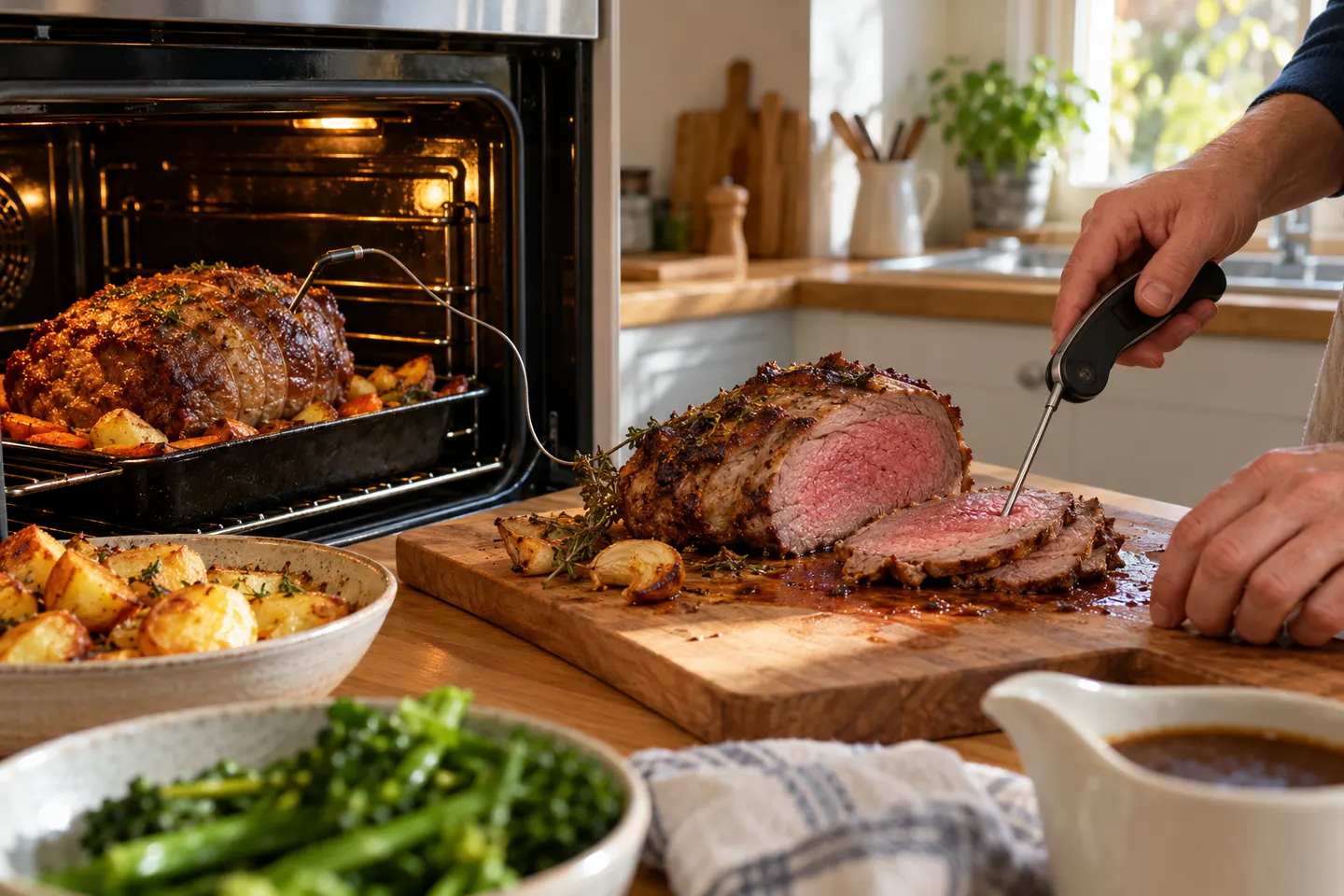
Start with a dependable instant-read thermometer; add a leave-in or wireless probe when you want continuous monitoring.