Locate the thickest uninterrupted meat
Study the roast from both ends and choose the broadest section of muscle. The geometric center of the edible meat is a better target than the center of the whole roast when bones sit along one side.

 Best picksGood Meat Thermometers for Every Kind of Cook
 Best picksBest WiFi Extenders: Which Range Extender Should You Buy?
 Best picksBest Dash Cams for Cars in 2026
 Best picksBest Radar Detectors for Cars: Models Compared
 Best picksBest Air Purifier for Bedroom in the US: Quiet Models Compared
Gearjury may earn a commission through eligible retailer links. Food-safety guidance comes from the cited authorities.
Guide
Insert the probe into the center of the thickest section of meat, away from bone and large seams of fat. For a leave-in probe, place it before roasting and verify with an instant-read check near the end.
Study the roast from both ends and choose the broadest section of muscle. The geometric center of the edible meat is a better target than the center of the whole roast when bones sit along one side.
Side insertion makes probe depth easier to judge and keeps the sensing tip centered from top to bottom. On a bone-in roast, angle the probe parallel to the bones without touching them.
Bone and large fat pockets can heat differently from the surrounding muscle. Withdraw and redirect the probe if you feel hard contact or if the tip lands in a visible seam.
Insert the probe while the roast is cool, confirm the tip location, and route the cable or wireless body according to its instructions. Keep exposed probe sections within their stated heat limits.
Use a clean instant-read thermometer in a nearby location and then another area. If readings differ, continue checking to find the lowest representative internal temperature.
Temperature can continue to rise after removal, but the amount varies with roast size and cooking conditions. Base safety decisions on authoritative time-and-temperature guidance, not appearance alone.
Common questions
No. Place the sensing area in muscle without contacting bone, which can distort the reading.
Either can work, but side insertion often makes the center easier to judge. What matters is reaching the thickest meat and avoiding bone and fat.
Yes, if it is an oven-safe leave-in model used within its limits. Remove an ordinary instant-read thermometer after checking.
Roasts heat unevenly, and the probe may cross different muscles or fat seams. Check several locations and use the lowest representative reading for doneness decisions.
Keep exploring
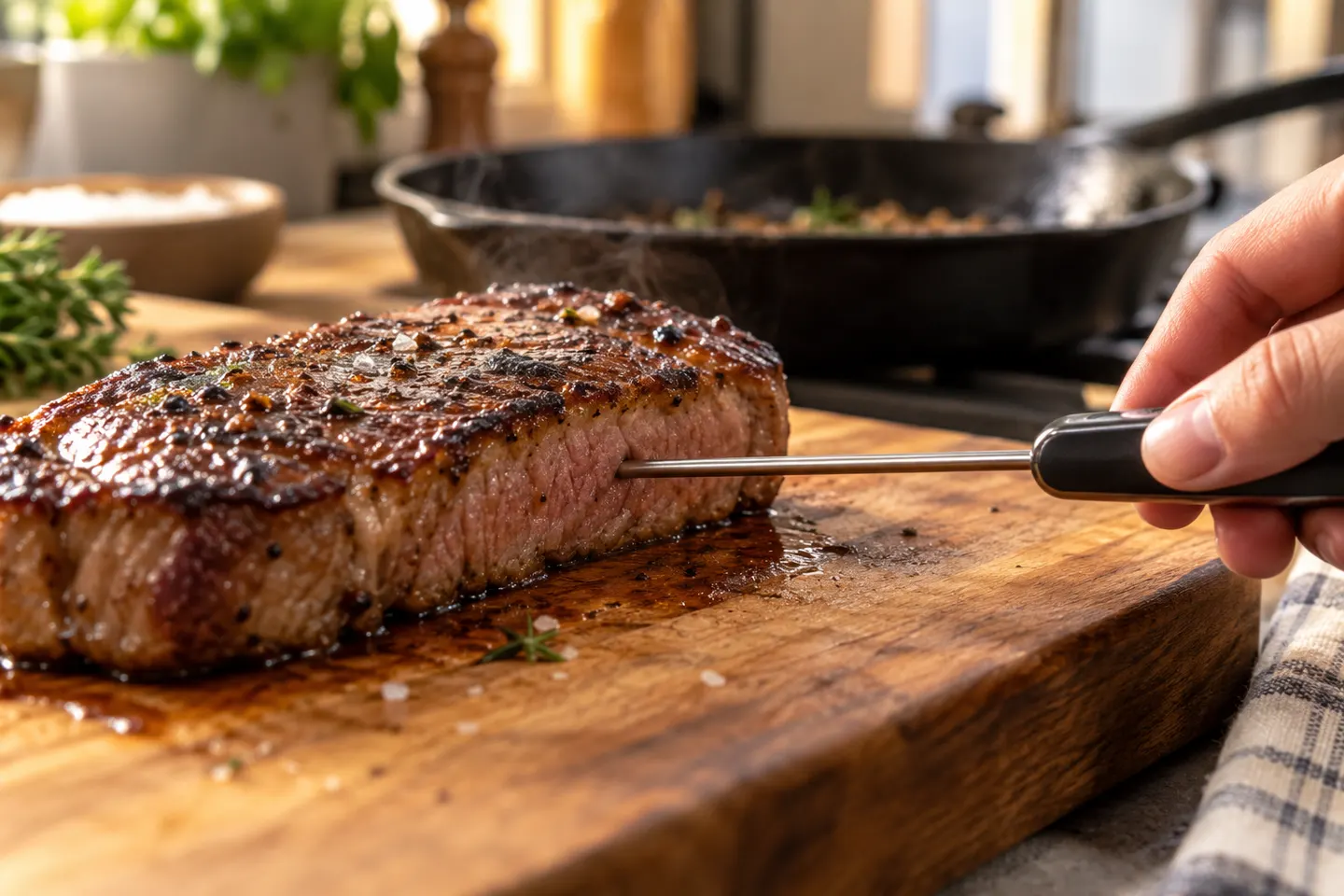
A fast instant-read probe is the most practical choice for steaks; insert it from the side into the center.
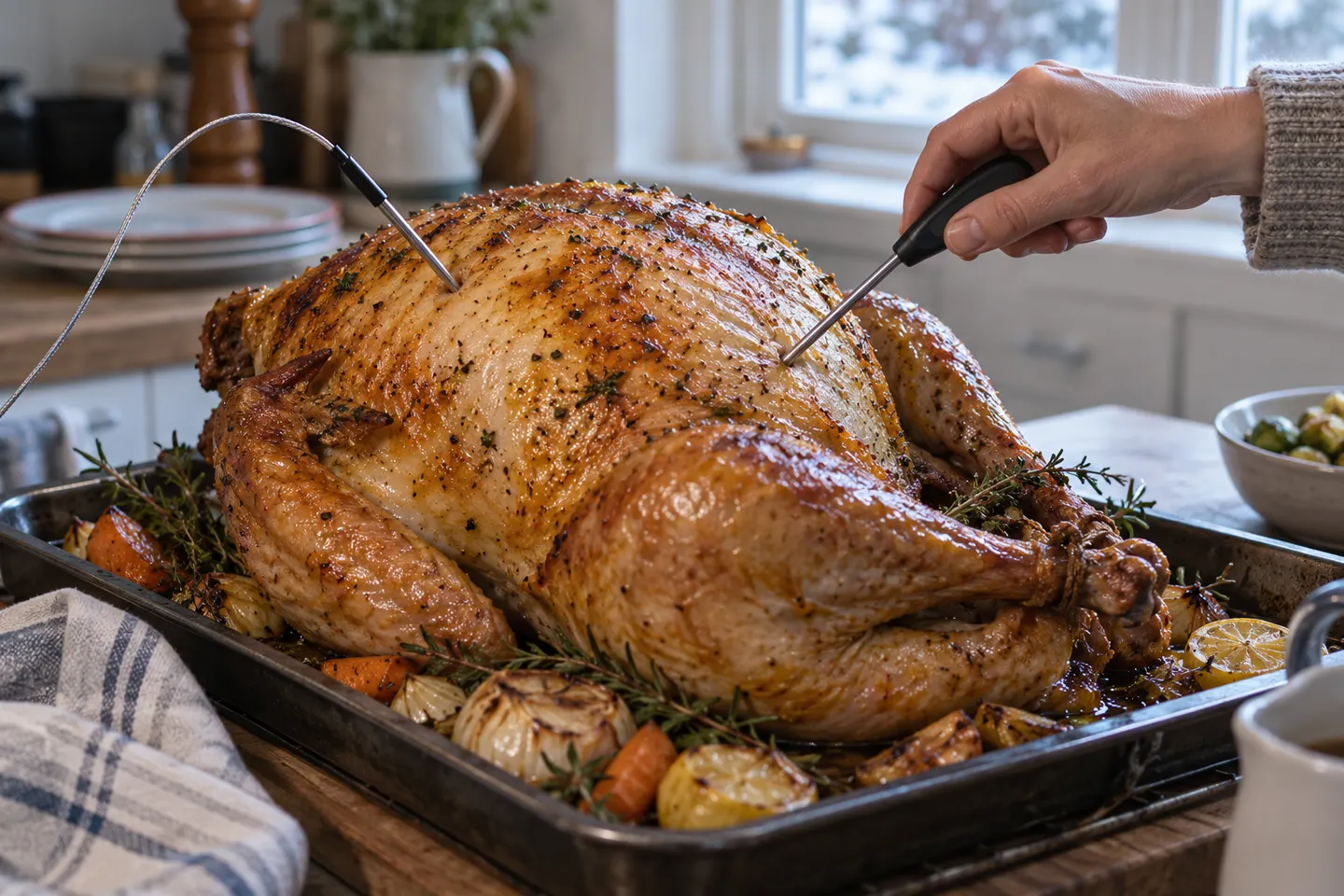
Use a leave-in probe to track the cook and an instant-read model to check more than one spot before serving.
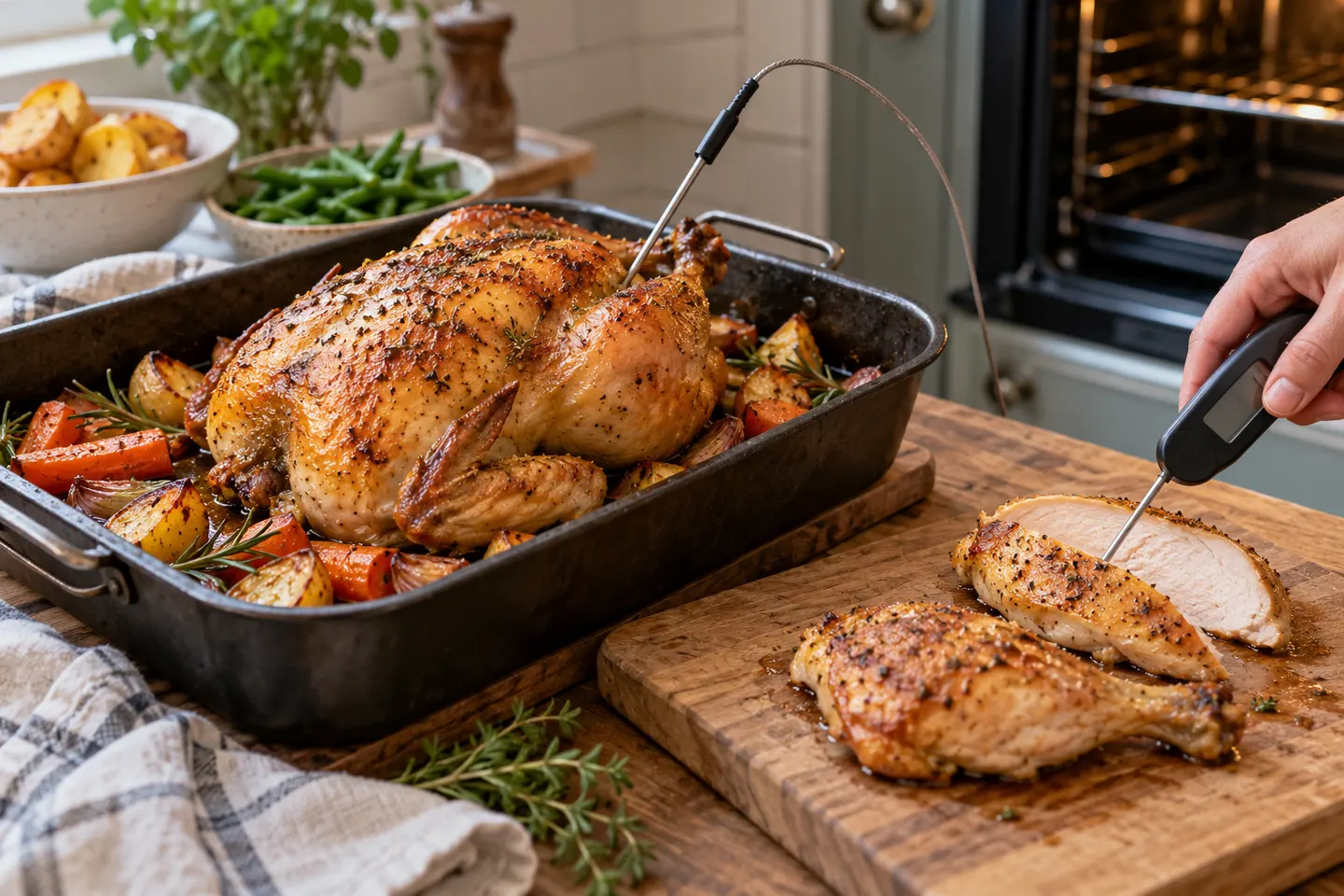
A fast, thin probe works well for portions; a heat-safe leave-in probe makes a whole roast easier to monitor.
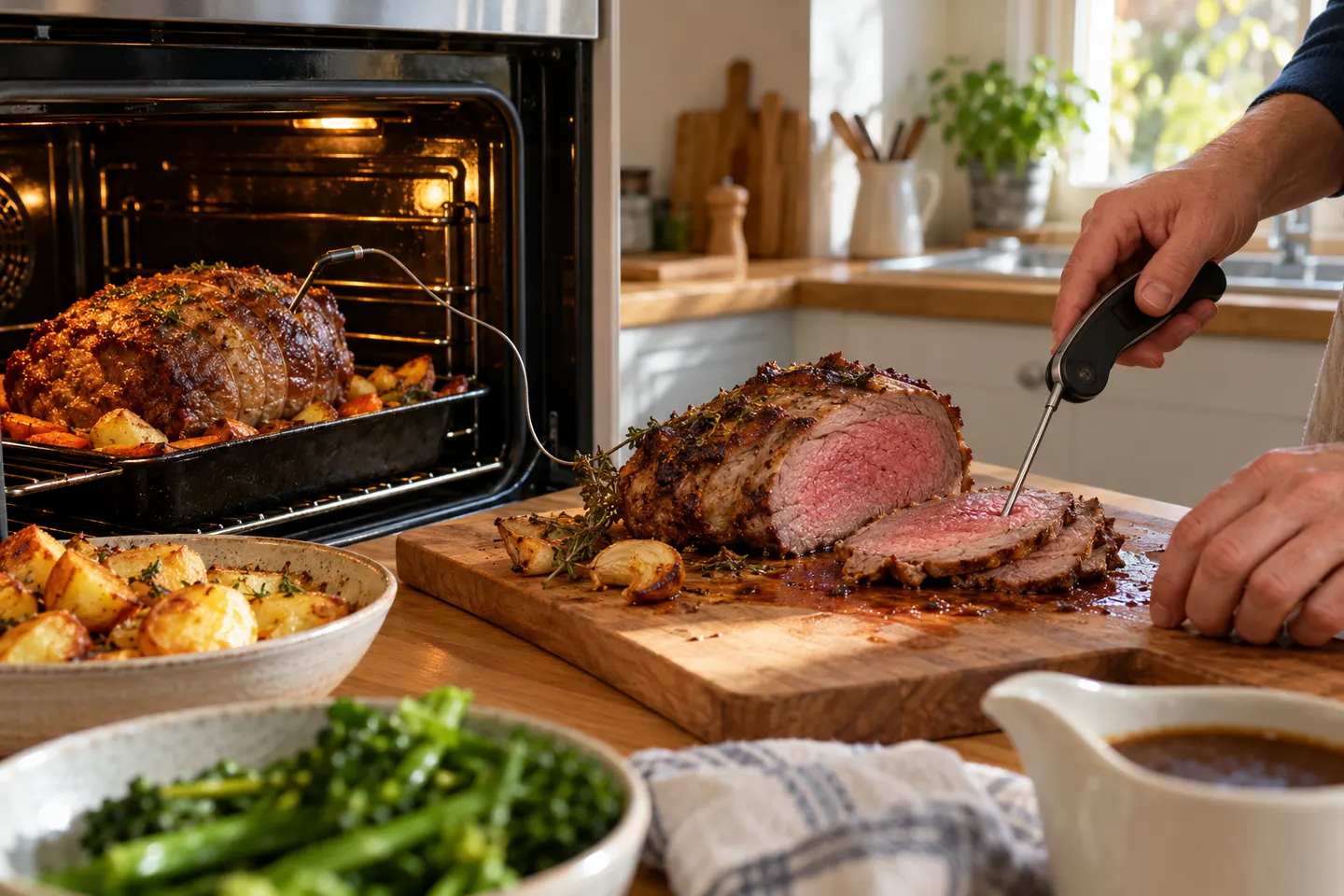
Start with a dependable instant-read thermometer; add a leave-in or wireless probe when you want continuous monitoring.