Gearjury may earn a commission when you buy through a retailer link. Our editorial guidance is based on the cited sources.
Guide
Which Type of Thermometer Checks the Surface Temperature of Food?
Which type of thermometer checks the surface temperature of food? An infrared thermometer does, without touching the food. Use a probe thermometer instead when you need the internal temperature for doneness or food safety.
GGearjury editorial team · Updated October 15, 2026· 4 min
01
What type of thermometer checks the surface temperature of food?
A food-safe infrared thermometer reads infrared energy from the surface and displays a temperature without making contact. It is useful for quick scans of griddles, pans, chilled displays, packaged foods, and the outside of food, but it does not reveal the temperature at the center.
02
When an infrared thermometer is the right tool
Use infrared when the decision depends on an exposed surface: checking whether a cooking surface is evenly heated, spotting temperature differences across equipment, or screening several areas quickly. Follow the device instructions for distance and aim, because the reading covers an area rather than a single invisible point.
03
A thermometer that can read temperature on food and equipment surfaces
A purpose-built infrared food thermometer can scan both food and equipment surfaces within the limits stated by its manufacturer. Reflective metal, steam, grease, glass, and an incorrect measuring distance can distort a reading, so keep the lens clean and measure the actual target surface rather than through a barrier.
04
Why surface temperature cannot confirm safe cooking
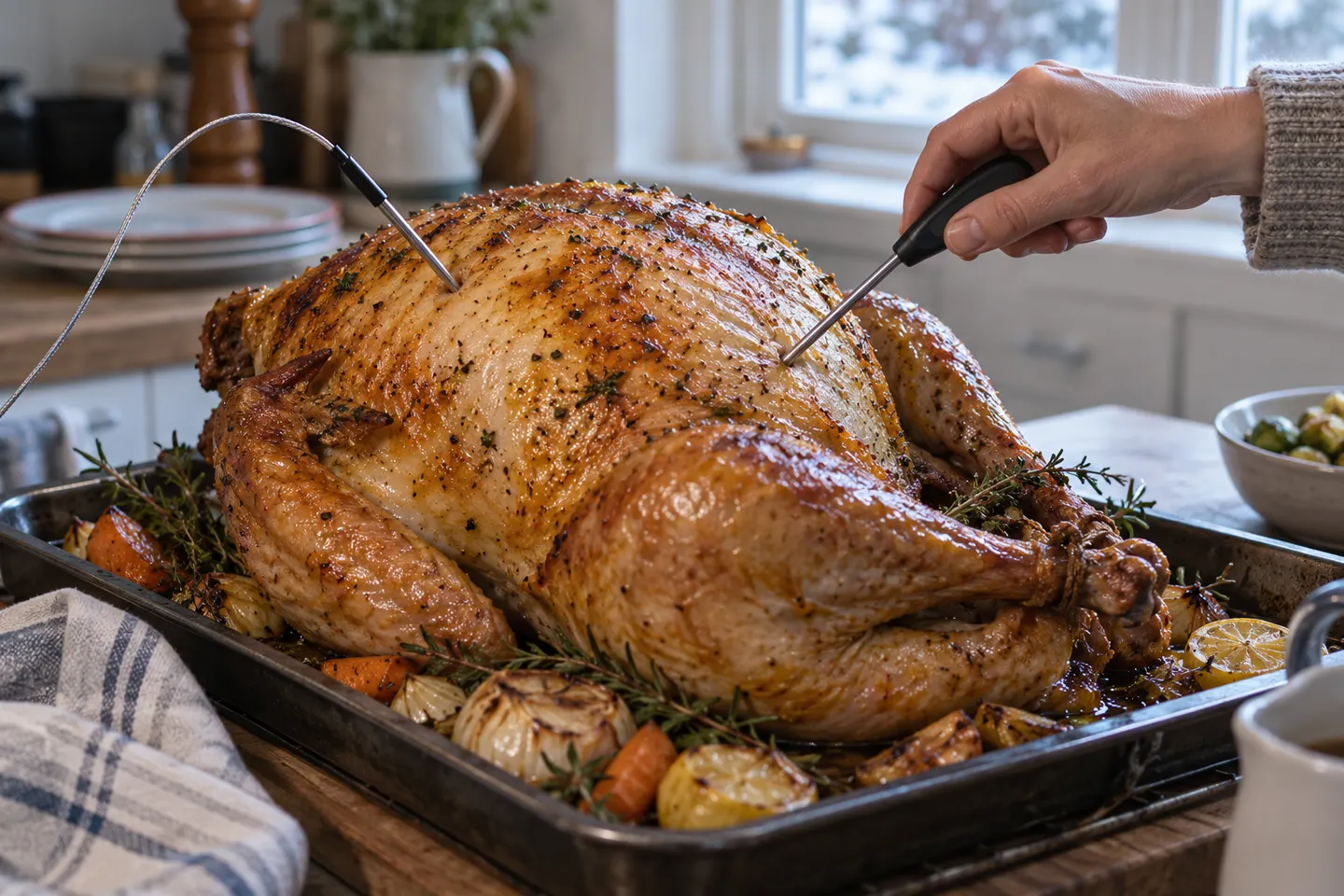
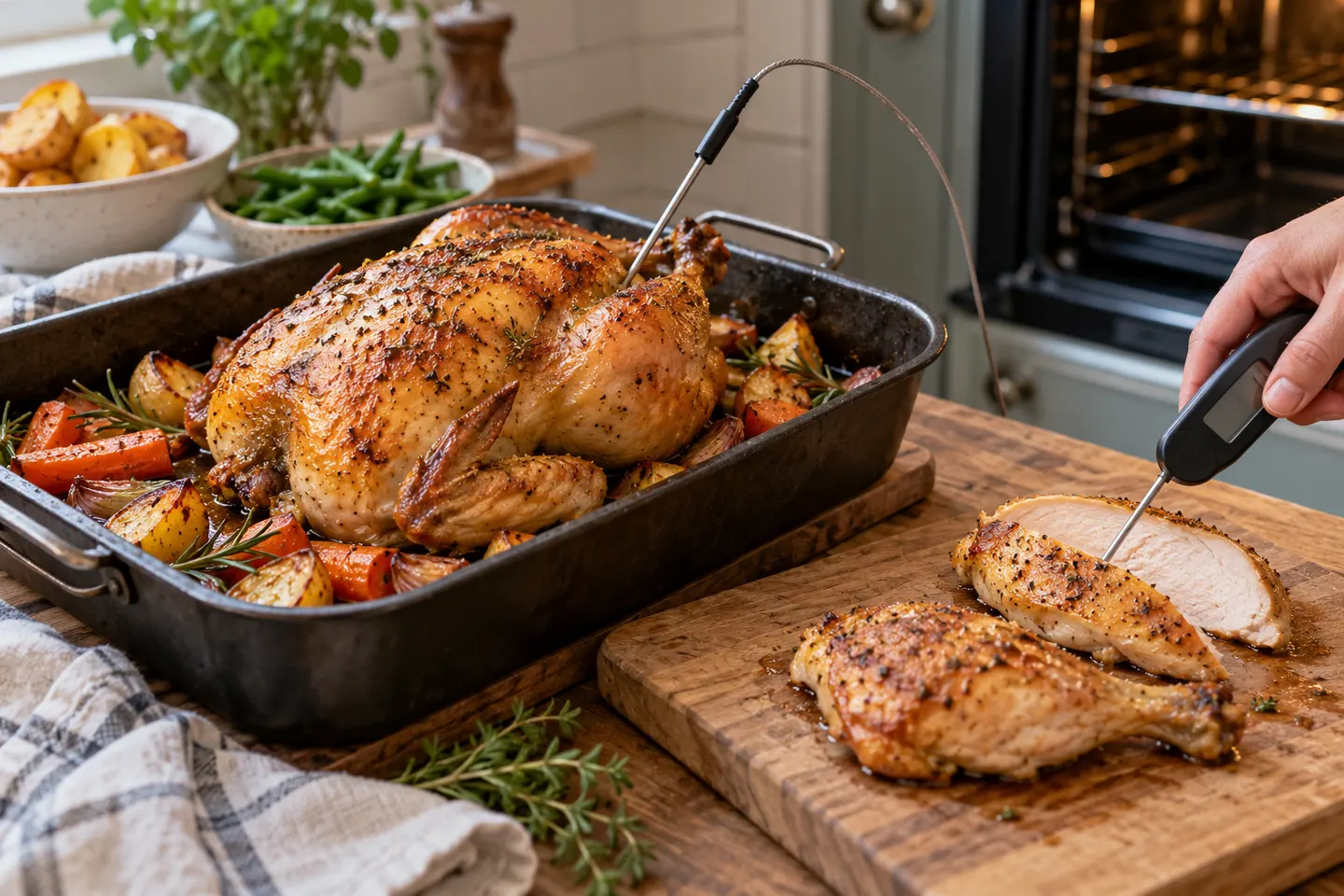
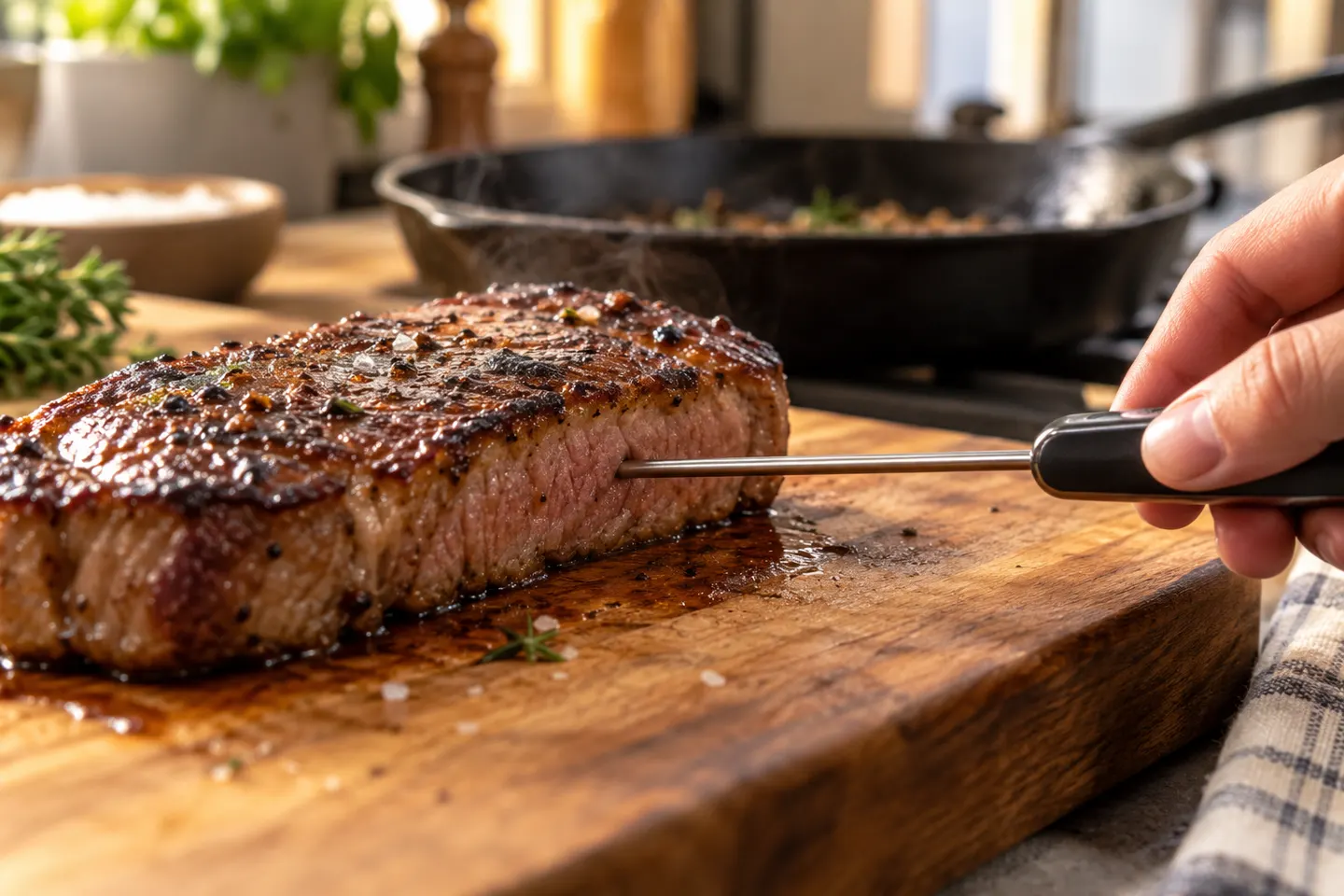
A hot exterior can surround a cooler center. The FDA advises checking the internal temperature of meat and poultry with a food thermometer, and its inspection guidance warns that an infrared surface reading alone may miss problems below the surface. Insert a suitable probe into the thickest part and avoid bone or the cooking pan.
05
Which food thermometer is best for each job?
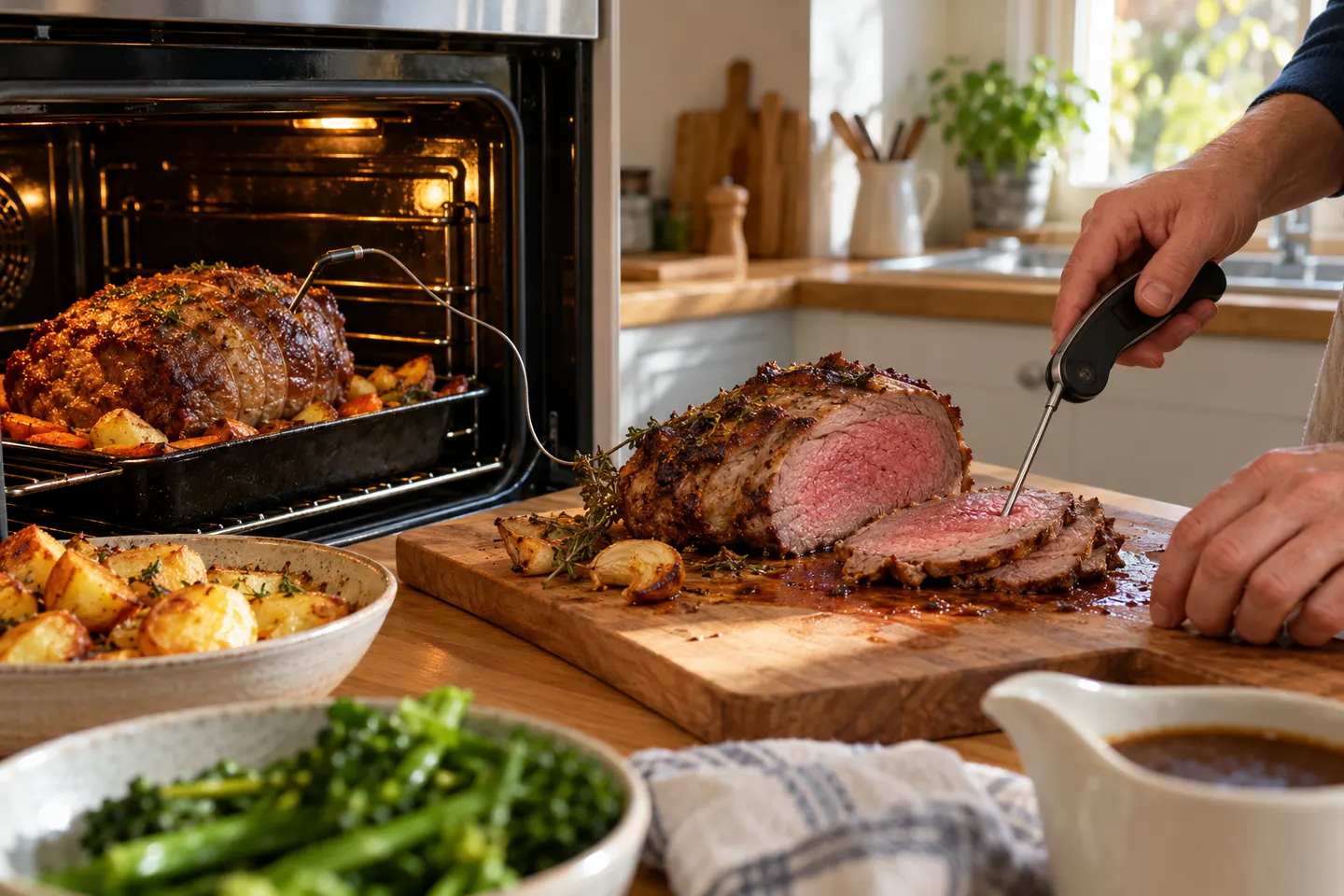
Choose infrared for non-contact surface checks, an instant-read probe for quick internal checks, and a leave-in probe when you want to monitor food during cooking. Thin foods need a probe designed for shallow insertion; large roasts and poultry require careful placement in the thickest edible area.
06
How to choose the best surface thermometer for cooking
Look for a model intended for food or kitchen surfaces, with a stated operating range, distance-to-spot guidance, adjustable emissivity if your tasks require it, and cleaning instructions suited to a busy kitchen. The best choice is the one whose measurement range and target area match the surfaces you actually check.
Common questions
Questions before you buy
What type of thermometer checks the surface temperature of food?
An infrared thermometer checks surface temperature without touching the food. It cannot measure the food's internal temperature.
Which food thermometer is best?
The best type depends on the task: infrared for surfaces, instant-read probes for quick internal checks, and leave-in probes for monitoring during cooking. For doneness and safety, use a probe that reaches the food's center.
Which type of thermometer is most widely used by food handlers?
Digital probe thermometers are commonly used because they check internal food temperature directly. Infrared thermometers are useful supplementary tools for rapid surface screening.
Which type of thermometer is most widely used for food?
A digital probe thermometer is the broadly useful choice for checking food internally. Surface-only jobs call for an infrared thermometer instead.
Start with a dependable instant-read thermometer; add a leave-in or wireless probe when you want continuous monitoring.
Your privacy
We use cookies and similar technologies. Necessary ones keep the site working. With your permission we also use statistics cookies (Google Analytics and Microsoft Clarity) to understand which guides help readers. You can accept all, reject all or choose. You can change your choice at any time from "Cookie settings" at the bottom of every page. Cookie policy