





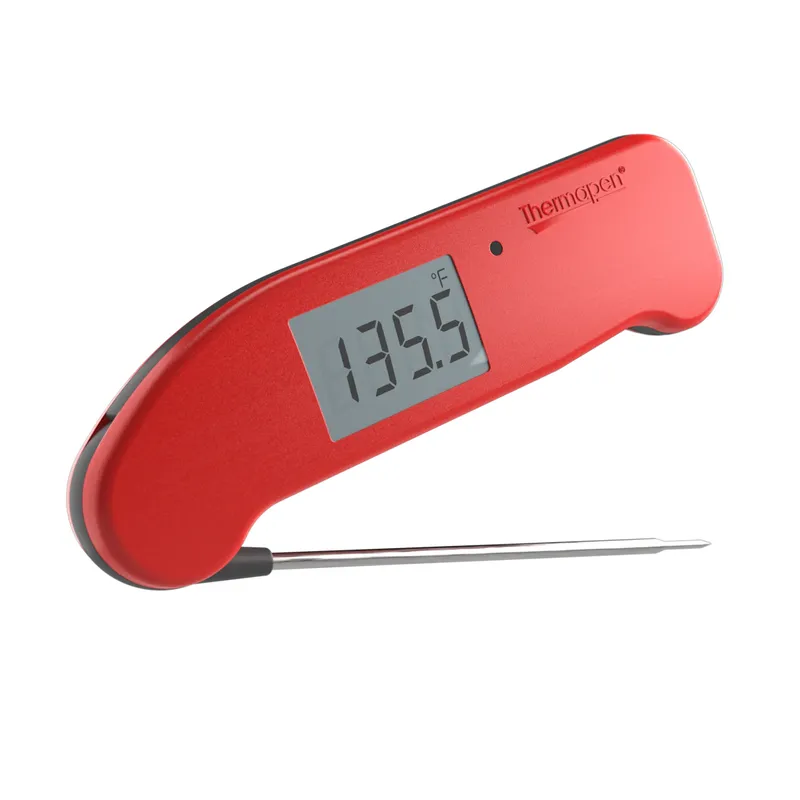
 Official manufacturer image
Our picks
Top picks
Official manufacturer image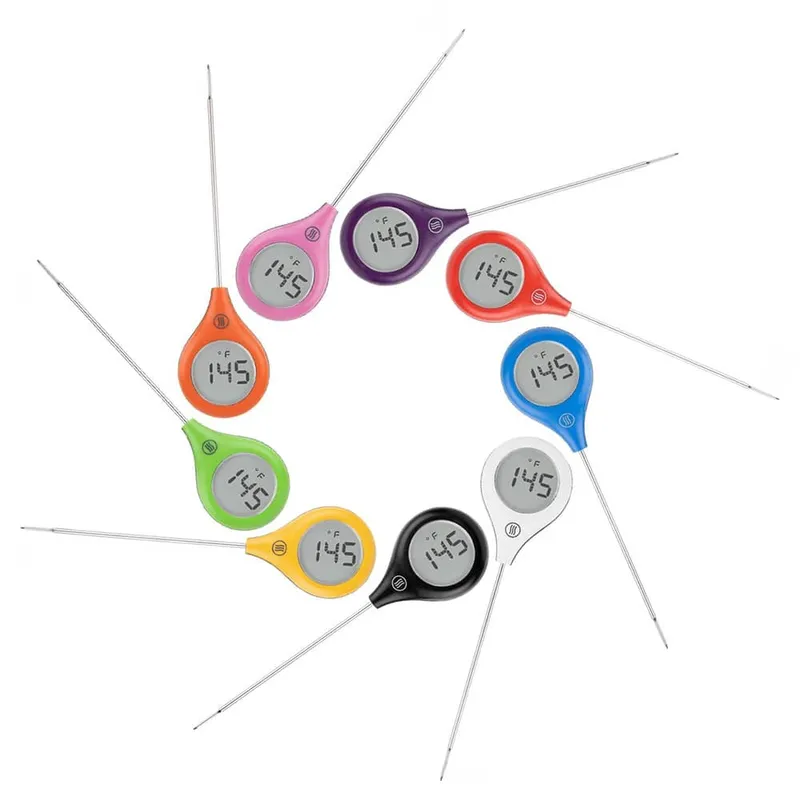 Official manufacturer image
ThermoWorks ThermoPop 2
Check price on Amazon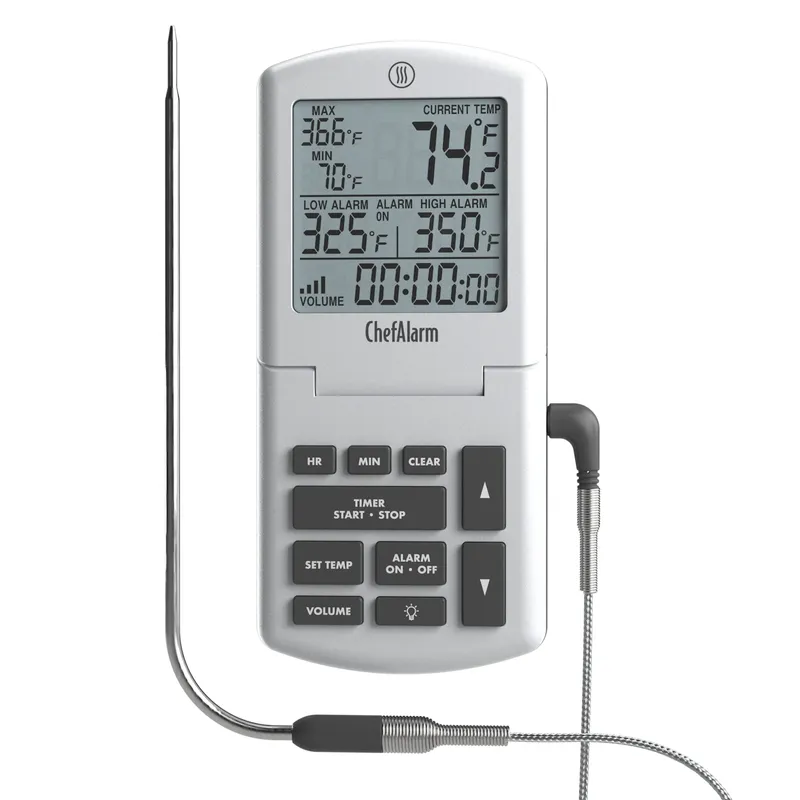 Official manufacturer image
ThermoWorks ChefAlarm
Check price on AmazonCommon questions
Questions before you buy
How accurate should a good meat thermometer be?
Compare the manufacturer's tolerance within normal cooking temperatures, not just the number of display decimals. A calibration certificate or documented verification process adds useful context.
Is a thermocouple better than a thermistor?
Thermocouples can respond very quickly and measure near the tip; thermistors can also be accurate and practical. The complete model's specifications matter more than the sensor name alone.
Does waterproof mean dishwasher-safe?
No. An ingress rating and dishwasher approval are different claims. Follow the cleaning instructions for the exact thermometer.
Can a high quality thermometer lose accuracy?
Impact, extreme heat, probe damage or component drift can affect readings. Check it periodically using the maker's recommended method and recalibrate or service it when supported.