How does a dash cam start recording?
Most units start when the vehicle supplies power through a socket or hardwire connection. The camera then writes consecutive clips to a compatible memory card.

 Best picksBest Meat Thermometers in the UK for 2026
 Best picksThe Best Dashcams in the UK for 2026
 Best picksBest Air Purifiers in the UK for Different Rooms and Needs
Gearjury may earn a commission when you buy through a retailer link.
Guide
A dashcam records short video files onto a memory card while it has power. Loop recording replaces the oldest ordinary clips, while protected events are kept until you review or manage the card.
Most units start when the vehicle supplies power through a socket or hardwire connection. The camera then writes consecutive clips to a compatible memory card.
When ordinary storage fills, loop recording overwrites the oldest unprotected files. Card size, resolution, channel count and clip settings affect how much journey history remains.
A G-sensor can mark a file after a sudden impact, and many cameras also have a manual save button. Protected space is finite, so review the card instead of assuming every marked clip stays forever.
Parking mode watches for impacts or movement, records at a reduced frame rate, or records continuously at a lower bitrate, depending on the model. It requires power after ignition-off and should use low-voltage protection.
WiFi commonly connects the camera directly to an app; it is not necessarily an internet service. GPS can embed or associate time, location and speed data when the model supports it.
Stop recording before removing the card, then copy the original file to safe storage. Check date and time regularly and follow the manual's formatting schedule.
Common questions
It uses retained power to record impacts, movement, time-lapse footage or low-bitrate video while parked. The exact behaviour and power accessory are model-specific.
It normally records whenever powered, but parking operation depends on its wiring and settings. Loop recording means ordinary old clips are eventually overwritten.
Only if it has an approved power source after ignition-off, such as a compatible hardwire kit or dedicated battery pack.
Most consumer cameras save clips to a removable microSD card. Some models can also transfer selected files to a phone or connected service.
Keep exploring
The Nextbase 622GW is our balanced UK pick for its detailed recording, stabilisation and accessible touchscreen. Garmin Mini 3 suits a discreet fit, while VIOFO A329S covers the front and rear at high resolution.

A dual-camera kit is the direct choice when you want the road ahead and traffic behind in the same recording system. Check rear resolution and cable length, not just the headline front-camera specification.
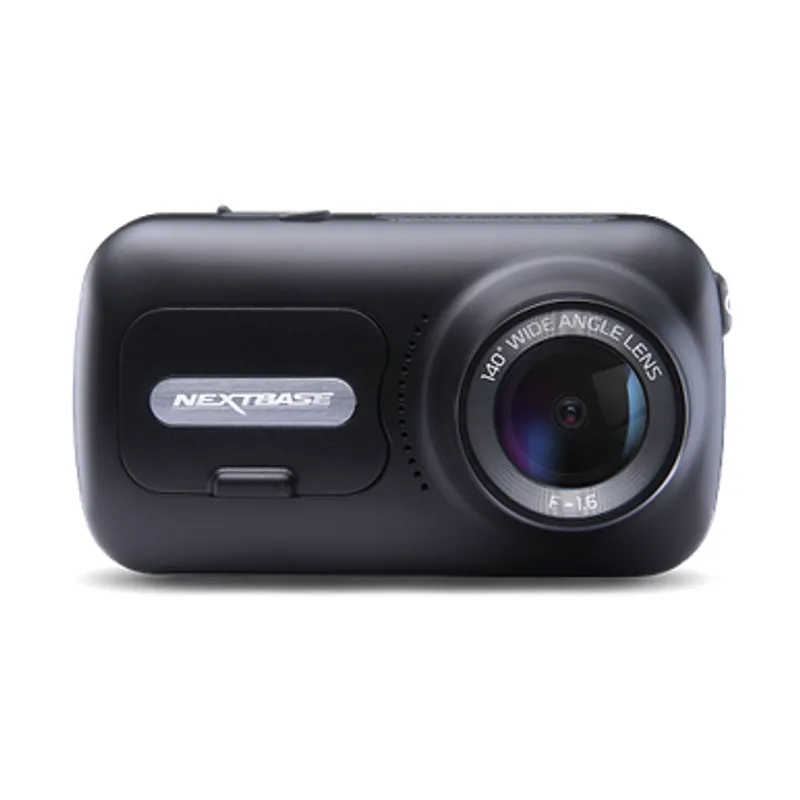
The 622GW has the strongest recording specification in this trio; the 522GW keeps the large touchscreen and polarising filter at 2K, while the 322GW covers the essentials.

Start with the coverage you need: a discreet front camera for the road ahead, or a front-and-rear system for evidence from both directions. Our guides then narrow the choice by installation, connectivity and brand.