Gearjury may earn a commission from qualifying retailer links; this does not affect our explanations.
Guide
What Is an Evaporative Air Cooler and How Does It Work?
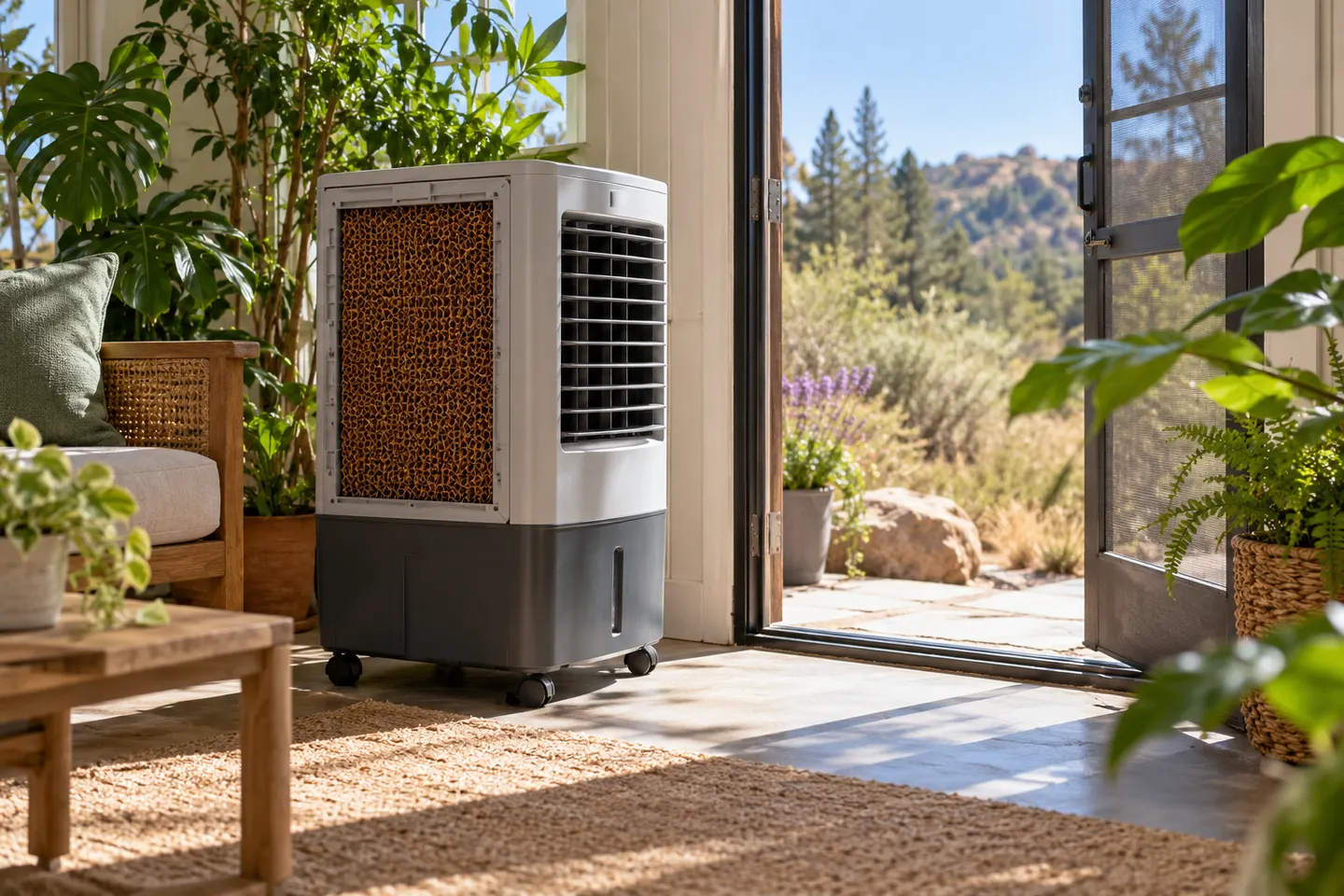
An evaporative air cooler moves air across wet media so some water evaporates and cools the outgoing airflow. It adds moisture and works best when the room can exchange air.
GGearjury editorial team · Updated October 18, 2026· 5 min
01
What is an evaporative air cooler?
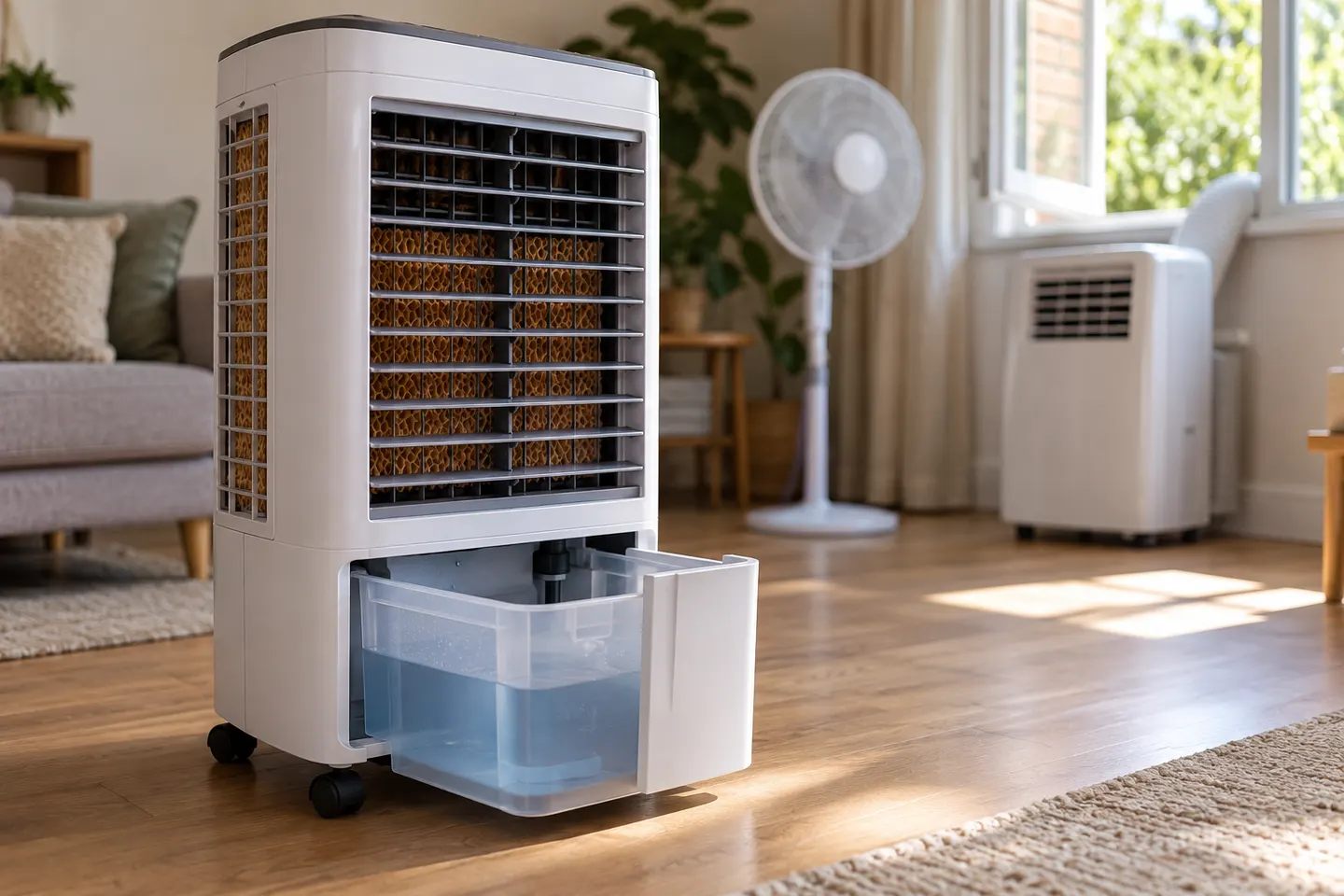
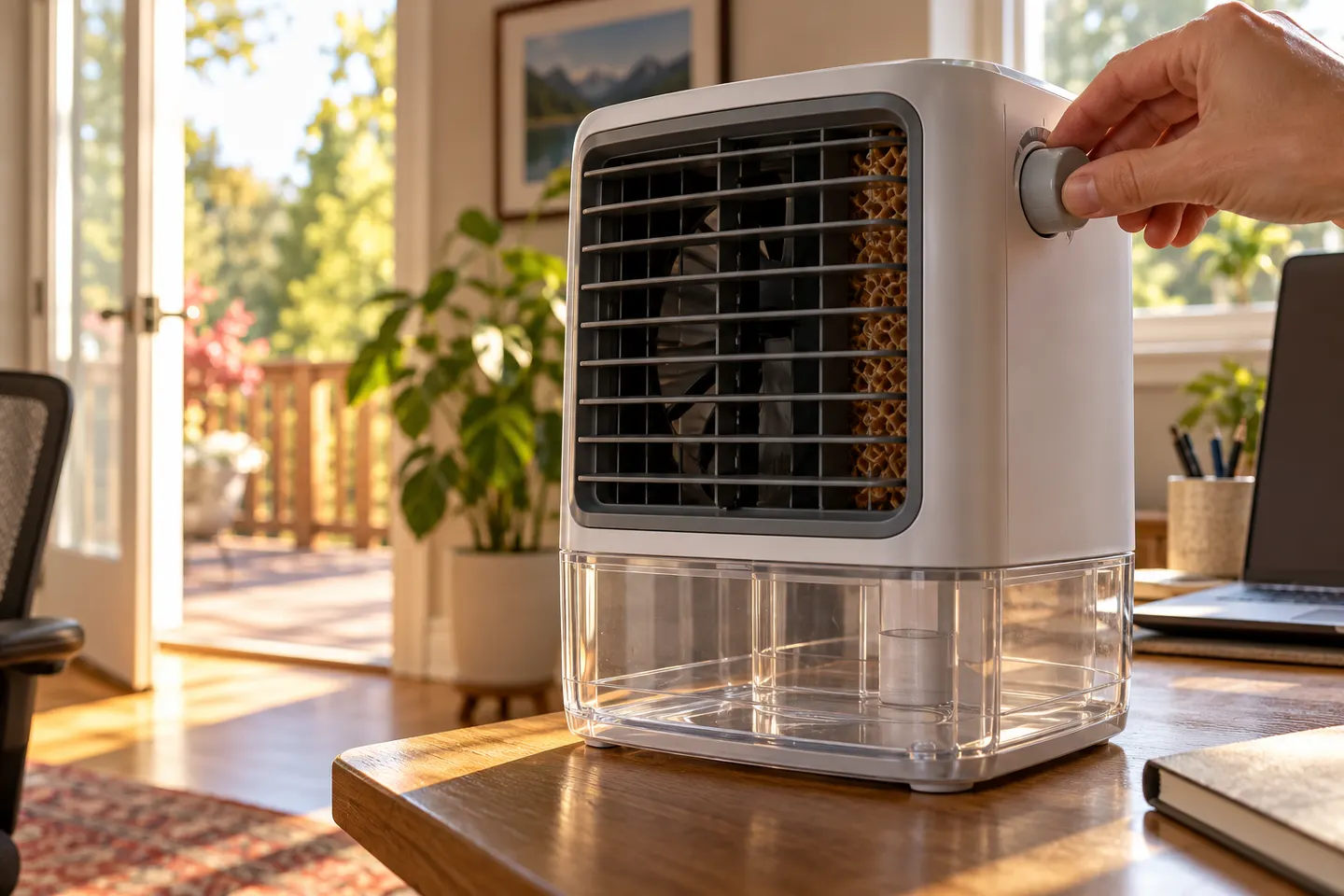
It is a fan-based appliance that passes air over water-wetted pads or media. Evaporation absorbs heat from the air stream, while the device increases indoor moisture. Portable models usually include a fan, reservoir and water-distribution system.
02
Why does cross ventilation matter?
The outgoing air is more humid, so a route for indoor air to leave helps prevent moisture from accumulating. Cross ventilation means air can enter on one side and exit on another; follow the unit manual and consider outdoor air quality.
03
How is an air cooler different from air conditioning?
An evaporative cooler uses water evaporation and does not use a refrigeration cycle to move heat outside. Air conditioning transfers heat through a refrigerant system. The two technologies suit different climates and room conditions.
04
What air cooler is suitable for a 7800X3D or 9800X3D?
Those are AMD Ryzen desktop processor names, so the query likely means a CPU air cooler, not a room evaporative air cooler. Choose a CPU cooler by socket compatibility, case clearance, processor power and independent thermal testing; a room air cooler will not cool a processor directly.
05
When does an evaporative cooler make sense?
It is most appropriate in dry conditions where ventilation is available and added humidity is acceptable. In humid weather, a conventional fan or air conditioner may be more suitable.
06
What should you check before buying?
Confirm the maker’s room guidance, airflow settings, tank refill and cleaning process, electrical requirements, noise information and local warranty. Treat coverage figures as manufacturer guidance rather than a guarantee for every room.
Common questions
Questions before you buy
What is cross ventilation for an air cooler?
It is a flow path where outdoor air can enter and indoor air can leave, often through openings on opposite sides. This helps carry away the moisture added by evaporative cooling.
What air cooler should I get for a Ryzen 7 7800X3D?
That is a CPU cooling question: look for a compatible processor heatsink, not a room air cooler. Check the CPU socket and case clearance, and consult current independent thermal testing.
What air cooler should I get for a Ryzen 7 9800X3D?
Choose a CPU cooler based on socket support, case dimensions and independent thermal results for that processor. Evaporative room coolers are unrelated to desktop CPU cooling.
Can you use an evaporative cooler in a closed room?
It is generally less suitable because it adds moisture and needs ventilation. Follow the manufacturer’s instructions for window or exhaust openings.
A portable air cooler can mean an evaporative unit or simply a fan marketed for personal cooling. Start by matching the technology to your room and climate.
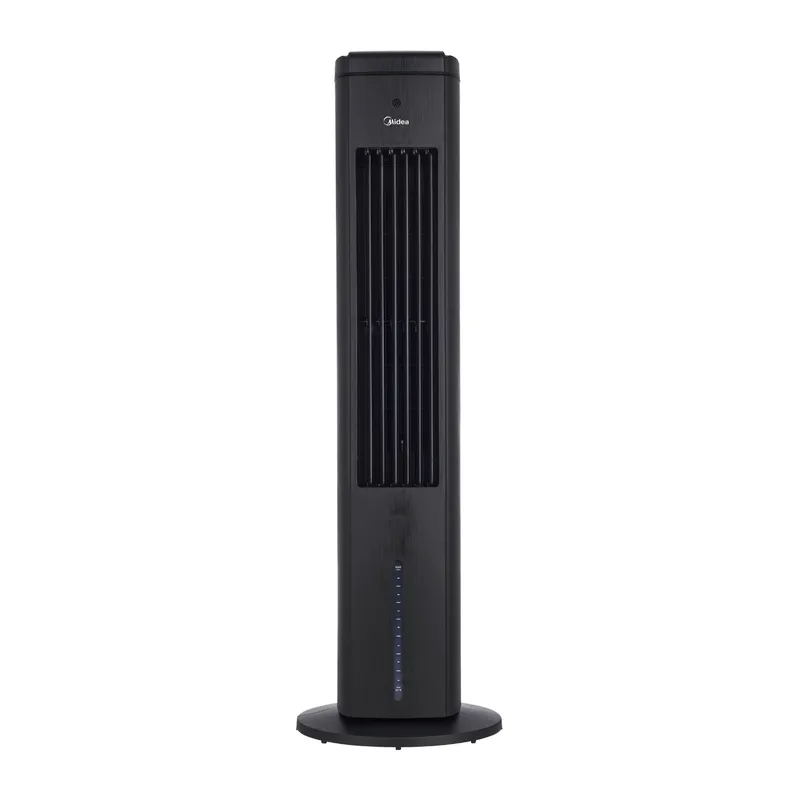
For a Canadian home, begin with Midea’s locally listed evaporative unit, then consider a personal fan or purifier fan if added moisture is a poor fit.
An evaporative air cooler needs water for its cooling effect. Some products can run as ordinary fans with an empty tank, but they do not provide evaporative cooling in that mode.
Midea Canada lists a direct-cooling evaporative unit. Its product details make it possible to compare controls and dimensions, while humidity and room ventilation remain key to fit.
Your privacy
We use cookies and similar technologies. Necessary ones keep the site working. With your permission we also use statistics cookies (Google Analytics and Microsoft Clarity) to understand which guides help readers. You can accept all, reject all or choose. You can change your choice at any time from "Cookie settings" at the bottom of every page. Cookie policy