What does K band mean?
K band describes a microwave frequency region. Manufacturer specifications commonly list K-band detection alongside other supported bands; the exact frequencies and settings depend on the detector.

 Best picksBest WiFi Extenders: Which Range Extender Should You Buy?
 Best picksGood Meat Thermometers for Every Kind of Cook
 Best picksBest Dash Cams for Cars in 2026
 Best picksBest Air Purifier for Bedroom in the US: Quiet Models Compared
Gearjury may earn a commission from qualifying retailer links.
Guide
K band is a microwave radar frequency range used by some speed-measuring equipment. A detector can alert to energy in that range, but an alert alone does not identify its source.
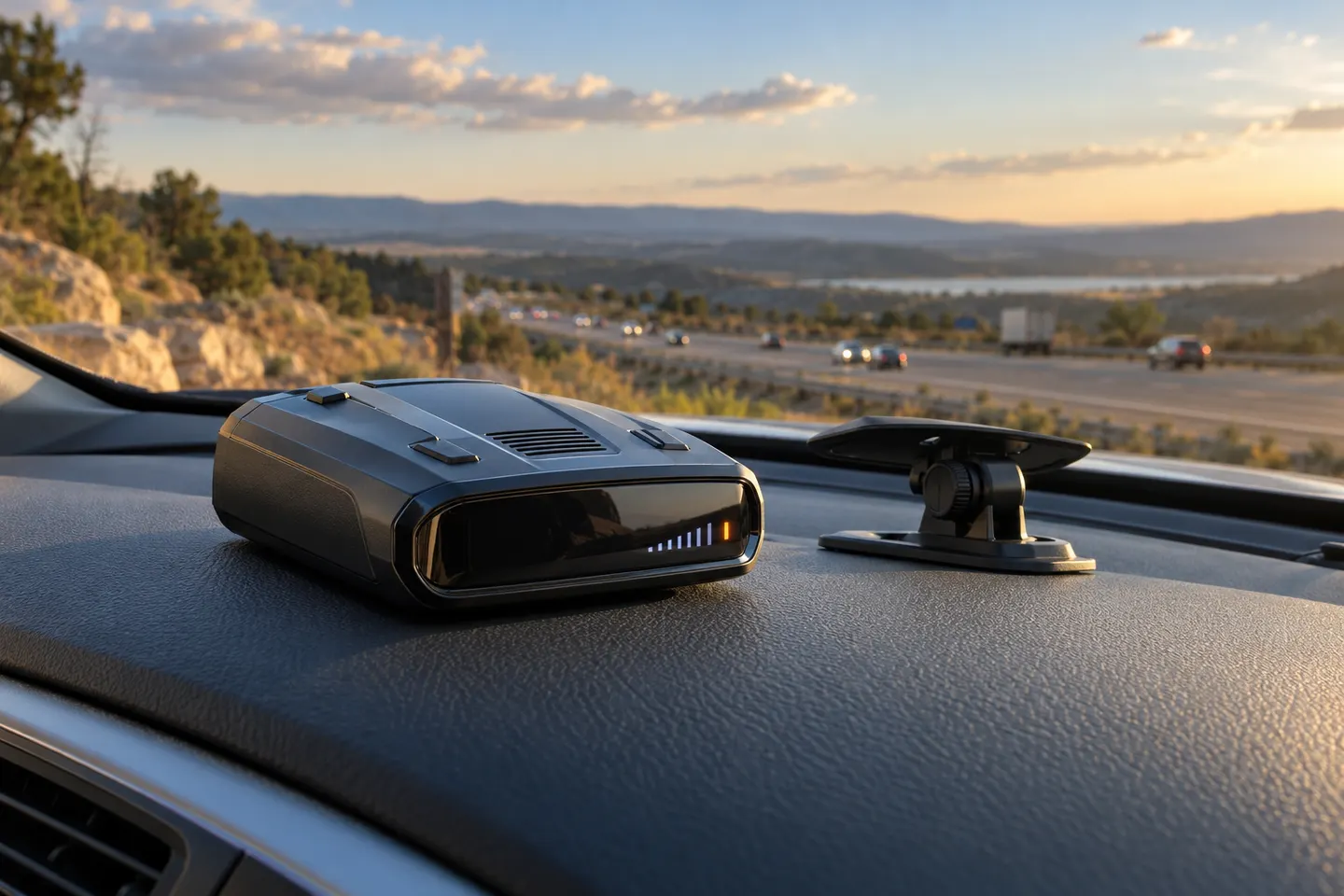
K band describes a microwave frequency region. Manufacturer specifications commonly list K-band detection alongside other supported bands; the exact frequencies and settings depend on the detector.
The unit senses radio-frequency energy within its configured range and reports it to the driver. The alert indicates detected energy, not proof that a police radar unit is operating nearby.
Yes. Other sources of radio-frequency emissions may trigger alerts. Consult your model’s manual for filtering and sensitivity options, and understand that filtering can affect what the device reports.
Do not change a band setting based on a generic rule. Local enforcement equipment and detector behaviour vary; follow the manufacturer’s instructions and applicable law.
Common questions
It is a detector setting for sensing radar energy in the K-band frequency region. The manual identifies the range supported by that model.
It means the detector sensed energy it classifies in that band; it does not identify the source with certainty.
Some speed-measuring equipment uses K-band frequencies, but practices and equipment vary by jurisdiction.
Some electronic devices can emit energy that a detector interprets as a band alert. Check the detector maker’s filtering guidance for your model.