







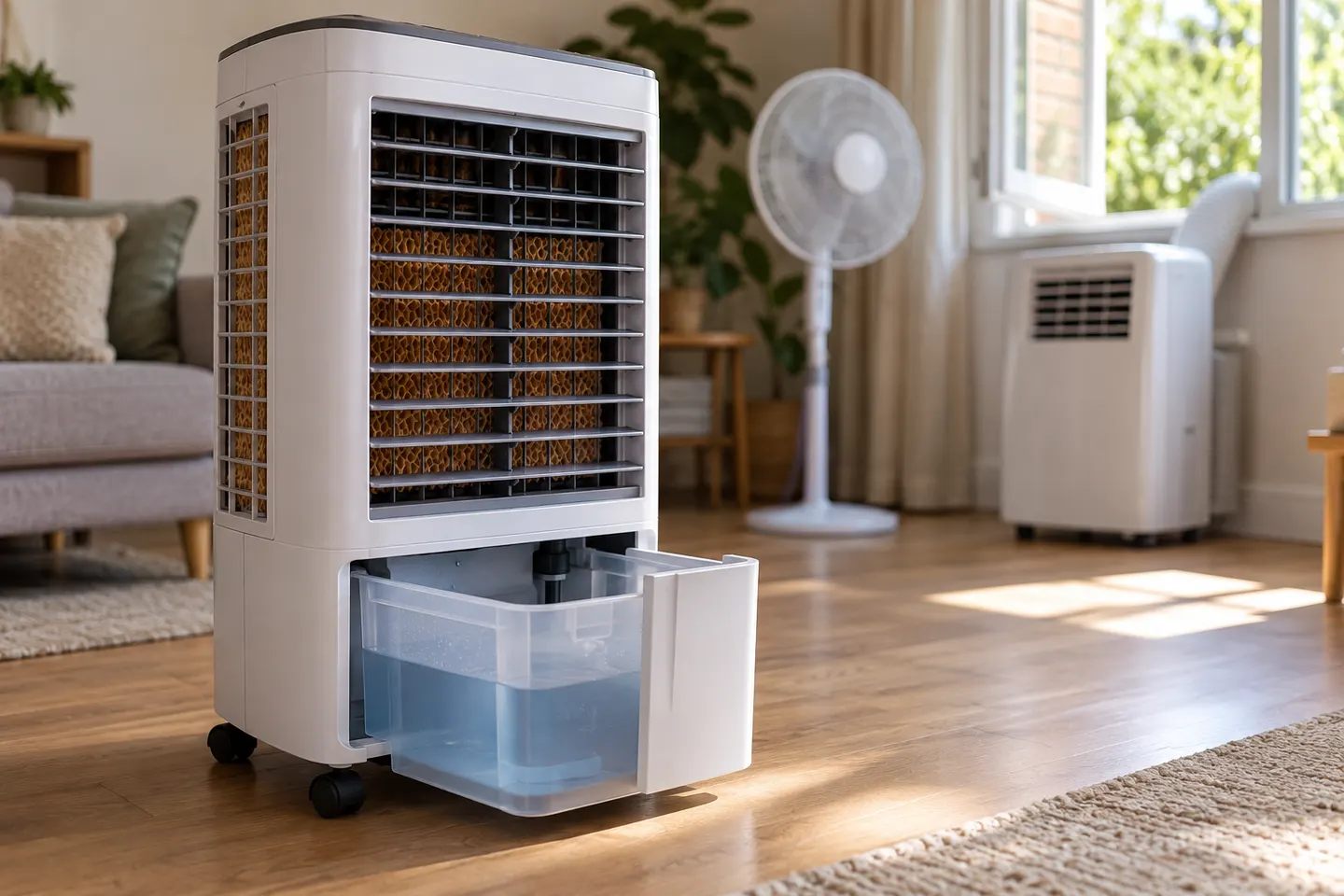
Dry air and a direct breeze
Gearjury may earn a commission from qualifying retailer links. This does not affect our editorial conclusions.
Head to head
Swamp Cooler Versus Air Conditioner: Which Suits Your Home?
A swamp cooler can suit a dry climate when you can ventilate the space. An air conditioner is the more suitable option when you need stronger temperature control or moisture removal, especially in humid weather.
Cooling with moisture removal
De’Longhi Pinguino PACN115EC
The verdict
Choose by climate and goal. Evaporative coolers are a dry-climate breeze solution; an air conditioner is the more versatile room-cooling choice when humidity is high. The cited De’Longhi models illustrate the two technologies, but their published specifications are not a like-for-like capacity test.
Dry air and a direct breeze: De’Longhi EV250.WH
The EV250.WH uses evaporative cooling and has a 4.5 L water tank; De’Longhi says it is best in hot, dry climates.
Cooling with moisture removal: De’Longhi Pinguino PACN115EC
The PACN115EC is identified as a portable air conditioner, which uses a refrigerant cycle rather than adding water through direct evaporation.
Avoid adding indoor moisture: De’Longhi Pinguino PACN115EC
Direct evaporative cooling humidifies its outgoing air, while air conditioners remove heat and moisture from indoor air.
Compare them side by side
| De’Longhi EV250.WH | De’Longhi Pinguino PACN115EC | |
|---|---|---|
| Cooling method | Water evaporation | Refrigerant-based portable air conditioner |
| Effect on indoor humidity | Adds moisture | Removes moisture during cooling |
| Ventilation | Ventilation is generally needed for direct evaporative systems | Window exhaust setup; check the model manual |
| Published water capacity | 4.5 L | — |
| Published runtime | Up to 6 hours | — |
| Best climate fit | Hot and dry | More suitable when moisture removal is also wanted |
Common questions
Questions before you buy
Is a swamp cooler the same as an air conditioner?
No. A swamp cooler uses evaporation and adds moisture to the air. An air conditioner transfers heat through a refrigerant cycle and generally removes indoor moisture as it cools.
Which is better in a humid climate?
An air conditioner is usually the more practical choice because high humidity limits evaporation and an air conditioner can remove moisture. A swamp cooler may make a humid room feel less comfortable.
Does a swamp cooler need an open window?
Direct evaporative systems need a way for humid air to leave, often through an open window or vent. Follow the instructions for your specific portable unit and avoid trapping excess moisture indoors.
Can a swamp cooler lower room temperature like an air conditioner?
It can lower the temperature of the air passing through it, especially in dry conditions, but its performance depends on humidity and airflow. It does not provide the same controlled refrigerant cooling as an air conditioner.
Which uses water?
A direct swamp cooler uses water that evaporates into the air. An air conditioner does not use a water reservoir for cooling, though it can collect condensate that must be drained or managed.
Sources and how we chose
- US Department of Energy, Building America HVAC Guide: Evaporative Coolers · 2026-10-22
- Natural Resources Canada, Air Conditioning Your Home · 2026-10-22
- De’Longhi EV250.WH product page · 2026-10-22
- De’Longhi Canada PACN115EC support · 2026-10-22
Keep exploring
Related guides
Portable Air Coolers: Compare Evaporative and Fan Options
A portable air cooler can mean an evaporative unit or simply a fan marketed for personal cooling. Start by matching the technology to your room and climate.

Best Portable Air Coolers to Consider in 2026
For a Canadian home, begin with Midea’s locally listed evaporative unit, then consider a personal fan or purifier fan if added moisture is a poor fit.
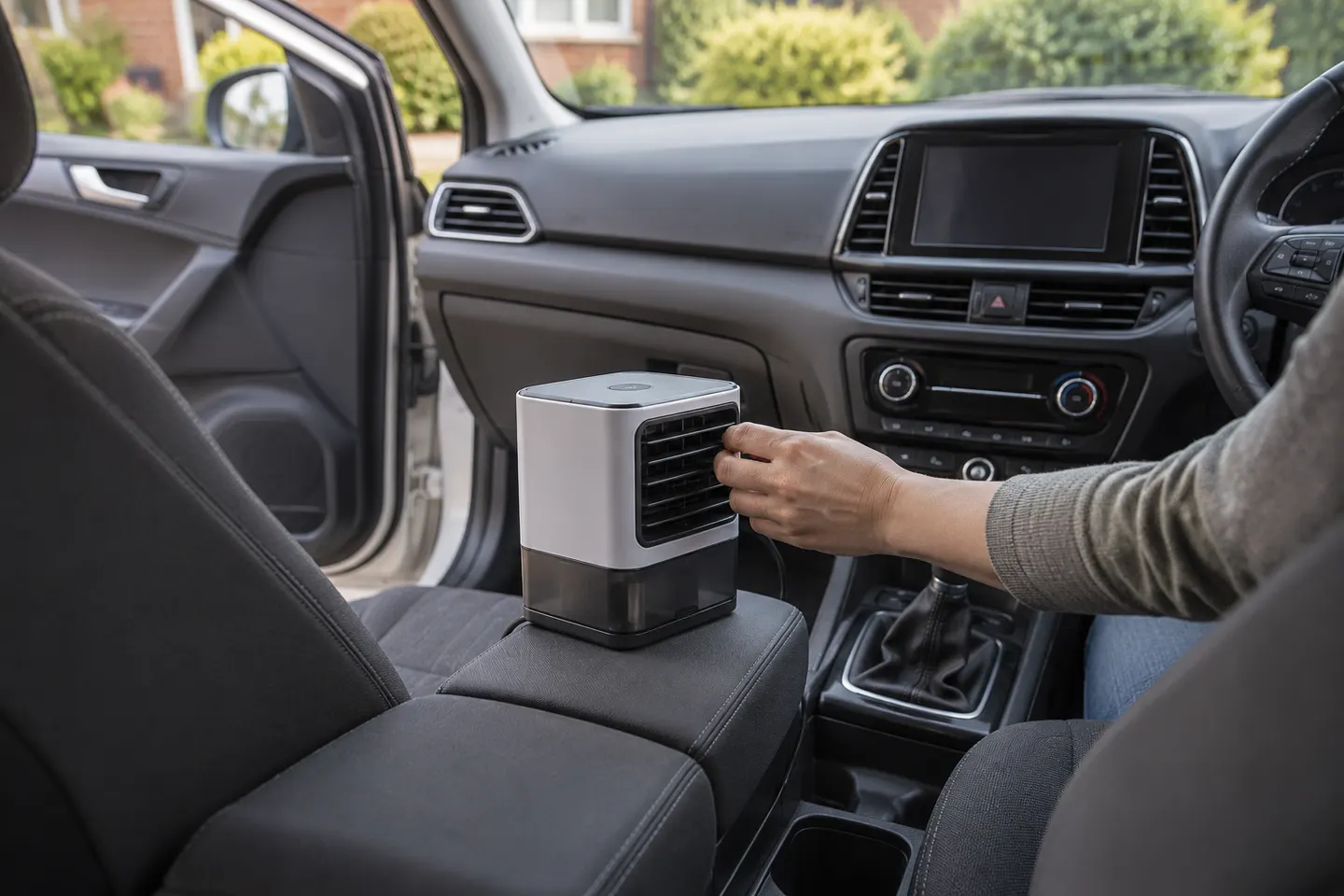
Car Air Coolers: Portable Cooling Options for Vehicles
A true evaporative cooler needs water, ventilation and a suitable power source. For most vehicles, a compact fan is easier to use than a household cooler.
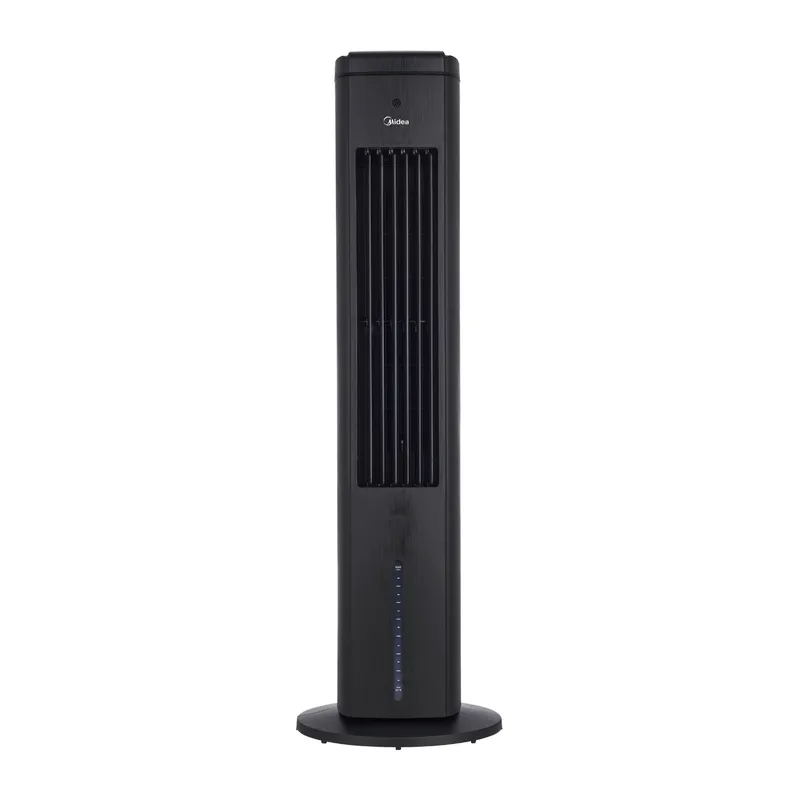
Midea Portable Air Cooler Options for Canadian Homes
Midea Canada lists a direct-cooling evaporative unit. Its product details make it possible to compare controls and dimensions, while humidity and room ventilation remain key to fit.